

Give Your Concrete Patio A Stylish Makeover With This Affordable Paint DIY
We may receive a commission on purchases made from links.
Imagine sipping a cool drink on a sun-drenched courtyard paved in timeless herringbone brick. It's hard to imagine that builder-grade gray slab of concrete in your backyard could become such an idyllic setting for your morning coffee or cocktails in the evening. But you can recreate the look with little more than some concrete paint and a stencil. Just dab on two or more brick colors in a herringbone stencil to transform your concrete patio into a stylish outdoor retreat.
While still stylish today, the herringbone pattern is nothing new — roadways in the Roman Empire were covered in this interlocking design. When created out of bricks, the herringbone layout improves strength. Since this DIY project is a painted version, it's more about the look than creating a stable base.
That said, painting a herringbone pattern offers a more affordable way to refresh an old patio compared to redoing the space with bricks. According to Angi, professional paver patio installation costs an average of $3,800. Choosing a herringbone pattern typically makes the project more expensive because of the extra materials needed for the cuts and the increased labor time. On the other hand, a gallon of porch and patio floor paint is usually around $40, while a stencil like the Cutting Edge Stencils Herringbone Brick Pattern costs $50 on Amazon. Even after adding concrete cleaner and primer to the list, you'll still come out ahead by painting your patio.
Use a stencil to paint a herringbone pattern
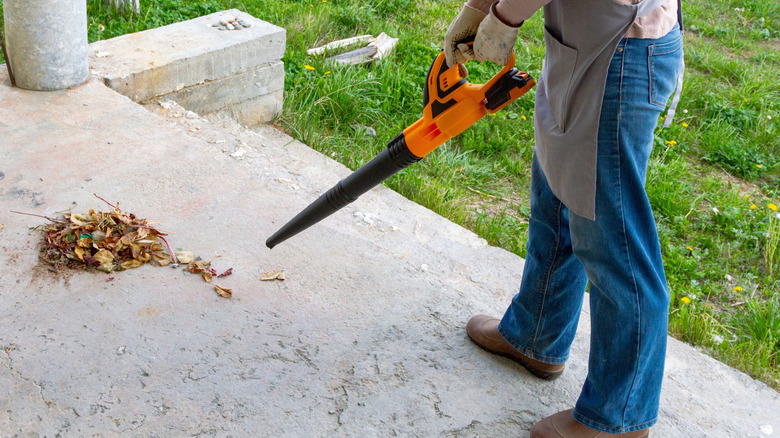
Before you paint a concrete porch, clean it thoroughly to remove dirt, debris, and greasy areas that could prevent the paint from sticking properly. After sweeping, spray the surface down with a hose and follow up with concrete cleaner. When the concrete is dry, apply concrete primer to help the paint adhere better. Next, apply white or light-colored porch and patio paint over the entire surface. You may need to apply a few coats to get a solid base color. You could also skip this step and use the concrete itself as the grout color.
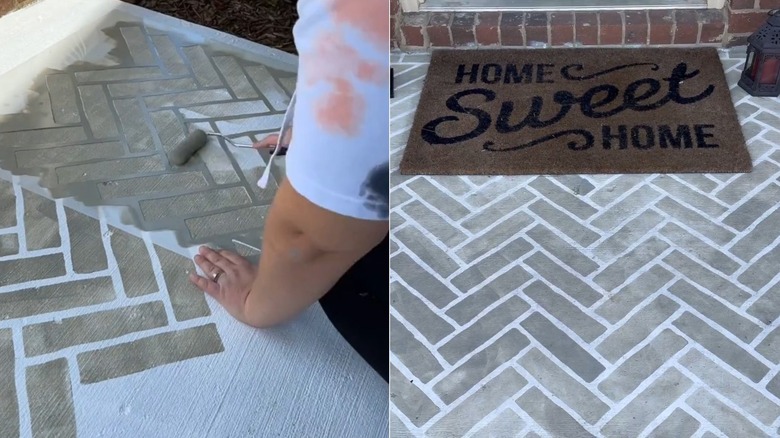
Position the herringbone stencil along one side of the patio, making sure it's aligned and looks straight when you approach the patio. Then, use a sponge or chip brush to dab different brick shades onto the concrete. Consider experimenting with colors to get the look you want. For instance, a few shades of brown create an earthy look, while deep red and terracotta hues add more variety. Alternatively, you can make your small patio look more spacious with paint shades that are light and neutral, such as pale gray or tan. If you're not sure which colors to choose, find bricks or pavers you love and pull shades from them.
The idea here is to layer on multiple colors to fill in the stencil sections for a natural brick look. You don't need to cover the white base fully — letting some of it show through gives the patio a weathered aesthetic. Move the stencil to the next section and repeat. Once the paint is completely dry, top it off with a concrete sealer to protect the paint from the elements.