

Protect Your Outdoor AC Unit From Snow And Ice With A Simple Piece Of Plywood
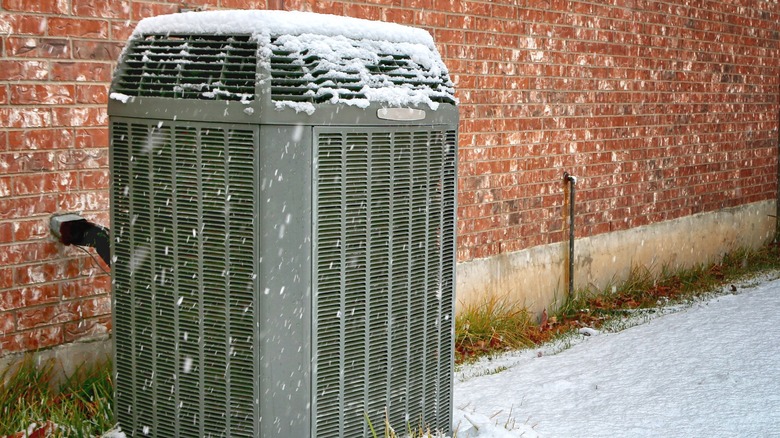
Any home with a central air conditioner or heat pump has an outdoor unit, and if the system functions only as an air conditioner, that unit is a condenser that doesn't run in the winter. But sitting next to the home, it's still exposed to ice, snow, and everything else winter has to offer. While it seems to make sense to protect it with a tarp as you prepare to shut your AC unit off for the season, that can create more problems than it solves. Securing a piece of plywood on top, however, will keep off the snow while keeping the machinery inside safe from various expected and unexpected hazards.
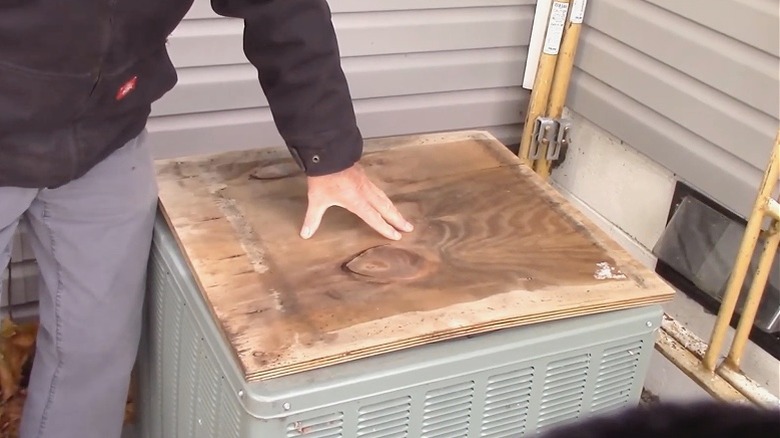
Air conditioner units are sturdily built, and protection isn't always necessary. If you live in a region that gets a lot of snow, plywood will prevent the melt from dripping into the unit and rusting the components. You don't need this kind of protection if you rarely get winter snow. On the other hand, plywood does offer protection against falling branches, icicles, and other debris, so it's nice to have it there if the unit is under an eave or a tree. Simply put a piece of plywood large enough to cover the entire unit on top of it, weighing it down with a brick or bungee cords if needed.
Keep in mind that plywood leaves the grilles on the sides of the unit exposed. Snow and ice can build up there and rust the housing when they melt. Debris, such as leaves and pine needles, as well as road salt, could also blow through exposed grilles, so it's important to clean the unit in the spring before you turn it on.
Why plywood may be better than an air conditioner cover
It may seem to make more sense to go ahead and wrap the air conditioner condenser unit for winter protection, but if you use the wrong cover, that's one of the worst things you can do. In many cases, you shouldn't cover your outdoor unit with a plastic cover, like a tarp, because it doesn't allow air to circulate, and the winter moisture will allow rust and mold to grow. A breathable cover is better — preferably one made specifically for your unit — but that isn't the end of potential problems.
An air conditioner with a cover provides shelter for mice, rats, and squirrels, and besides creating a mess that you have to clean up, they may chew up wires and other critical components. It isn't just small rodents; raccoons and opossums can also make their winter homes in a covered air conditioner. Forgoing the cover and simply laying plywood on top of the condenser unit prevents these problems by allowing air to circulate and taking away the promise of a warm environment from shelter-seeking critters. Just remember to take it off as part of your AC maintenance routine before you start up your unit to keep the condenser properly ventilated.