

Should You Do Anything To Your AC Unit Before Shutting It Off For The Season? We Asked An HVAC Pro

According to a 2022 report from the U.S. Energy Information Administration, almost 90% of American households rely on air conditioning. Since rising costs are making it a serious struggle to keep running it, many people are thrilled to see the arrival of cooler fall temperatures. But should you do anything to your AC unit before shutting it off for the season? To find out, Hunker spoke with Andrew Kuznetsov, President of ADRIUM Service Solutions, an appliance repair, HVAC, and coffee equipment company, who said scheduling an inspection before temporarily protecting it from harsh weather are the only steps you need to take.
"In my opinion, there is no need for the AC to be 'winterized'," Kuznetsov told us during an exclusive interview. Because of how an HVAC system works, the expert said there is always an indoor and outdoor unit. "The outdoor unit is built to stay all seasons outside. That means it's able to work in different common conditions. Not extreme, of course, but it's okay to stay and work under the sun, snow, or rain," he explained. In other words, as long as your local area experiences common winter conditions, rather than months of sub-zero temperatures, you probably don't need to do much.
However, Kuznetsov explained that HVAC systems are engaging in a heat exchange when your system's evaporator coil refrigerant absorbs heat before transferring it to the condenser coil, where the fan spreads it into the air. "If you want to take care of it during the winter and keep the condenser motor from rust and seizing, one option is umbrella or canopy positioning to keep water from collecting inside the condenser," he suggested.
Covers can protect your unit from harsh weather (but remove them frequently to avoid nests)
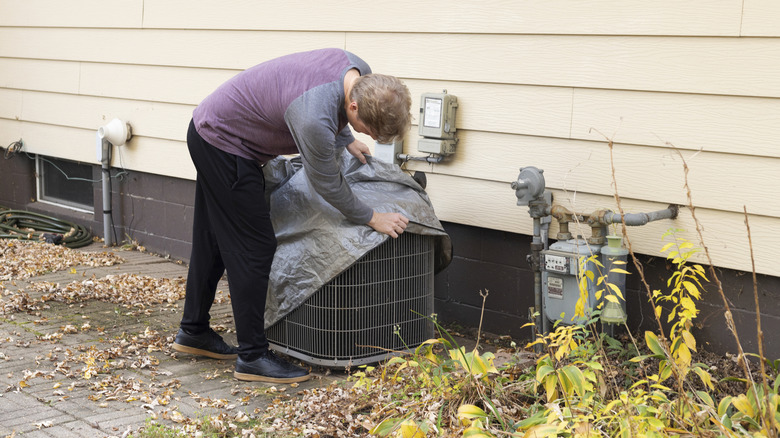
Despite the fact that your AC unit is intentionally designed to withstand all kinds of weather, it can still be damaged by exposure to leafy debris or animals looking for shelter. However, Kuznetsov said that while a properly secured cover can provide some protection, it's not an entirely foolproof method. "The main mistake people make is leaving the unit covered for the entire season, because it can become a nest or shelter for animals," he explained.
Because most of us aren't traipsing along an icy walkway and through a snowy side yard to check on our outdoor units during the winter, the HVAC repair expert said it's common to discover animals during spring maintenance calls. "If you use a cover, it is better to use it during the rainiest or snowiest periods and remove it afterward so the unit can air out," he advised. This will also warn any unwanted inhabitants who planned to rely on a warm and cozy cover for the season that they should seek shelter somewhere else.
Kuznetsov said a properly secured cover can also protect your condenser coils during strong winds. Before installing one, you should make sure your unit is completely free of leaves, twigs, or other debris. "Make sure that there are not any obstructions on blades and it can spin freely," the expert added. Among the most important DIY air conditioner maintenance tasks you can easily handle, doing this quick cleanup can also help you avoid any startup problems when spring arrives.
When to DIY maintenance versus calling an HVAC technician for help
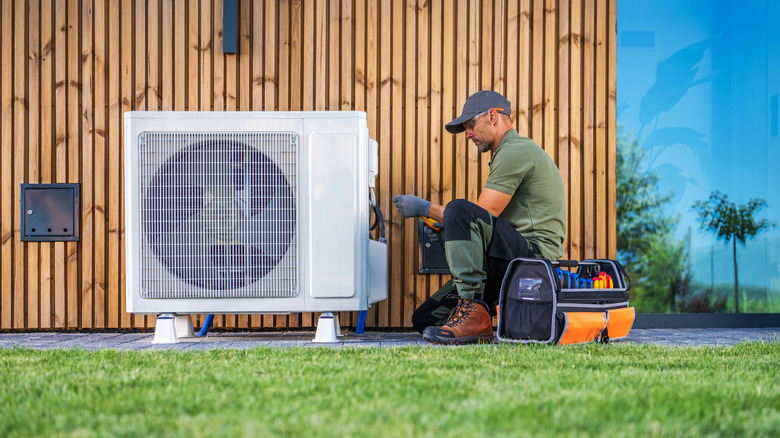
"I've seen more units damaged beyond repair after the family dog used them as a bathroom for years then I've seen ruined by winter weather," Kuznetsov joked. While he acknowledged that there's a lot of essential air conditioner maintenance you can do yourself, like replacing your air filter every three months, he said certain preventative maintenance is best left to the pros.
The expert added, "I would recommend having a technician come and inspect the unit between seasons to make sure that all components are in good shape, capacitors are good, connections are not rusted, fan is good and refrigerant level is fine, evaporator and condenser coils are clean." He said that when your unit is dirty, it can't absorb or spread out heat as well, which significantly reduces energy efficiency. It can also increase your operating costs.
Other than clearing debris from around your unit and temporarily covering it, the most important things you should do before shutting off your AC for the season mostly happen inside your home. Before flipping the thermostat to heat, consider installing weatherstripping or heavy thermal curtains around drafty doors or wobbly windows to keep warm air inside. Or, if you're on a tight budget, it costs nothing to move furniture away from your vents or reverse your ceiling fans to help warm air circulate throughout your home.