

Don't Cover Your Air Conditioner This Winter Until You Know This

We may receive a commission on purchases made from links.
In a world where things seem increasingly priced to move and designed to be replaced in a few years, DIY-minded people might be tempted to try something off label to prolong the lives of their hard-earned possessions. This is one reason folks have started covering their AC's outdoor condensing units during winter to keep them from being damaged by weather and winter debris. Hunker spoke exclusively with Matt Gorbacz, owner of HVAC system cleaning company Clean Air Technologies, about this emerging habit, and he pointed us toward some good reasons not to do it. To be sure, there are a whole checklist of things you should take care of to prepare your home for winter, including HVAC maintenance, but covering it isn't part of the plan.
"I have been working on HVAC systems for a long time," Gorbacz says, "and I've seen what happens when people cover up their AC unit wrong in winter. Honestly, I don't suggest you cover your outdoor AC unit tight with plastic or tarps. This can trap moisture and leave you with rust, corrosion, and even critters nesting in the unit."
His warning doesn't mean that you have the wrong instincts about caring for your AC condenser, though. Seasonal or weather-related things can definitely go wrong with them. Covering the outside unit is just the wrong solution. "If you see damage or hear odd noises when you turn on heating, do call in a professional," Gorbacz explains. "Otherwise, just keep it clear, level, and uncovered so it can dry out on its own. You might mean well by covering it, but most times you end up creating more problems."
What goes wrong when AC units are covered?
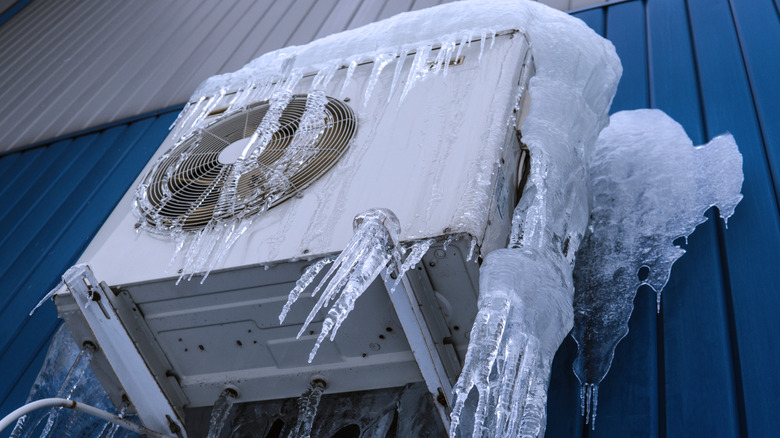
Covering an AC's outdoor condensing unit in winter is, on one level, somewhat reasonable. Here's this large, expensive, open-air electrical device with a fan and fragile metal fins all over the place. It seems like the kind of thing that should be protected from the elements. But Matt Gorbacz tells Hunker that, in shutting out the weather, you're also shutting off some key functions of your HVAC system's compressor.
"HVAC units are made to handle all weather conditions, including rain, snow, and frost," Gorbacz says. But the problem isn't simply that covering a condenser is unnecessary; it can undermine the very reasons those units are designed to be open to the elements. "When you cover them up, it traps moisture, blocks airflow, and damages the system in the long-run," Gorbacz adds.
The results of covering your outdoor AC unit can range from higher power bills to disaster. "You see, the compressor and fan inside the unit rely on consistent airflow to function efficiently," Gorbacz explains. "And when you place a cover over it, it obstructs this necessary airflow and increases strain. This leads to premature wear on the motor, lower efficiency, and an ultimate system failure."
How you can protect your HVAC in winter
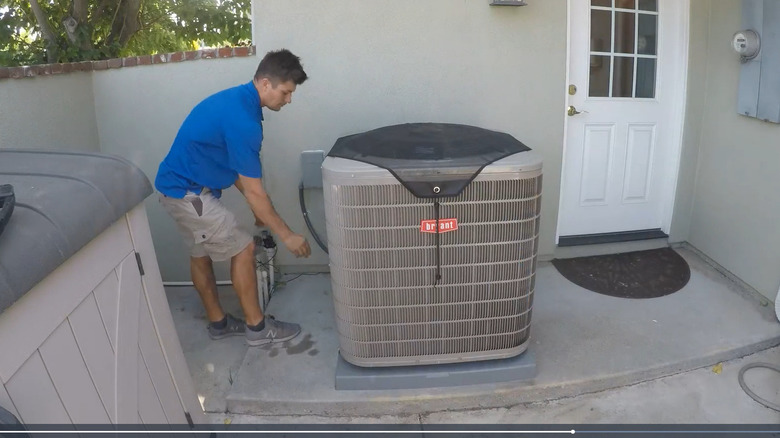
This is not to say that your AC's condenser is impervious to the vagaries of a life outdoors in harsh climates. Speaking to Hunker, Matt Gorbacz points out some useful alternatives to covering the condenser in winter for those who are determined to extend the life of their HVAC system. "What I suggest is, if you want to keep leaves or dirt out, just place a piece of plywood on top or a breathable mesh cover that lets air move," he says.
Products that are purpose built to protect AC units are your first and best line of defense. "I particularly suggest mesh covers to cover the outdoor unit as these covers are designed to protect against leaves, twigs, and debris without blocking airflow," Gorbacz adds. "They ensure the air intake and exhaust pathways are unobstructed. Also, they prevent the unit from becoming a breeding ground for moisture or mold."
Gorbacz favors one particular method of common-sense essential air conditioner maintenance to steel your HVAC against the detritus of fall and winter. "Clean the outdoor unit with a hose and clear out the leaves before winter," he says. "And if you want to cover it up, cover the top only."