

The Pyrex Bowl Sitting In Your Cabinet Could Be Vintage. Here's How To Tell

Grandma's kitchen hand-me-downs aren't just sentimental pieces of cookware. They're potential goldmines. You'll want to consider looking into your heirlooms' authenticity, especially if Granny gifted you bowls with fun shades and playful motifs that could be valuable vintage Pyrex. In order to determine if you're dealing with the real thing or a copycat, there are a few factors to take into consideration. The bowls' colors, patterns, backstamps, condition, and construction will indicate whether or not the items in your cabinet are truly vintage Pyrex.
Colorful bowls are the name of the game when collecting. However, Pyrex's line began in 1915 with thermally resistant clear glass ovenware that many still purchase today. However, the real draw for thrifters is the Pyrex colored opal glass bowls that debuted later in 1945. Since then, the mid-century gem has offered an array of colorways and themed designs, some of which are more valuable than others.
Considering one Pyrex collectible sold for $22,000 in 2023, you'll want to do some investigating into your own collection. If you're dealing with actual Pyrex from years past, the condition will affect the way in which you use it, as some might be better left for display rather than meal prep. Moreover, knowing what you're working with will determine whether or not the piece is something you'd like to resell or keep in the family for your own grandkids, their grandkids, and beyond.
How to spot vintage Pyrex bowls from the fakes
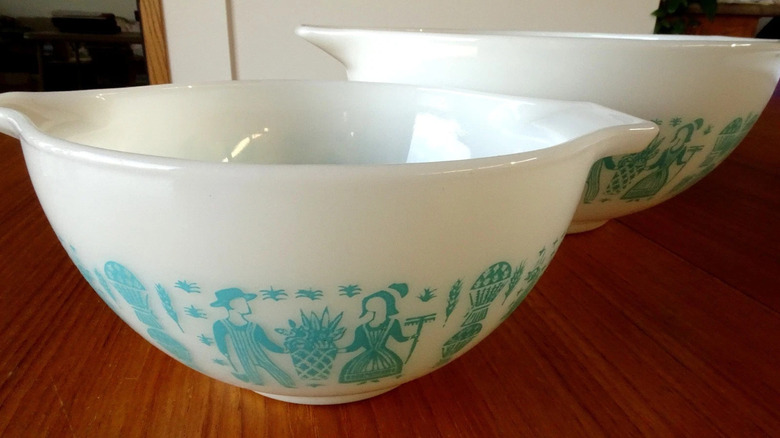
When trying to spot vintage Pyrex bowls, start with a quick flip. Turn your item upside down to inspect the backstamp, which typically sports "PYREX" in capital letters. (Yes, there is a difference between PYREX and Pyrex.) Trademarks evolved throughout decades, and you may notice new details that emerged, including "Made in the USA", inventory numbers, and occasionally, prep instructions like "No broiling." Aside from backstamps, some vintage bowls sport deeper base rings than new pieces and reproductions. Original pieces were not mass-produced with high-tech manufacturing. This means you may come across a few blemishes here and there. Yes, it's a good thing!
Learning the colors and patterns (something The Pyrex Collector shares in great detail) can help you spot a real from a wannabe. For example, spotting a mixing bowl in a chartreuse shade with a wicker pattern should set off alarm bells: This promotional pattern only came as a casserole dish, not a bowl, which is a telltale sign something is off. Colors on older bowls typically sport a matte finish, whereas newer releases look glossy. And vintage pieces are heavier to boot, considering their construction.
Now that you know what constitutes the real thing, keep an eye out for red flags that signal a Pyrex copycat. If the pattern almost looks too perfect, or like a decal, it was likely mass-produced. Barcodes, a "Made in China" backstamp, and pristine packaging likely indicate a reproduction, not an age-old cookware piece you'd find at Grandma's. When in doubt, always consult an expert.