

What Does Club Soda Do To Fire Ants?
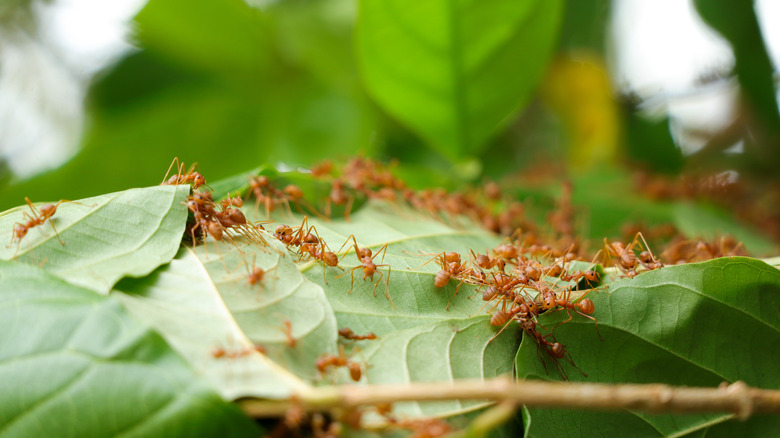
Imagine having an ingredient in your kitchen that can kill fire ants without leaving toxic residue. As such, it won't pollute the environment, harm beneficial insects, or pose a danger to your pets. How perfect is that? In the late 2000s, that's exactly the reputation club soda acquired amongst gardeners and homeowners seeking home remedies to get rid of fire ants. It was believed that if you drenched the ants' nest in club soda, you could exterminate the entire colony within two days, queen included. The reasoning was that the carbon dioxide bubbles would suffocate the invading pests.
Sadly, soda's glorified reputation and exultant role in getting rid of anthills in your yard is unfounded, confirms Scott Svenheim, ACE-certified Hybrid Education Facilitator at Truly Nolen, in his exclusive interview with Hunker. "Pouring club soda in a fire ant mound will do nothing for the fire ants," he tells us. "It will not get to the queen, and although it may disturb the worker ants temporarily, they are resilient and will just rebuild the mound." The only exception? If you manage to drown some ants from an overspill. But given the colony size of fire ants, it wouldn't accomplish much — though you might get some thrills from watching the soda bubble.
Want to remove fire ants from your yard? Try baits
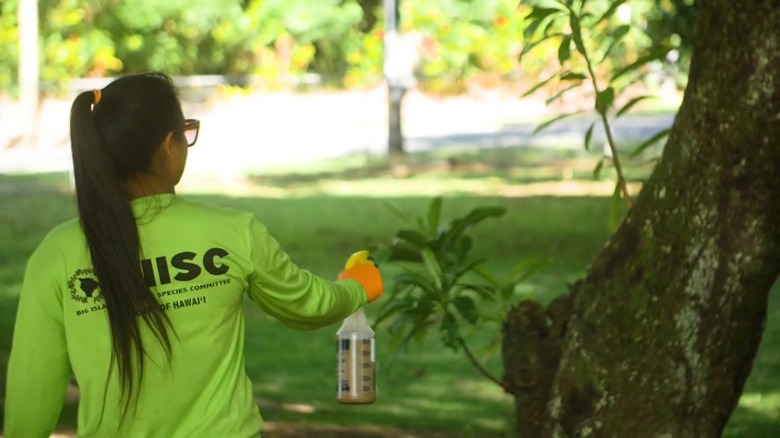
Another terrible piece of news that Svenheim confirmed for us — and you might have to make peace with — is that no DIY home remedies can fully help you eliminate a fire ant infestation. Fire ants are extremely difficult to remove, even with chemicals, and are quick to reinfest the same location — sometimes in even greater numbers if their hunters are eliminated — once you stop control. While you may have some luck with boiling water, you need to be extremely careful about not burning yourself or being stung by distressed ants. Not to mention, it'll kill the surrounding grass and plants.
Having said that, what should you do if you find a fire ant nest in your yard? Turn to baits — they're safe, inexpensive, and generally quite effective. "There are products, such as long-lasting baits you can purchase from good home improvement or hardware stores specifically for fire ants, that work well," explains Svenheim. Often used as part of a two-step method, baits are broadcast a couple of times across the yard. They're slow to act to give enough time for worker ants to move them deep into the colony and help take down the queen. Applied in a timely manner, they prevent new infestations from growing bigger. Pest control professionals complement baits with spot treatments for individual mounds that may have been missed or turned up later.
Can you prevent fire ants from moving into your lawn?
While a few deem fire ants beneficial since they feed on bad bugs, including chinch bugs, roaches, fleas, and ticks, the consensus is they aren't welcome. Stepping into loose soil mounds and being bitten by pesky insects — repeatedly — causes inflammation and may even be fatal in extremely rare cases. It's probably worse if they make it inside your home and bother toddlers and pets. Given these risks, prevention surely sounds better than looking for a cure afterward. Unfortunately, Svenheim tells us, "There is no effective prevention. They can easily swarm in from neighboring areas and yards and start a colony again, and there is no effective way to prevent that." The only way forward, if you live in heavily infested areas or have had them before, is regular monitoring. "Thorough and regular checking and inspections are the best way," he acknowledges.
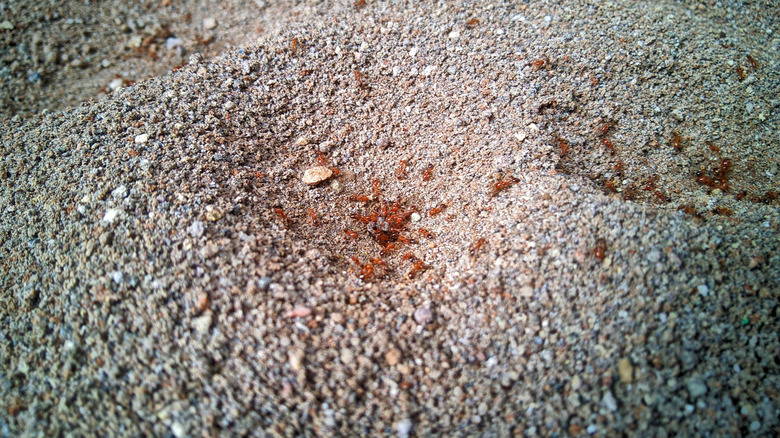
Among the major infestation signs to look out for, scan the turf or garden for fluffed-up, earthen mounds without visible openings. They mostly appear a couple of days after precipitation, and if you can safely shovel the soil, you may find white eggs and larvae inside. Our pest control expert also suggests monitoring for "trailing ants," though he cautions, "Without proper identification by a trained expert, they could be other ants and not fire ants." To counter that, it's best to call in professionals who might assist with proper identification and control.