

Warm Up A Freezing Garage Floor In The Winter With An Energy-Efficient Solution
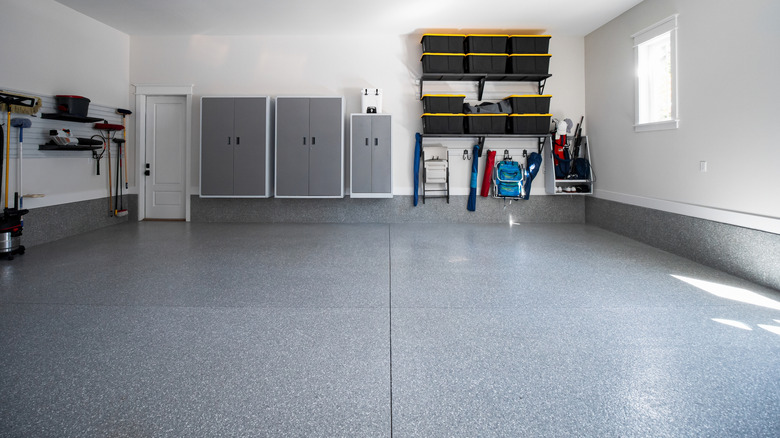
If you live in a cold climate, chances are you'd benefit from having heated garage floors. Not only do they keep your garage at a comfortable temperature, they're also useful for preventing your tools from rusting, your paint cans from freezing, and snow from turning to ice on your garage floor.
Should you be looking for a highly energy-efficient solution, consider a radiant floor heating system for your garage. Electric radiant heating is made of thin electric cables or mats that sit underneath the concrete, while hydronic radiant heating runs tubes of hot water underneath your garage floor. Like your HVAC system, both options continue to heat your garage until the space reaches whatever temperature you set it to; but unlike with other heating sources, the concrete floor of your garage will trap the heat and continue to release it into the room over time. This means your radiant floor heating doesn't need to be working constantly to keep your garage at a stable temperature, reducing the amount of energy it uses overall.
Over time, a radiant heating system can save you money on energy bills. Radiant Professionals Alliance estimates that homeowners can save up to 30% more energy by using radiant heating systems compared to conventional ones. If you're someone who frequently uses their garage during winter, a radiant heating system could be a valuable addition to your home.
What to know before installing radiant heated garage floors
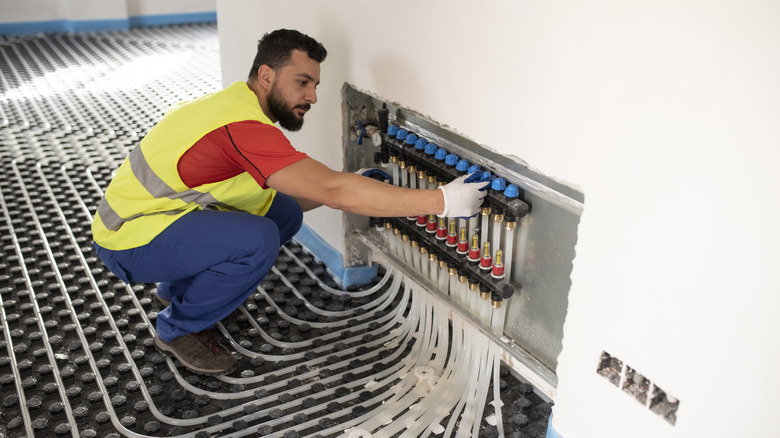
Radiant floor heating is very effective, but it has its downsides. For starters, it can be costly. While you might make up much of the price difference in energy savings, you'll still need to commit to an initial investment. Electric radiant floor heating can cost up to $25 per foot, including both materials and installation, while hydronic radiant floor heating can go up to $30 per foot on average. Both systems require working with a professional — hydronic systems will also need a boiler or heat pump if you don't already have one.
If your garage is already fully built, installing a radiant heating system becomes a little more complicated. For one, you could rip out your current garage floor, add the heating system, and pour new concrete over it — but that's understandably a hassle most homeowners don't want to deal with. Generally, the better option is to install the radiant system over your existing floor, then pour even more new concrete over that. The main downside of this method, of course, is that your garage will lose some of its height, as the floor will be raised by at least half an inch. Its tricky installation for existing garages is one of the main downsides of radiant heating systems. But if you're seriously interested in reducing the amount of energy your garage consumes, it could still be worth looking into. And if you're interested in installing radiant heating throughout more of your home, here's everything homeowners need to know about radiant heating.