

Cover Tin Cans With Sticks To Make A Rustic Bird Feeder For Your Yard
We may receive a commission on purchases made from links.
Bird feeders come in every shape and size you can imagine. Some even have built-in cameras that allow you to keep an eye on the avian visitors who stop by. But if you want to appeal to the birds in your backyard, you don't always need fancy equipment or pricey technology. Chances are, you already have the necessary supplies to attract them right at home. To add a rustic touch to your bird feeder collection, all you'll need is some aluminum cans from the kitchen and sticks from the backyard.
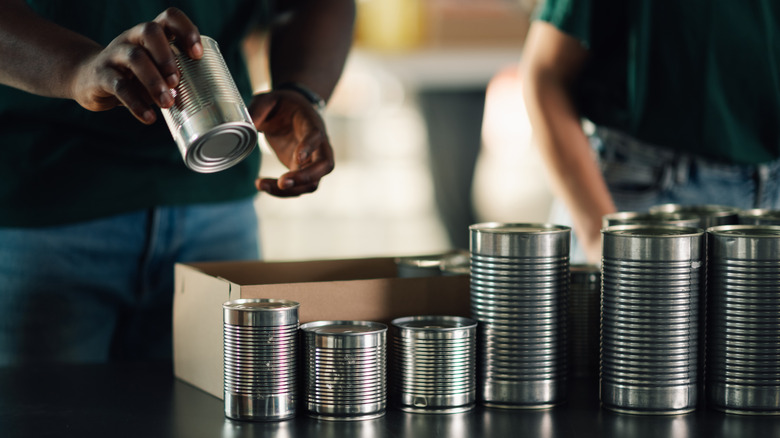
Not only will your bird visitors have a new space to perch, it's also a way to sustainably upcycle tin cans. If the cans have sharp edges from the can opener, use a pair of pliers or the curved side of a spoon to smooth down any pokey areas. The birds probably won't enjoy the taste of canned vegetables or soup, so be sure to peel the label and scrub the cans clean.
This feeder is meant to blend in with your foliage, and thin sticks and twigs are probably all around your yard already. A supply of old sticks without leaves will work best because they can easily be broken into smaller, clean pieces. Lastly, you'll need weatherproof super glue, such as Gorilla Max Strength Construction Adhesive, to prevent the feeder from falling apart. A Perky Pet Hanging Chain and some rope will be the final step to hang the feeder.
Making this bird feeder feel like home
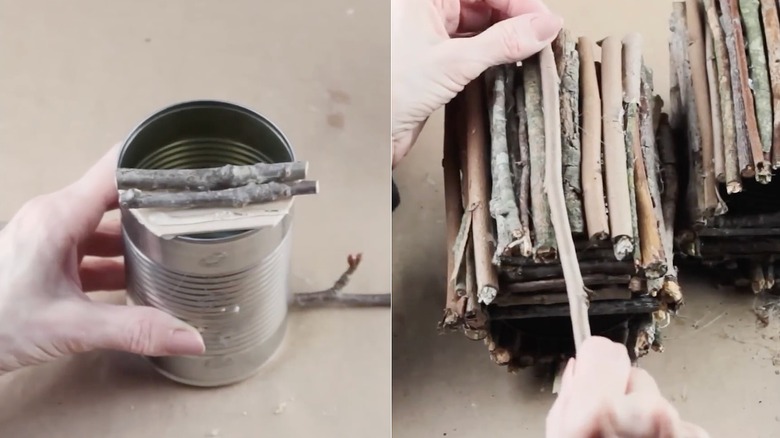
A bird feeder isn't useful if the seeds fall out. Start by measuring a large craft stick to the width of the lower half of the can's opening, and secure it with glue. Then, cut your twigs to the same length and glue them horizontally to cover the craft stick's surface. (If you don't have craft sticks on hand, skip it and just use the tree sticks.) Laying them in the same direction, cover the bottom of the can with similarly sized pieces. This project is meant to blend in with the outdoors, so don't stress about making it look completely uniform.
Cut the remaining sticks roughly to the can's height, and glue them all the way around the side of the can. After the first layer, you might see some of the aluminum peeking through, so continue adding sticks if you prefer the feeder to be completely covered. Then, make a perch by gluing a stick underneath the can. Repeat these steps for all three cans.
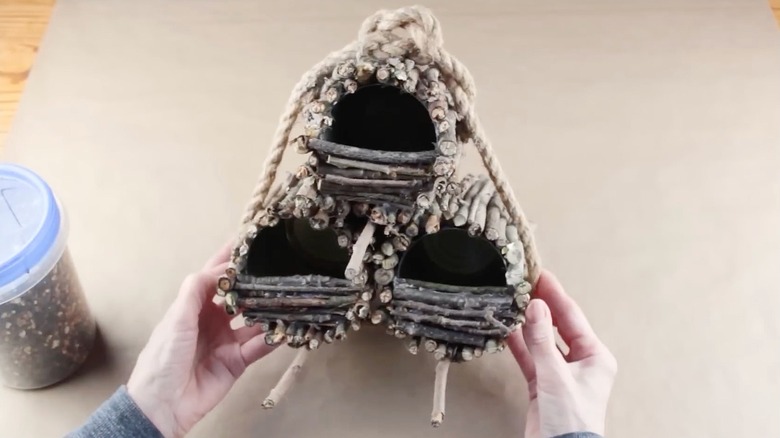
This feeder takes on a pyramid shape, which will help prevent crowding given that the cans are relatively small. Generously glue two of the cans side-by-side and the final can on top between the first two. You can either stop here and display your feeder on a table, or hang it on a tree. If you choose the latter, glue a rope around the structure and hook the chain.
Keeping the birds happy and healthy with the right seeds
Birds tend to stay away from low-quality food patches, so they'll avoid a feeder with old, low-quality, and moldy seeds. When choosing your bird buffet, not just any seed will do. In the fall and winter, birds are stocking up on high-protein and high-fat foods, which makes seeds with a mixture of millet, peanuts, black-oil sunflower seeds, Nyjer seed, and cracked corn most beneficial. Spring is nesting season, so in lieu of birdseed, you could also incorporate nesting supplies such as twigs, moss, cottontail fluff, and other natural materials. Birds mostly rely on an insect diet in the summer to feed their chicks, but if you do leave out seeds, make sure they stay dry in the hot humidity.
Keep your feeder at least five feet off the ground and clean it every few weeks by wiping down the can's interior with a paper towel. If hawks are native to your area, you might want to implement some predator-deterring tips for more protection. Having a variety of feeder types helps diversify your yard, so once you've created this stick-themed perch, you may want to try others made from repurposed tomato cages or old glass jars.