

Boomers Don't Like These Modern Outdoor Trends, And It's Clear Why
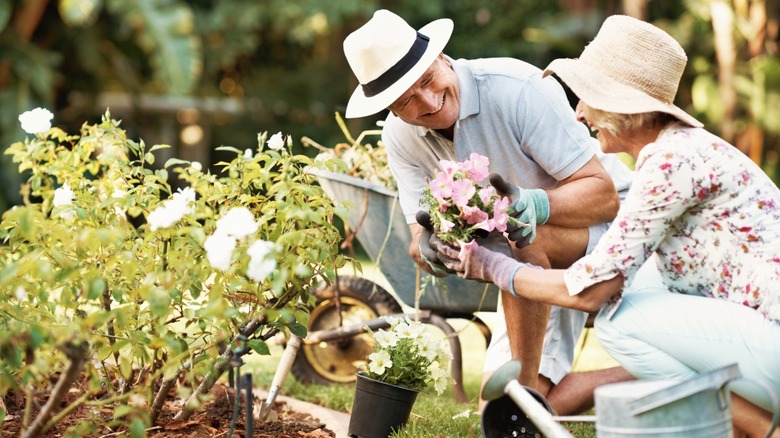
Until recently, the quintessential American yard demanded a neatly manicured lawn, tiny foundation shrubs, and colorful flowers lining the front walkway. Perfect landscaping has long been a symbol of wealth and leisure, and that aesthetic became a must-have for the middle class during the emergence of post-World War II suburbia. While today's younger homeowners are embracing lower-maintenance, synthetic, or naturalistic lawns, Brad Holley, Design Director at Outdoor Dynamics, finds that these modern landscaping trends go against everything boomers were taught their yards should be.
"Ignoring a small outlier minority, it's safe to say that Baby Boomers were really the last generation to almost universally adhere to Downing's 'National Landscape Aesthetic'," Holley told Hunker during an exclusive interview. He's referring to Andrew Jackson Downing, a 19th-century American horticulturist widely regarded as one of the fathers of suburban landscape design. The emergence of public parks and master-planned suburban communities are rooted in Downing's treatises on gardening, and according to Holley, older generations have been immersed in his ideas most (if not all) of their lives.
"If you've spent decades with an understanding that a certain style is considered 'normal,' then anything that comes along and challenges your idea of normal is probably going to feel ... strange," Holley explained. Attributing psychological phenomena ranging from herd mentality to normative social influence, he added that boomers approach landscaping with the goal of abiding by the status quo. "If you look at things through this lens, you can understand why they would balk at newer trends like synthetic turf, non-mulch alternative ground covers, minimalism, Xeriscaping, and especially [the] unruly style of 'Re-Wilding'."
Native landscaping looks wild and messy to older generations
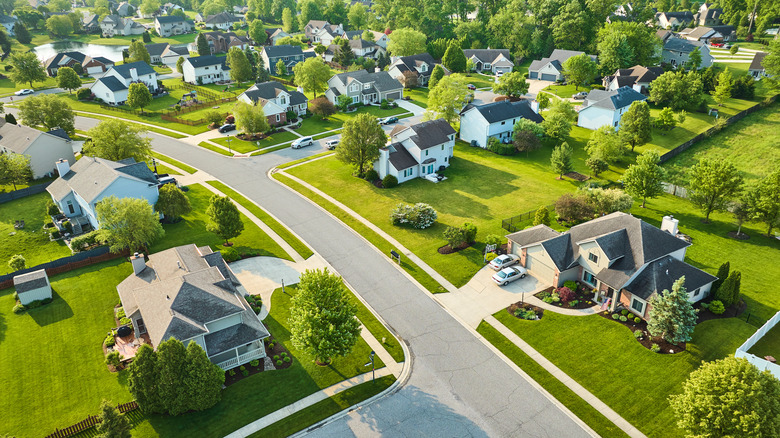
Boomers typically equate good landscaping with neatness. "Older generations generally like to stick to Downing's original playbook (whether they know they're doing that or not)," Brad Holley explained. The landscape design expert said this equates to a clear set of criteria, like keeping grass mowed to a short height, using shrubs to conceal an unsightly foundation, and maintaining a stately tree on the front lawn.
In Holley's view, this approach to landscaping has been related to status and perception since the time of royal and noble classes in the old world, though it became more accessible as economies shifted to capitalism. "Homes slowly got bigger, luxuries became a little more common, and the age-old race for status continued, only now, there were more participants than ever," he noted. And that sentiment persisted through to the 20th-century suburban expansion. "You needed to make sure everyone around you knew that you were living the good life — that you were part of the club. And this meant that in addition to having a new, American-made car in your driveway ... you also needed to have an orderly, 'American' yard."
It only makes sense, then, that boomers would flatly reject millennial and Gen Z preferences for more unmanicured looks that come from designing native gardens or re-wilding the landscape. While native landscaping can still be relatively orderly and visually balanced, it eschews the water- and chemical-heavy lawn care habits many boomers have cultivated over the decades. Meanwhile, re-wilding goes a step further to let nature take over entirely. "Re-wilding almost insists on removing as much of the human influence as possible," said Holley. "It means no more pristine, weed-free, emerald green lawn. And it certainly means no more cutting it down."
Boomers don't need to save time with artificial landscaping
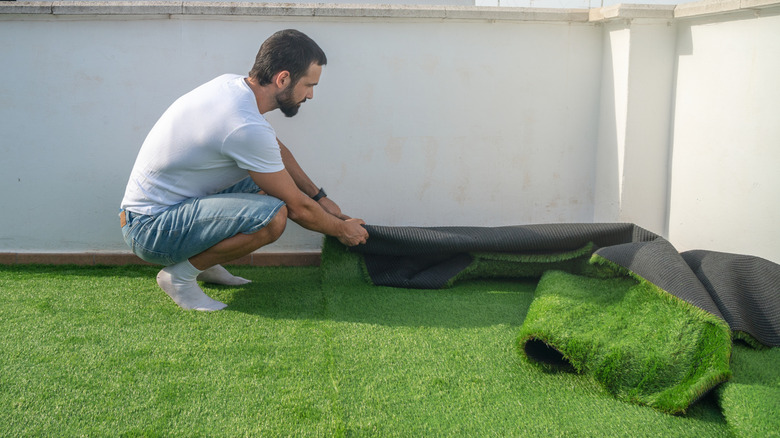
According to Brad Holley, the time-saving appeal of artificial plants and the attempt to soothe anxiety over decades of resource-intensive environmental damage are also causing generational clashes. The design expert said that, while now-retired boomers have plenty of opportunities to tackle time-intensive tasks, stressed-out millennials need lower-maintenance landscaping solutions. "This is the singular struggle that has given rise to the concept of synthetic plants. From synthetic turf, synthetic "green walls", and even decorative, synthetic potted plants," Holley stated, pointing to a priority for convenience above all else.
That trend contrasts sharply with the next generation, Gen Zers, who the design expert finds to be shouldering a sense of stewardship. Holly pointed out that many dislike the wasteful petroleum and water dedicated to achieving perfectly green lawns just as much as boomers shudder at the thought of installing synthetic turf. He explained, "This is why you'll find younger generations like Gen Z (and beyond) embracing ecologically friendly practices like 'Native' landscaping, as well as the philosophy of its more unruly, free-spirited younger brother, 'Re-Wilding'."
Despite these differences, Holley said each age group still shares the same core priorities. "You'll find that every generation wants to maintain a sense of care and curb appeal," he explained. Even though boomers and younger homeowners may be sharply divided when it comes to modern outdoor trends, most would agree that the ultimate goal remains having an attractive and welcoming entryway, a sense of cleanliness and care that protects property values, and a maintenance routine that feels manageable.