

Don't Toss Empty Milk Jugs: A Creative Way To Make A Cute Bird Feeder
There's something about mushrooms that gives a garden the feel of an enchanted forest, especially when they're the classic red-and-white toadstools you might find in a storybook. And, with a little creativity, craft supplies, and milk containers, you can add a little touch of the forest to your outdoor space while giving your visiting feathered friends somewhere to snack.
TikTok creator Sunny from @northwoodsfolk shares a clever and resourceful way to make a mushroom-shaped bird feeder using little more than the vessels from yesterday's bowl of cereal: A rectangular milk carton for the stalk of the mushroom and the bottom of a plastic milk jug to use as the cap. The mushroom cap also slides upward for easy filling without having to disassemble it every time.
To make your own, you'll need an empty milk carton, a plastic milk jug, a utility knife or scissors, paint, paintbrushes, and jute rope or something similar to hang it with. When your craft is done, hang it in the best spot for a bird feeder. This is about 10 to 12 feet away from a thick shrub or other dense greenery, so there's a quick spot for birds to hide without a nearby place for predators to do the same. You could even pair your new mushroom feeder with an upcycled hanging birdbath to give your backyard birds an all-inclusive retreat.
How to create a DIY mushroom bird feeder from milk cartons
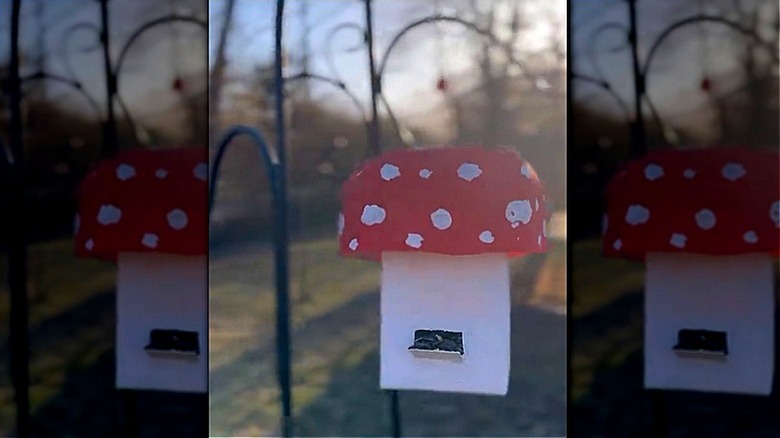
To recreate Sunny's project, start by washing both milk containers thoroughly and allowing them to dry. First, cut the bottom off the plastic jug to make the mushroom cap. Then, cut off the top of the rectangular milk carton. Then, cut an opening into the side of the carton. Cut a small rectangle, leaving the longer, bottom side of the rectangle attached to the container, and pulling it down to make an opening. The attached bit of carton serves as a perch for the birds to stand on while they eat. Be sure to leave enough room below the openings to hold the birdseed, and trim away any sharp or jagged edges. Now, paint the feeder however you like, avoiding any areas that will come into contact with the seed. Once the paint has fully dried, thread the jute rope through both pieces and secure it so you can hang the feeder, making sure the cap can still slide up for refilling.
Before adding birdseed, poke a few small drainage holes in the bottom of the carton to prevent water from collecting inside and causing the seed to spoil. You'll also need to clean it using water and a small amount of bleach at least every two weeks to prevent mold, spoiled seeds, and accumulated droppings from making birds sick. Keep in mind that cardboard milk cartons aren't made to withstand prolonged exposure to the elements, so if your feeder starts to soften, warp or show signs of mold, dispose of it and make a new one. Lastly, consider adding a few bird-friendly plants to your landscape to go all-in on an outdoor space that's truly for the birds.