

The Gorgeous '50s Dishware To Look Out For At Thrift Stores
We may receive a commission on purchases made from links.
With a crash, one of your favorite ceramic or porcelain plates falls to the floor and shatters into what seems like a thousand pieces. It's heartbreaking when a piece of dishware cracks, chips, or smashes, especially if it's a valuable vintage dinnerware piece or one of your personal faves. While you can keep those pretty, breakable plates and dishes for display, for everyday use, you may want to turn to Melmac, a type of dinnerware popular in the 1950s and known for its durability.
Melamine, the material behind Melmac dishware, was created in Germany in the 1830s and gained popularity in the mid-20th century, thanks to its sturdiness and the fact that it was dishwasher-safe. Pieces made from Melmac included plates, bowls, serving ware, and basically anything you might want to use to prepare and serve food. The dishware was available in a wide range of colors and often featured patterns, such as floral motifs or vegetables.
While cute and colorful, Melmac dishes weren't perfect. Since they are made from melamine, they aren't safe for the microwave. Also, while difficult to break, the dishware was prone to scratches and easily stained. For that reason, it fell out of fashion in the 1970s. That said, it's pretty easy to track down sets of Melmac dishware, usually for a good price. A dinnerware set recently sold for $25 and a set of eight bowls recently went for $10.
Setting the table with Melmac
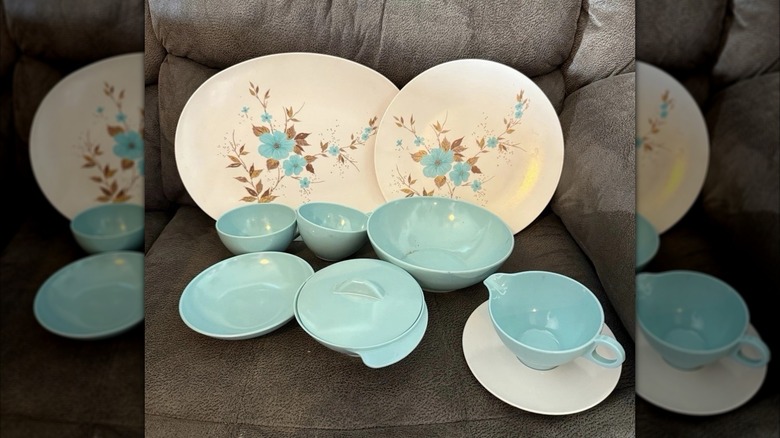
One thing to know about Melmac dinnerware is that it's not a brand like other popular mid-century dishware such as Pyrex, CorningWare, and other valuable vintage kitchenware brands. Instead, "Melmac" refers a melamine powder from American Cyanamid. So, a brand could put the "Melmac" name on their dishes as long as they used the material from American Cyanamid. A few of the brands that produced Melmac dishware included Royalon, Boontonware, and Texasware — not exactly household names.
If you collect vintage kitchenware, Melmac will look right at home on your display shelves, alongside blossom pink vintage Pyrex and vintage Libbey glassware. It also deserves a spot on your dinner table, as long as you keep a few things in mind. First, be mindful of heat near melamine — remember, no microwave. To prevent staining, thoroughly rinse the dishware right after use, being sure to remove any traces of sauce and other food. Melmac can go in the dishwasher, but should you choose to wash it by hand, use gentle cleaning products, like a soft sponge, rather than abrasive materials, to avoid scratches. Also, skip using steak knives or trying to cut anything on Melmac. The blade can damage the surface.