

Ditch Traditional Hardwood Mulch: This Alternative Holds Up In Flower Beds

It's one of the rare pieces of gardening advice that's true year-round. Whether it's in the heat of summer, just as you plant your beds in spring, or when you prep your garden for winter's cold, mulch is a smart addition to your flowerpots and garden. You've got lots of options for mulching, too, from pine straw to gravel to different wood mulches. Cypress mulch is frequently recommended for flower beds in particular. Sara Bendrick, founder of Sarita Landscapes and a professional landscape contractor and designer, spoke exclusively to Hunker about why that is.
Cypress mulch "comes mainly from the bald cypress (Taxodium distichum) tree, which can grow in standing water," Bendrick explained. "Although it's technically a softwood, it shares a lot of characteristics of a hardwood." She continued, "Because it is dense and fibrous, it is a lot hardier as a mulch option compared to other choices on the market. It stays in place better, too." Used in garden beds, Bendrick says, "It holds up great, and you can expect it to last two to three years because the heartwood contains natural chemicals that resist rotting." This is a major bonus, as many other organic mulches need to be refreshed annually.
Why use cypress mulch in your flower beds
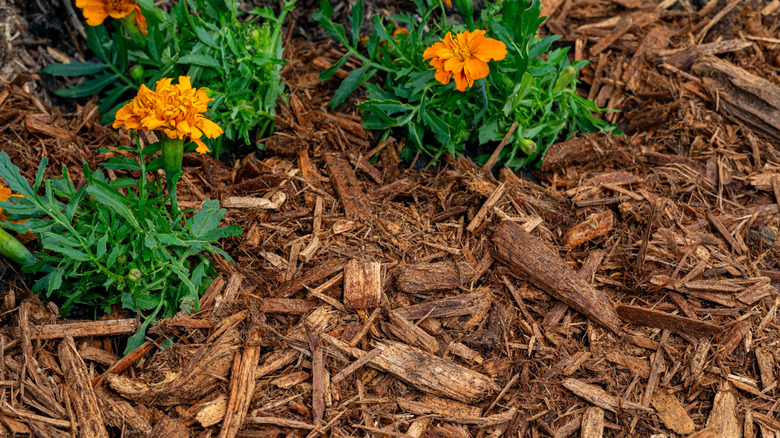
When it comes to the benefits of mulch, cypress ticks many boxes. It does a terrific job of retaining moisture, ensuring your flowers have the water they need to stay perky and beautiful, even on the hottest days. Specifically, cypress heartwood mulch contains cypressene, an oil that helps repel termites and other pests, including fungi. Cypress mulch's density also makes it an effective weed barrier — the mulch keeps sunlight from reaching the soil beneath, so weed seeds can't germinate and sprout.
While many mulches have a usable life of one to two years, cypress mulch can last for up to three years. And unless you're looking for more permanent, non-organic mulches like gravel, that's plenty of time, according to Sara Bendrick. "Mulches are meant to break down after a while to help add nutrients and organic matter to the soil," she says, adding that it's "a sign of a healthy garden." For that reason, don't worry about extending cypress mulch beyond those two to three years.
There's an additional benefit to cypress mulch's density. "Cypress mulch is denser and heavier than normal mulch, so it stays in place better, even on a slope," Bendrick notes. This is a significant perk if you've been wondering how to keep your mulch in place on an incline.
Downsides of using cypress mulch
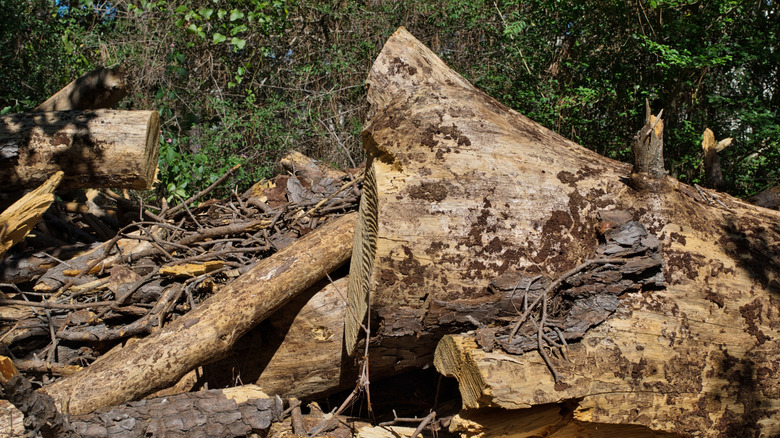
Nothing is perfect, and that includes cypress mulch. Sara Bendrick notes three potential downsides to using the mulch in your flower beds. For one, if the mulch "completely dries out, it can become hydrophobic, meaning it will repel water," she explains. "If you're having a very hot season, with low humidity, hose it down occasionally."
A bigger potential downside to cypress mulch is its sustainability, or lack thereof. Overharvesting is a concern, "especially in Florida and Louisiana, as the tree is a slow-growing native tree to those regions," Bendrick explains. Environmental concerns about cypress mulch are the topic of heated debate, with some saying you should skip cypress mulch entirely, as there are many other options available, including those that let you say goodbye to traditional mulch.
However, if you like cypress mulch's good looks and benefits, rather than skip it, you can look for products that are sustainably harvested, such as those that are certified by the Forest Stewardship Council, a non-profit that sets standards for responsible forest management. Another thing to look for is "plantation grown" cypress mulch. Of course, this all assumes you can find cypress mulch in your area. According to Bendrick, "the product isn't available everywhere," making this another possible downside. Ultimately, cypress mulch can be a great addition to your flower bed, provided you can find a responsibly sourced option in your area.