

What Does Vinegar Do To Stainless Steel?
Vinegar cleaning hacks are everywhere now, and it has become a go-to cleaner in many homes. So it's natural to reach for it when your stainless steel dinnerware, countertops, or appliances sport unsightly stains, get covered in limescale, or are streaked with water spots. But what does cleaning vinegar do to stainless steel? The answer depends entirely on how you use it, as it effectively cleans in some instances and can damage appliances in others.
To elaborate, if you dilute it and then apply it briefly to dissolve mineral deposits and grime on stainless steel, it'll work without causing much headache. But undiluted vinegar left on for a long time can damage the layer that protects the metal, leaving the surface dull, reducing its shine, and making it more prone to rust. Not to mention, it can lead to pitting over time. However, if you're not yet ready to turn to chemical cleaners, a few habits can keep vinegar working for you instead of against you, whether you're tackling water spots or a grimy sink.
How to use vinegar safely on stainless steel

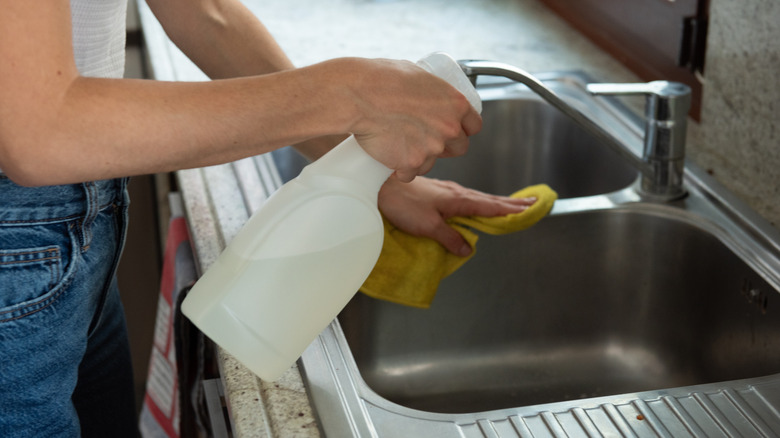
When using vinegar on stainless steel, the method matters more than the product. Mix vinegar with water in a 1:1 ratio, pour the solution into a spray bottle, and spritz it on the affected areas. Now, rub it in with a soft cloth, moving along the grain of steel, to remove greasy residue. Just don't let it linger on any surface; wipe it immediately to avoid damaging the surface underneath.
This solution is safe to use on the stainless steel surfaces of your kitchen appliances, as well as any plastic and glass parts. And if you have a hard water supply, you might see scale build up on your stainless steel cutlery and utensils over time. To eliminate it, scrub them with this diluted vinegar solution. The same goes for sinks that develop calcium deposits. The method is a bit different, though. Instead of spraying the vinegar-water solution on your sink, dampen a clean microfiber cloth and use it to scrub away the stains. Once done, rinse and dry your sink as you normally would.
That being said, vinegar isn't right for every part of your kitchen. To elaborate, avoid using vinegar on the finish of your faucet to avoid damaging it. However, if vinegar has already led to small, irregular pits, dull patches, or light rust, remember you can clean stainless steel with baking soda: Simply mix equal parts baking soda and water.