

Easily Upcycle A Broken Vase Into A Unique Garden Planter
Ceramic vases are beautiful, weighty, and perfect for giving your flowers an elegant home. However, they can also be fragile, leading to cracks and breaks. In the worst cases, one clumsy move sends your vase crashing to the floor. Luckily, just because it's broken doesn't mean it can't be used again. With some creativity, you can give fragmented vases new life, all without spending hours gluing the pieces together. Instead, they can serve as repurposed planters for your outdoor greenery and flowers.
To recreate this project, you'll want to work with a ceramic or clay variety. (Skip broken glass vases as the sharp edges can cause injuries.) If you have a vase that has a crack, cover the area with a towel and gently hit the edge with a hammer for a clean break. You can customize the look to your liking, especially if it's a larger vase. Just make sure you wear gloves and eyewear to protect yourself.
A whimsical space for your sprouts and fairy gardens
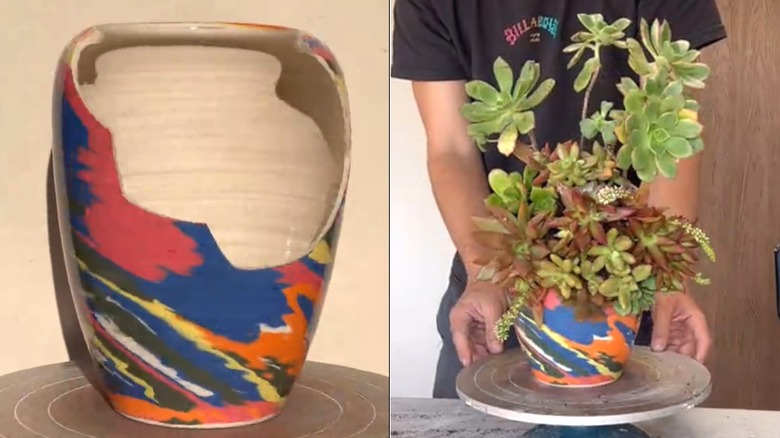
It's important that your new planter has an intact base with at least a few inches of height so that soil doesn't spill everywhere. Flower vases typically don't have drainage holes, so you'll want to use a masonry drill to make a hole in the bottom's center. Don't worry if you don't have power tools! You could also line the vase with about an inch of pebbles to create drainage. Sticks at the bottom work similarly, but they're a lighter filler that will make large vases easier to move later.
With a large portion of the vase wall missing, that U-shape creates space to display plants and decor on a slope for more visibility. Fill the bottom of the planter with soil (and the pebbles if you need drainage). This lower, front part doesn't have as much depth for root spreading. So, it may be a good idea to put tiny seedlings or air plants in this shallow end. Then, slowly work your way up the back wall.
Final touches for your trash-turned-garden-treasure
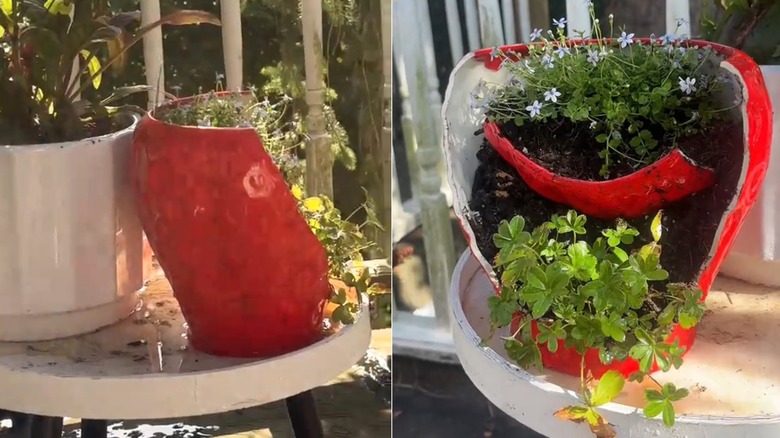
Get creative as you're setting up your unique plant display. If you have the pieces that have broken off the vase, you can use them as supports or dividers. Add decently sized shards horizontally to create layers, then surround them with more soil. These can also be used to divide plantings. For example, you could create a level to house flowers at the top, and fill the bottom compartment with greenery. This DIY is an ideal setting for a discreet fairy garden, layered succulent exhibit, or another clever broken pot idea. Fairy gardens require some tiny furniture and decor, but you can also use tiny vase shards creatively as a floor and stairs for your mythical visitors.
When you're working with a smaller tabletop vase, there probably isn't much room for deeply rooted plants, especially with a partial wall, so opt for shallow-rooted plants like lavender and hydrangeas. Hanging plants like string of pearls and pothos will also add dimension when they cascade downward as they grow. It's also not necessary to glaze your vase before adding plants. Unglazed, clay vases are porous and soak up water, while glazed vases retain moisture. Both are fine for plants, but you'll just probably need to water plants in an unglazed vase more often and less often in a glazed one.