

Broken Plant Pots? 13 Clever Ideas To Turn Them Into Cute Garden Decor
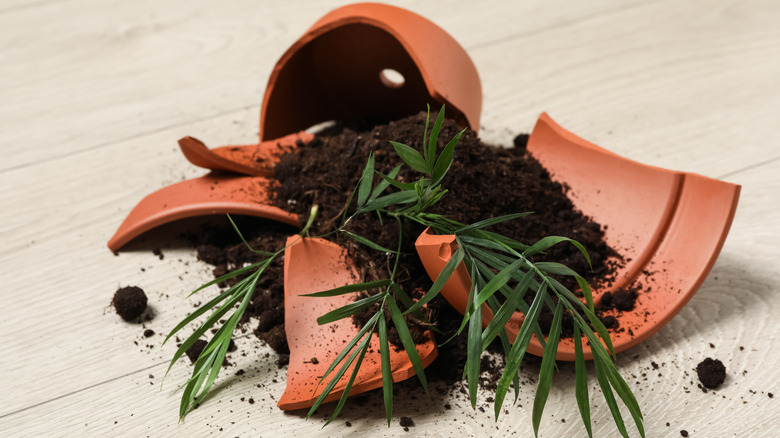
Being a gardener is a constant lesson in learning to let go of the reins a little. Despite all your best efforts, you can't seem to keep deer out of your garden, you planted all your baby lettuces a week before a surprise frost, and you seem to be breaking pots and planters at a rate that seems above the norm! While you may not be able to save the lettuce, those broken pots can be transformed into adorable (and functional) garden decor.
Rather than tossing them or hiding them in your garden's dark corner of shame, there are loads of ways to repurpose damaged pots. Plastic pots can be converted to water halos for thirsty plants, transformed into bee motels, or used as a handy twine dispenser. Broken terra cotta plants can turn into a tiny fairy homes, statement art pieces, or tiered succulent gardens. You can even help out your favorite garden critters by making toad abodes and pollinator pools, or beautify your own habitat with a stylish, natural walkway.
Make a mini fairy garden
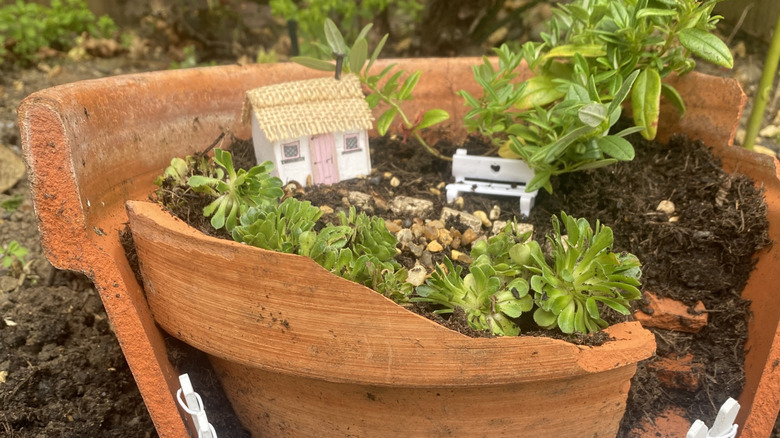
If your garden is lacking a miniature fairy garden, you're going to want to amend that as quickly as possible. Start with the broken terra cotta pot you've had lying around for two seasons — the one missing half of its side. Fill it with soil, perhaps some small plants, a few succulents, or even make an instant bonsai tree if you're feeling ambitious. Next, raid Dollar Tree's garden section for miniature figurines to set the scene. We're talking gnome houses, tiny fairies, and toadstool mushrooms! After making one, you'll want to make a dozen more!
Let plants overflow
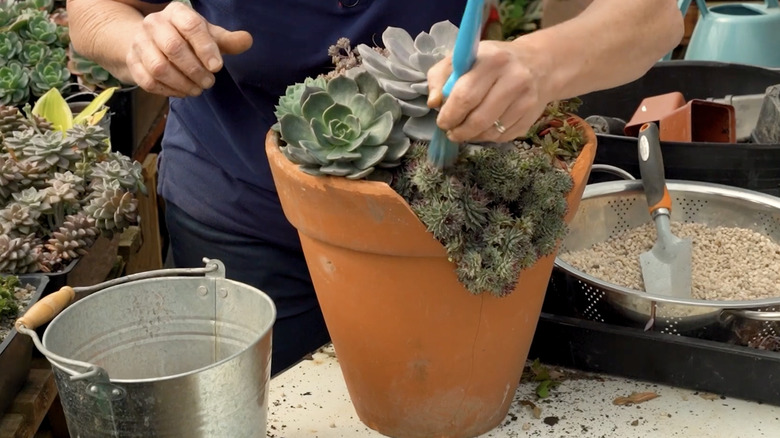
If you've got a broken pot that would ordinarily be a major cause of soil spillage, it's time to call in the succulents. While most plants look uncomfortable in a pot with a massive missing shard, these types of broken pots can give succulents and cacti a chance to show off. Fill with soil up to the break, then arrange succulents to sit inside the crack, filling it with more soil and more plants as you go. Alternatively, use the natural slope for plants like petunias or creeping jenny to spill out and over.
Make plant halos
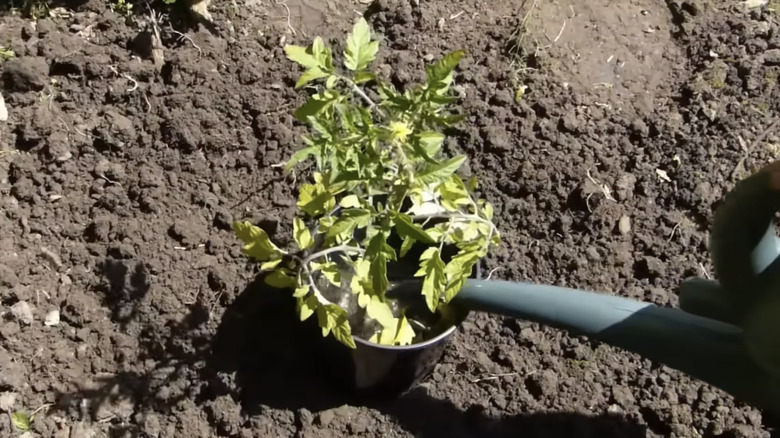
For plants needing a lot of water, use broken plastic pots to create a halo that surrounds the base of the plant. This ensures that water doesn't run off, but rather goes straight down to the roots of the intended plant. To pull this off, simply cut off the bottom of the plastic pot, place the remaining ring around the plant in question, and push it an inch or two into the soil. As you water, stay inside the ring, and not a drop of water will go to waste.
Create a pathway
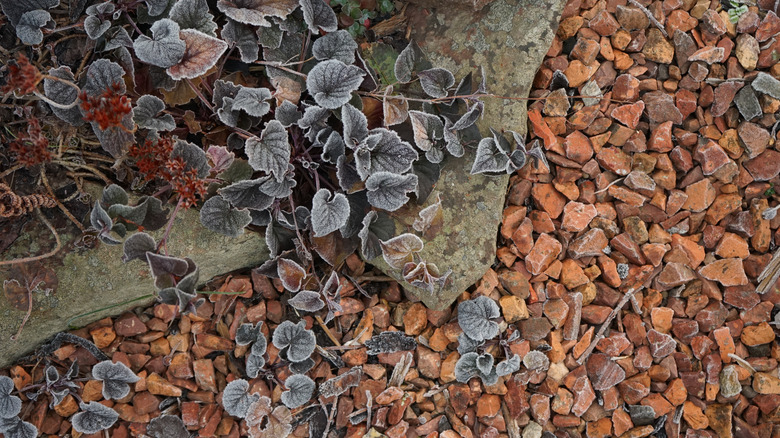
If you've accumulated a completely unreasonable volume of terra cotta pot shards, consider turning them into an artsy natural path in your garden. With smaller, more pulverized pieces, pour them over a leveled path the same way you would gravel. Voila! An immediately finished, inexpensive walkway. If you have larger shards, lay them down flat, arranging them how you like, and press them (sharp sides down) into the soil. You can fill the gaps with small rocks or gravel, or leave the soil to its own, now somewhat flashier, devices.
Make a tiered succulent garden
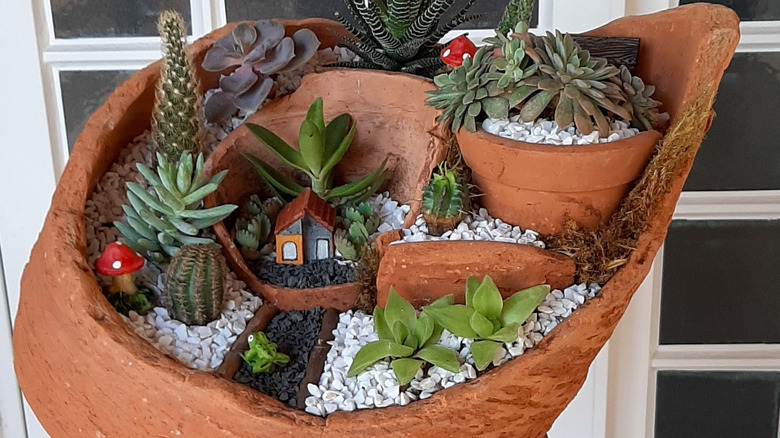
If you have broken terra cotta pots in a variety of shapes and sizes, use them to create a layered rock garden for succulents and cacti. Situate smaller pots inside the larger ones in ascending order, using cacti and succulent potting mix in between the layers to create height and hold the shape. Fill nooks and crannies with succulents and cacti of varying colors, shapes, and sizes to create an enviable desert landscape design. If you have one broken pot, use the shards as dividers and containers to create that same layered effect.
Create pollinator pools
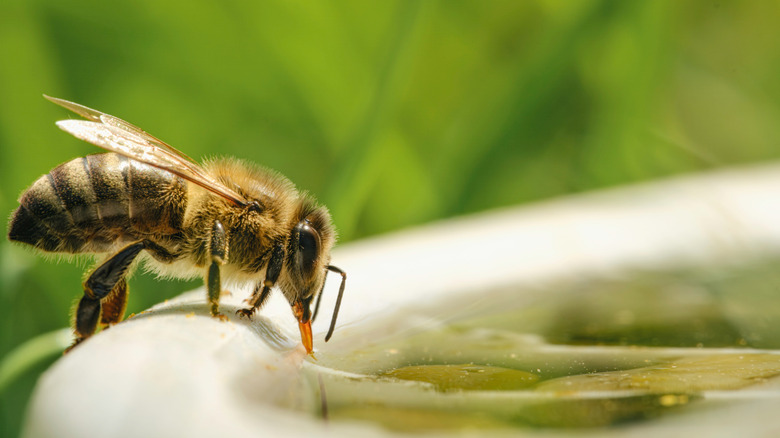
You probably already have a bunch of creative birdbaths scattered around your garden, but have you ever stopped to consider that bees and butterflies need their own spots? Create shallow pools for them by placing curved pot shards around the garden. After a rain or good watering, these cupped fragments hold a thin layer of water, giving pollinators an abundance of options to quench their thirst. With larger pieces, add pebbles to create landing pads for our tiny, beneficial friends.
Add mulch to potted plants
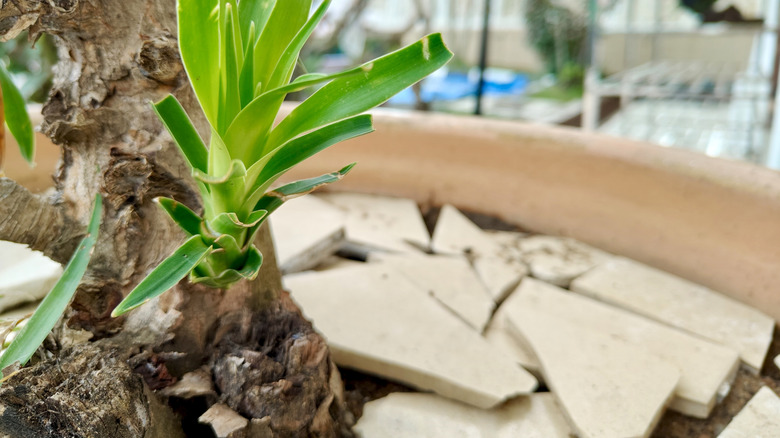
During the warmer months, plants in containers can dry out pretty quickly. Use terra cotta or porcelain shards to mulch your potted plants and retain moisture. Simply create a single layer of them around the base of the plant, covering any bit of visible soil. When using small pieces, leave a clear area around the stem so the crown and roots can breathe. This trick also keeps pets from digging in the pots and acts as a deterrent for common garden pests, like slugs and snails, who aren't fans of the jagged texture.
Create a toad hide
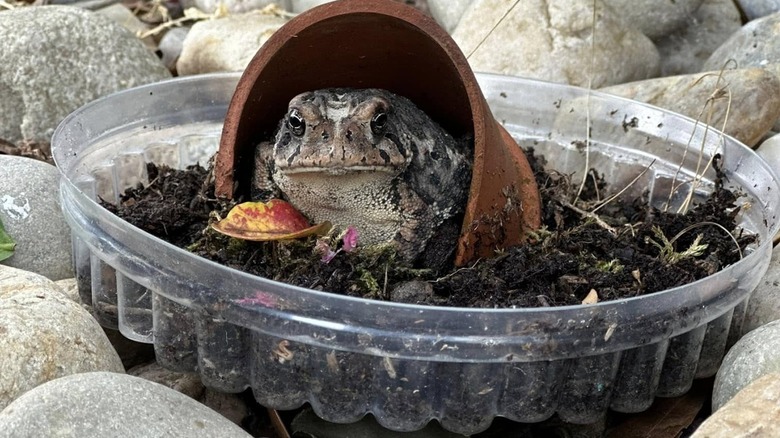
If you, too, dream of your garden being an enchanted wonderland full of woodland creatures, you've really got to install some toad hides, also known as toad abodes. Hides keep croakers protected from the elements, and most importantly, hidden from predators. Lucky for you (and them) it couldn't be easier. Smaller, damaged terra cotta pots that still have the bottom can be partly buried an inch or two into the soil. Pop them around shadier, less-trafficked parts of your garden, where toads are most likely to hang out.
Make a twine dispenser
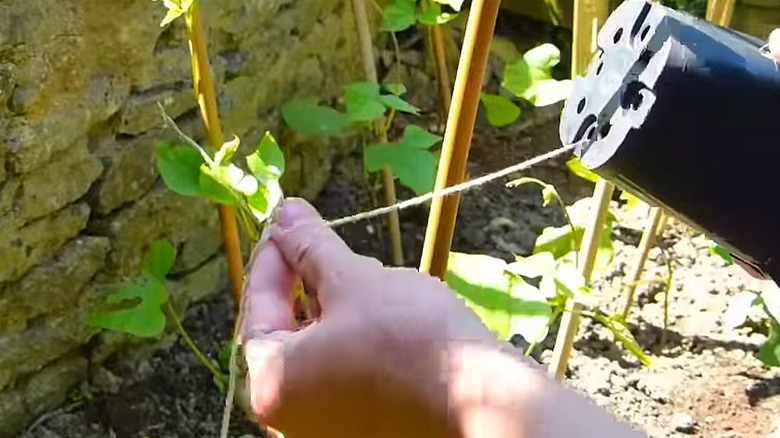
Rather than toss out a cracked plastic plant pot, repurpose it into a cool twine holder. This is one of those "ah-ha" hacks that will change the way you view a broken plastic pot. Simply take a spool of garden thread, put it in the pot, and thread the loose end through one of the drainage holes at the bottom. Place duct tape or plastic over the top to prevent the spool from falling out. Tug the thread, and it will unspool with ease.
Make mosaic garden pavers
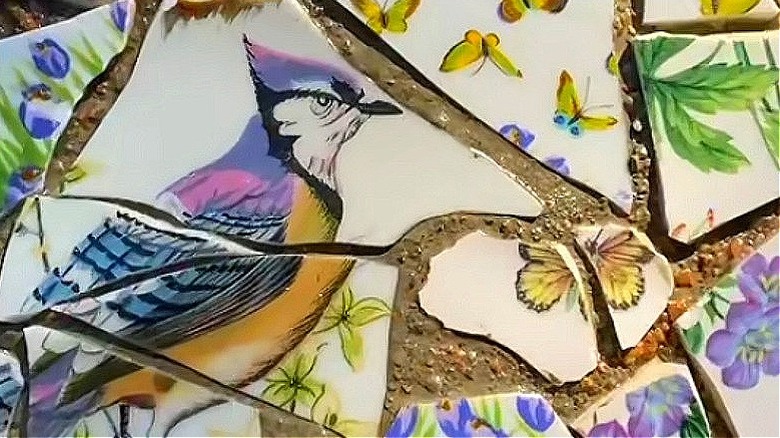
Perhaps your garden has been begging for you to build a concrete paver walkway, but you don't want to do it in a boring way. Instead, create a colorful, one-of-a-kind installation by incorporating broken planter and pot pieces into it. After pouring concrete into a paver mold (or pie tin), press shards of terra cotta or colorful ceramic planters into the wet concrete to create a cool mosaic design. Create images, colorful patterns, or your own abstract art.
Make plant markers
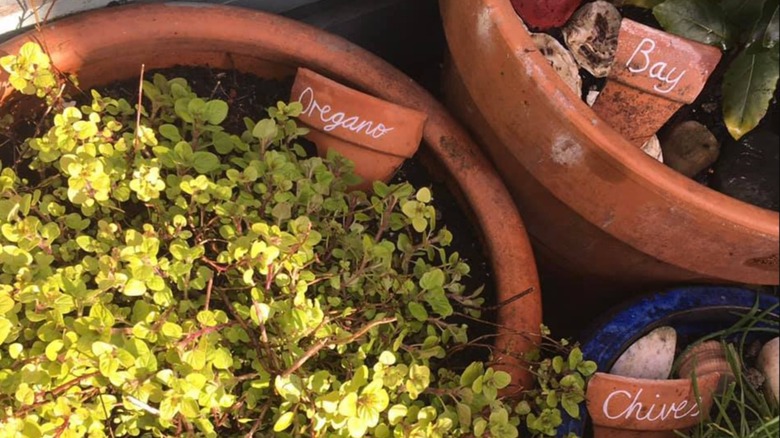
As far as labeling our plants goes, we've tried every method in the book. But using shards of broken plant pots to label the garden is not only wildly resourceful, it can also be more effective than other methods. One option is to write the plant name on the shard in permanent marker before placing it text side down beside the plant in question, protecting the label from the elements. Alternatively, if your container garden sits partly protected on a porch or in a greenhouse, feel free to take artistic license with your markers.
Add artfully buried planters
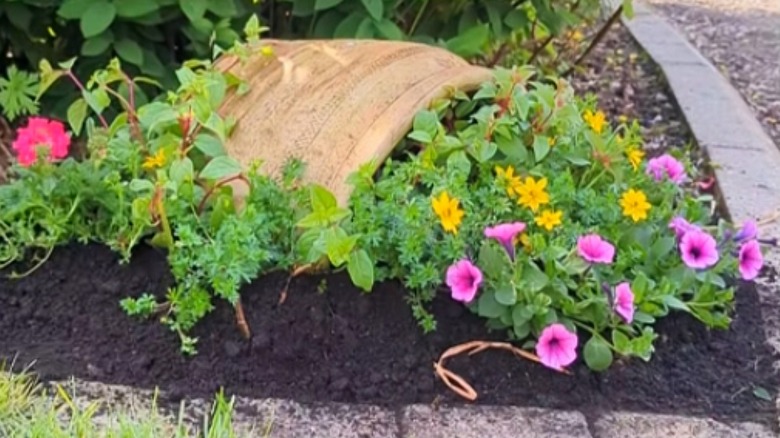
Folks who dig the cottagecore-inspired, wabi-sabi vibe are always looking for ways to make new things look artfully older. Use large, broken pots to embrace this aesthetic, partially burying them in soil to create a blown over look that adds a quaint and creative sort of charm. There doesn't have to be a formula — just cover whichever part is broken with soil, leaving the intact sections exposed. Set flowering or evergreens plants at the opening of the toppled planter, or spillers can be used to create an overflowing effect.
Make a DIY bee hotel
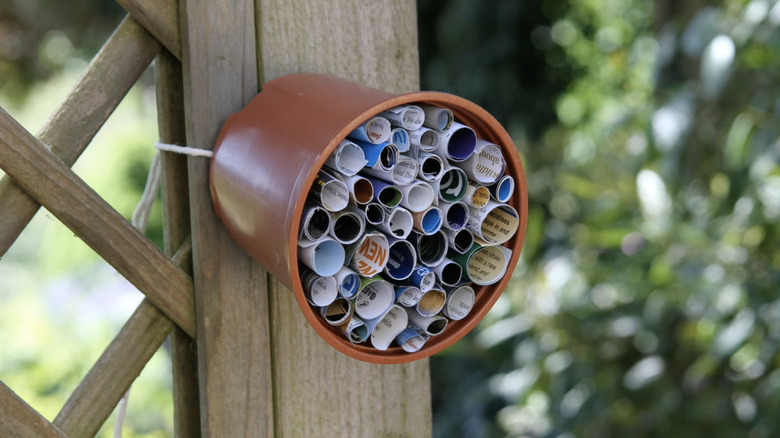
If you're in the business of attracting more bees to your yard, invest some time in making a proper bee hotel for your friendly neighborhood pollinators. Solitary bees, like carpenter and mason bees, use these as nesting spaces. Trim a bunch of bamboo at the nodes to produce tubes with one open and and one closed end. Otherwise cut strips of paper and roll them into tubes. Fit your tubes of choice snuggly into a broken plastic pot, using tape to hold the broken pot together if necessary, then attach it to a railing, tree, or under your deck.