

Give Milk Jugs New Life With A Clever Hack That Keeps Plants Watered
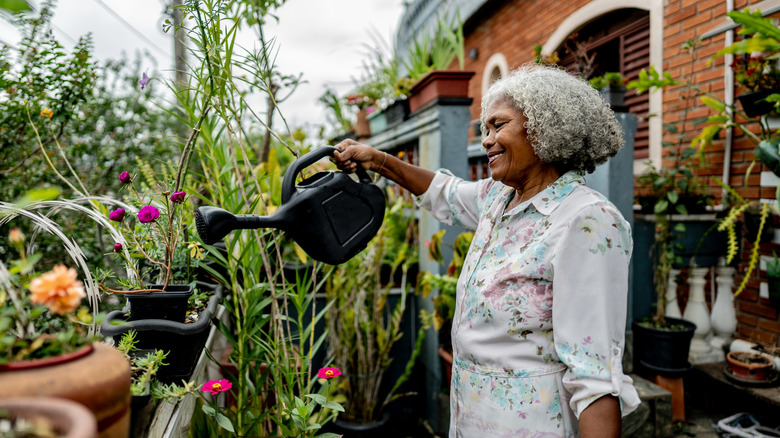
Cultivating a garden takes more than just soil, sunlight, and water. Some people might swear by special equipment to keep plants happy and healthy, but that can be pricey when you just want the basics for your garden. Thankfully, helping your plants thrive doesn't require anything outside of what's already in your kitchen. In fact, you could make your own watering system using empty milk jugs.
Watering can be tricky, and gardeners often get it wrong. Some gardeners overwater their seedlings, and overwatering is one of the leading causes of plant deaths. Too much water contributes to root rot because the soil and roots don't have a chance to take in oxygen. A drip irrigation system using this milk jug hack offers a slow, steady trickle of water directly to the root zone.
Another perk of a slow irrigation system is the health of your plants. Overhead watering can splash fungi spores and other disease-causing microorganisms from one plant to another. Using drip irrigation, even something as simple as this milk jug trick, prevents the moisture from splashing from one leaf to another, and may help keep plants healthier.
Giving your plants what they need
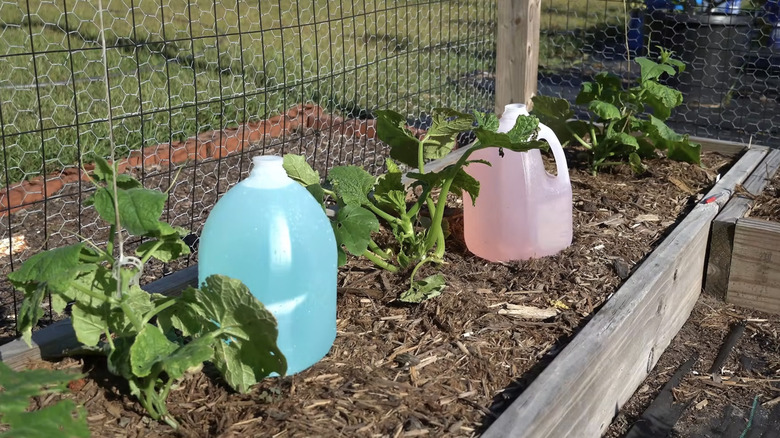
Start with a clean, plastic, gallon-sized jug. Use scissors or a pocket knife to poke a hole at the bottom of the jug. The hole should be small enough for water to trickle out slowly, not gush into the soil. Refilling the jug will be tricky, which is why it's so important to make the holes the right size. You can use your milk jug to provide water, or, for extra nutrition, make a simple comfrey liquid fertilizer or a diluted solution with leftover table scraps. Just place the jugs next to your plants and pour the solution into the top.
You can also use this trick to water two plants at once in the garden. Poke two holes instead of one at the bottom on either end so that the water trickling out reaches the roots of each plant. A recycled milk gallon isn't the most aesthetically pleasing piece of garden decor, but there are workarounds. A bright coat of eco-friendly, nontoxic, multi-surface paint will create some visual interest in the garden and minimize toxin exposure.