

Ditch Mulch And Gravel: The Rustic Alternative Edging For Sustainable Homes
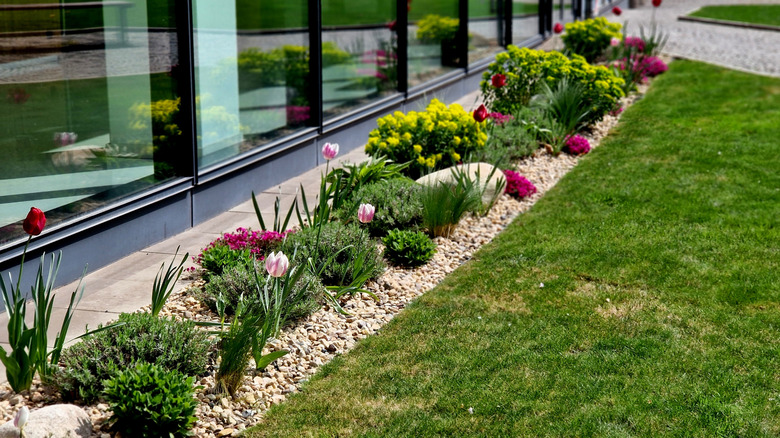
Maybe you've always identified with the third little pig in the classic children's fable. Or maybe you just want your home to say sustainable and traditional in the same huff and puff. In that case, reclaimed bricks are your new best friend. Edging the borders of your home using reclaimed bricks will keep these beautiful pieces of history out of a landfill, plus add a touch of rustic charm to your curb appeal. By reducing the demand for new bricks ever so slightly, you're also helping to reduce carbon emissions: firing clay bricks produces a lot of carbon dioxide. And, on the practical side, brick edging will keep greenery from encroaching on your home — we're looking at you, mulch — and look neat and tidy much longer than landscaping with gravel.
As with any project involving reclaimed materials, you may have to settle for what's available. Reclaimed bricks can be found in every style, from deep-red 19th-century Victorian to dark early 20th-century industrial and timeless, sun-bleached farmstead. In some tellings of the classic fable, a friendly local donates the bricks the third little pig needs to build his home/fortress. However, we're not all lucky enough to have a friend with a direct line on some coveted Victorian-era bricks, so we just have to scrounge around until we get enough. Check demolition sites, salvage yards, eBay, Craigslist, and Facebook. If you can't find any for free, some suppliers offer reclaimed bricks for sale; just brace yourself for sticker shock because they're not one of the cheapest places to buy bricks. Reclaimed bricks typically go for a premium based on their history and unique visual character.
Count (and clean) your bricks before you lay them
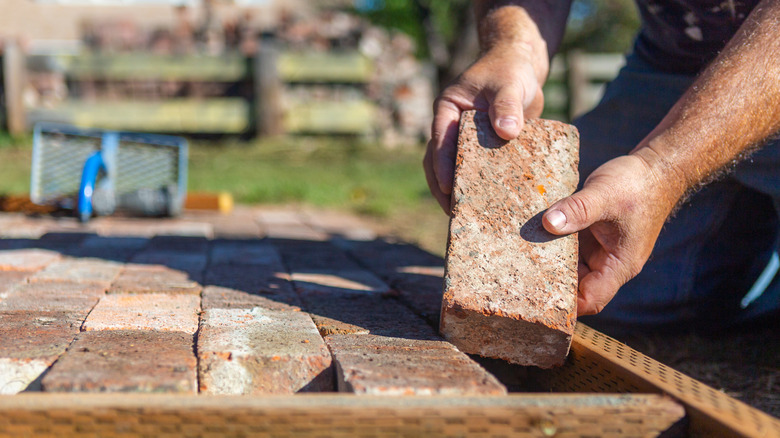
How many bricks do you need to transport your home's frontage back in time? Reclaimed bricks can be found in a variety of different lengths, so calculating just how many will cover it is tricky. Assuming a single layer of two bricks of an average length of 8 inches, you could cover a straight-line facade of 50 feet with about 150 bricks.
Getting the bricks is just the first step to decking out your home with a beautiful and environmentally-friendly reclaimed brick edging. Next, unless you're buying them from a supplier, you'll probably need to clean them up. Old, stuck-on mortar often chips off with the judicious application of a cold chisel and a hammer. A thorough going-over with a wire brush can then remove whatever traces of mortar are left over from their previous life. If some mortar or stains are still clinging on, a bath in a muriatic acid solution (10 parts water, 1 part acid; always acid into water, never water into acid) and a deep rinsing should finish the job.
Just as in the fable, this project will take time. Installing reclaimed brick edging properly means digging out dirt, pounding down paving sand, sprinkling stone dust, and finally laying down and (optionally) mortaring the bricks themselves. Unlike edging with gravel or mulch, this is not a simple weekend DIY project. Unless you're absolutely channeling your inner pig, it's probably best to leave the bricklaying to the professionals.
The best of both worlds is to gather and clean the reclaimed bricks yourself, then contact a pro for the installation. Not all paving contractors will have genuine reclaimed bricks on hand, and if they do, they might charge a premium based on the historic, aesthetic, and environmental value — so it definitely pays to DIY the collection and cleaning process. Don't stop once you have your reclaimed brick edging laid down; combine it with some farmhouse exterior ideas or rustic industrial decor to complete the look.