

What It Means When Riding Lawn Mowers Make A Grinding Sound
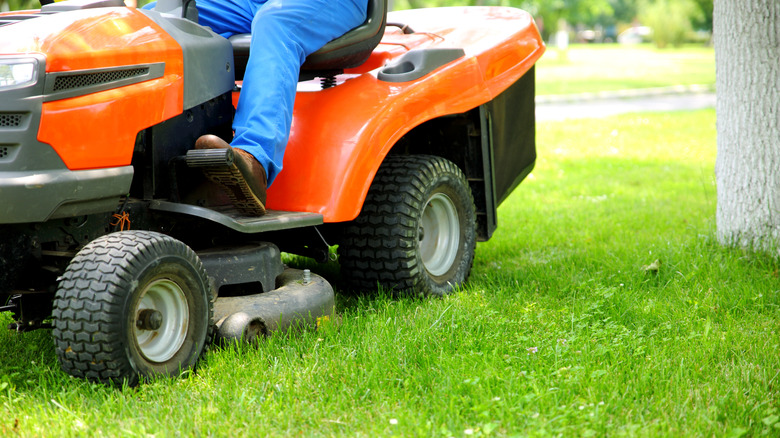
Riding lawn mowers are incredibly convenient, except for when they aren't. Grinding noises can be concerning, but the actual problem may not be as bad as it sounds. There are some hidden downsides to riding lawn mowers, and if you don't have mechanical experience, it can be intimidating to try figuring out what is going wrong with it. There are a few issues that can cause grinding noises; it could be something as simple as debris trapped under the deck, or a worn/damaged spindle, mandrel, bearing, or pulley.
That may sound like a lot of different parts to keep track of, but it's actually simpler than it sounds. These pieces work together as part of the spindle assembly, also called the mandrel assembly, to help the blades spin properly. When they're fully functional, these parts move together fluidly. However, as they wear down, warp, or become clogged with external debris, they may struggle to move properly. This creates excess friction, causing that unpleasant grinding sound as parts grind against each other. Additionally, wheel bearings, which allow the mower to move easily and efficiently, may also wear out and make a grinding noise. It can be difficult to know which piece is causing the grinding noise from sound alone, making it key to run through the possibilities one by one.
Troubleshooting a grinding noise in a riding lawn mower
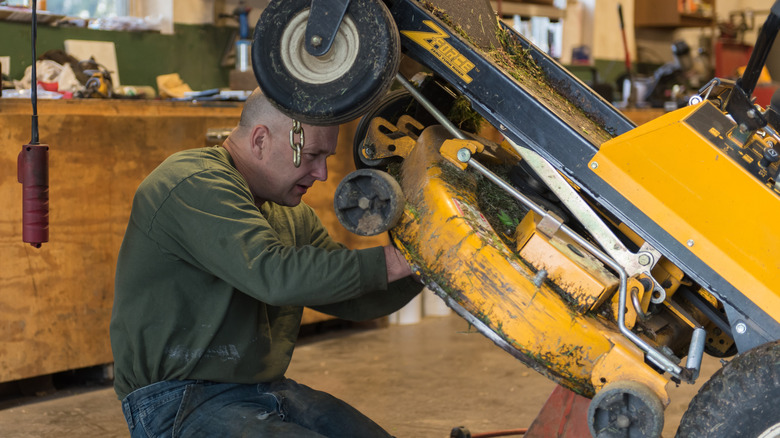
Once you notice that your riding lawn mower is making a grinding noise, stop mowing and remedy the problem before using it again. Continuing to use the mower may cause the problem to worsen, creating a bigger problem for yourself. Before trying to locate the source of the issue, disconnect the mower's spark plug to prevent accidental engine start-up.
First, check under the deck for debris. Fixing the problem may be as simple as removing some bit of plastic or stubborn plant matter that got wrapped around the spindle somehow. There are a number of tools you can use to remove grass from lawn mower decks if necessary, but no matter what you choose, take care while working next to the blades and wear cut-resistant work gloves to prevent injury. If there's no obvious debris, or the grinding noise continues after cleaning the deck, then it's time to look deeper.
Carefully check each part for signs of wear or damage. You may need to remove some parts to access others, so reference your owner's manual or the manufacturer's website for specific guidance on how your riding mower is put together. If you can't see any signs of damage, carefully move or rotate each part. You may be able to feel where it is sticking and identify the damaged component. Once you've found the problem piece, it will likely need to be cleaned or replaced. It's important to stay on top of your lawn mower maintenance and tune-ups to avoid issues like this going forward. While you can't prevent every issue, frequent checks can help you catch problems before they become major.