

Refresh Your Backyard On A Budget With An Old Laundry Hamper And Cement
We may receive a commission on purchases made from links.
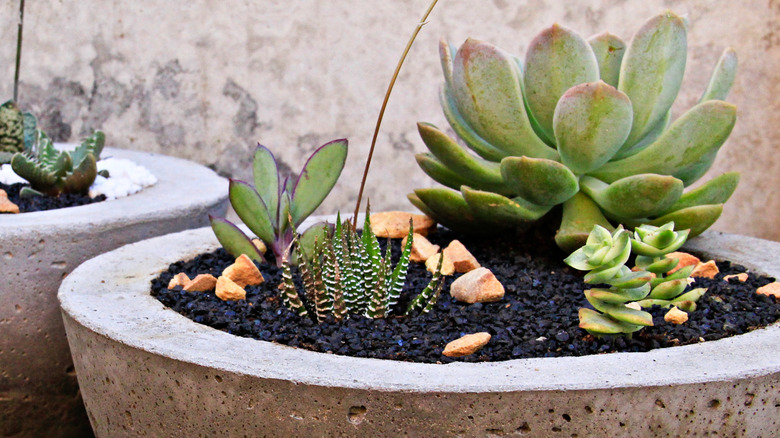
Concrete planters can really make a statement in your backyard, and since concrete is poured into molds, there's really no limit to possible shapes. The trouble is, concrete planters have a high price tag — a 15.7-inch model, like the Kante Large Round Cylinder Charcoal Concrete Planter, can set you back over $100. But if you have plenty of time on your hands, an old laundry hamper, and some cardboard, you can make your own impressive, custom planter.
The YouTube channel DIY – Cement Ideas Tips shows us exactly how. While you'll likely want to watch the full video for step-by-step guidance, here's what you'll need to pull this project off. As well as the hamper, which you'll use for the outer mold, you'll need to create an inner mold with cardboard — this is what will create the hollow space for you to place plants.
To mix and pour concrete, you'll need a large bucket, water, some sort of measuring cup or scoop, a trowel, a concrete hoe for mixing, and concrete mix. The DIYer in the video creates their own concrete mix with a combination of cement and sand, and while you could follow the 4-2-1 rule for concrete, a much easier option is to purchase a bag of concrete mix. With pre-measured mixes, you'll just need to add water and follow the instructions on the bag. Although the video creator isn't wearing gloves, it's a smart idea to do so, as well as goggles and a mask
How to make your own concrete planter
One thing that's missing from the DIY video is a drainage hole, which is key to plant root health. You have two options for adding a drainage hole to your planter. For one, you can insert an object through the base of the interior mold, such as a greased PVC pipe or rubber stopper, and remove it once you've demolded the planter. Alternatively, you can add a hole after the concrete has cured with a concrete-suitable drill bit. Don't have one? You may still be able to drill into concrete using regular tools you already own.
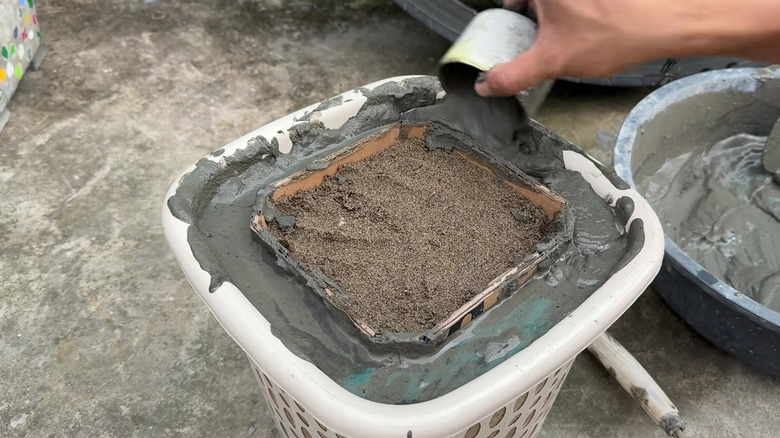
For the first step, the DIYer applies packing tape to the sides of a tall laundry hamper, so that the concrete mix doesn't spill out. You can save yourself a bit of time by using a hamper that doesn't have holes. Next, they make a mold for the interior of the planter using cardboard. The interior mold can follow the shape of your hamper, just at a smaller scale so concrete can fill in around it.
Once you've created the mold and have mixed the concrete, it's time to pour a thin layer of concrete into the hamper (or trash can) and tamp it down using the trowel. Next, place the cardboard mold into the hamper, taking care to center it — filling the interior mold with sand can keep it stable throughout the pouring and curing process. Start to fill the hamper with the concrete, using a measuring scoop or cup. Shake and tap the hamper against the ground every so often to level the concrete mix and break up any air bubbles. Repeat until the planter is completely full, then allow it to fully cure before demolding.
Customize your concrete planter
You have plenty of options to create and customize a planter that matches your design style, both before and after you start pouring the concrete. One option is to play around with different structural details. To create an inset on each side, the YouTuber cuts foam mats to fit into the sides of the hamper. You can do the same, or cut mats into abstract shapes that leave impressions in the concrete. Looking for a more textured finish? Line the hamper with jute or other textile before pouring. Before the concrete is fully set, you can place stones, shells, or other decorative elements into the rim.
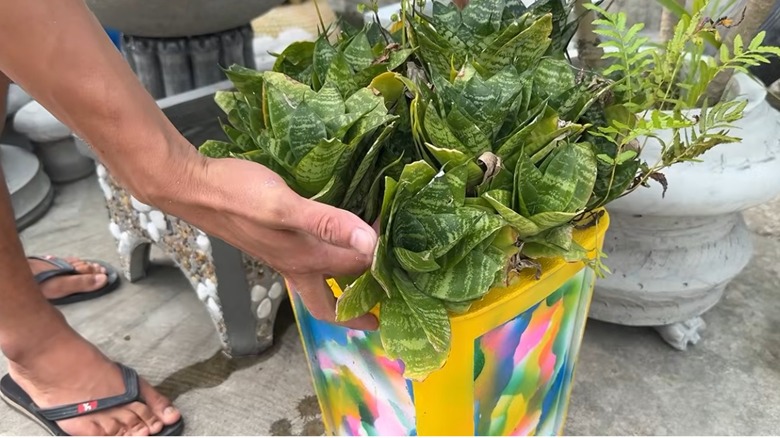
In the video, the DIYer uses a cardboard stencil and spray paint to create a fun tie-dye-esque design on the exterior of the finished planter. Alternatively, you can create your own stencils, spray paint it a solid color, or leave it as is for a more industrial look.
Customization possibilities don't stop there — you also aren't limited to making planters out of laundry hampers. Other household objects can be used to achieve different sizes and shapes. For instance, you can try using this same technique with an old bucket or a small trash can.