

Why Riding Lawn Mowers Can Start Cutting Unevenly
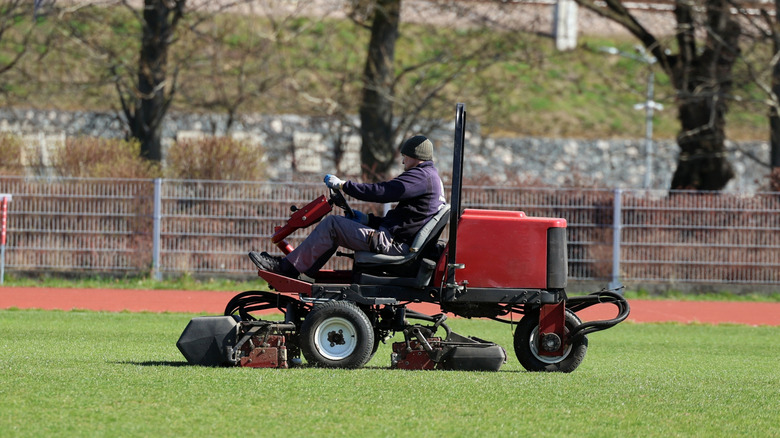
A riding lawn mower can start cutting unevenly when one side of the machine or mower deck sits lower than the other. Most of the time, this is down to tire pressure, but a non-level deck, worn or damaged blades, and grass packed beneath the deck can produce similar results. So, if you're suffering from uneven cuts, those are the places you should check first. Begin with the tires; their height affects the position of the entire machine. If one tire loses pressure, that corner of the mower may sit lower and cause the deck to cut closer to the ground. Check the tires while they are cold and inflate them to the pressure specified in the mower's manual. Depending on your mower, the pressure may differ between the front and back tires.
Next, move on to the deck itself. Deck hangers and adjustment points can move after striking an obstacle, and the deck may also need readjustment after it has been removed and reinstalled. Scalped areas of your lawn could have appeared because the deck was mowing too low or you were driving over uneven ground. If you still can't find the issue, take a look at the blades (when the mower isn't running, of course). A dull blade is likely to tear grass and leave ragged tips, which is part of why dull blades are a sign a mower needs attention. Meanwhile, a bent, loose, or badly damaged blade can cut at inconsistent heights. Riding lawn mowers are meant to last for upwards of a decade, so if you don't take action when you notice uneven cuts, you could end up prematurely killing your mower.
Diagnosing an uneven cut
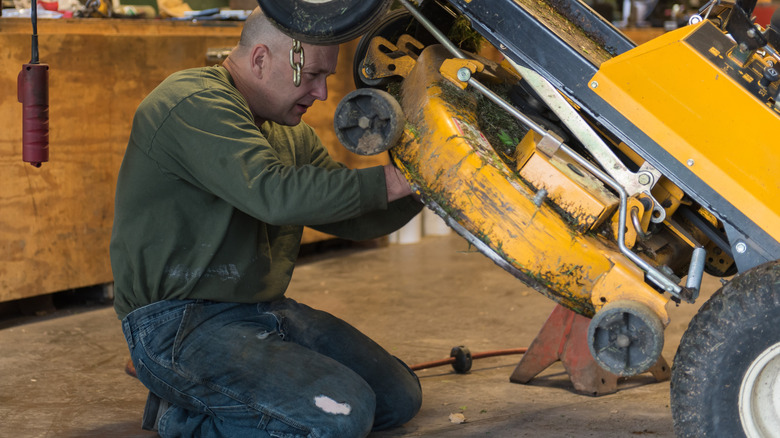
When you notice these uneven cuts, it's time to take action. Shut down the mower and place it on even ground before conducting your checks. Disengage the blades, engage the parking brake, take out the key, and wait for the mower's moving parts to come to a complete stop. Refer to the manufacturer's manual on how to deactivate the mower before looking underneath its deck. Firstly, ensure that the pressure of all tires is right. Once you've checked that, adjust the deck's level as the manual tells you to, and measure the distance between the floor and the ends of the outer blades. Note that there might be some variation in this measurement among the different manufacturers. so make sure you're adjusting the mower in accordance with your particular manufacturer's recommendations.
Next you'll want to examine the bottom side of the deck for heavy accumulation of grass and leaves, because that can impair the flow of air and discharge. Clean the deck (again, in accordance with your manufacturer's instructions), but don't work underneath an unsupported mower. Generally, it's best to only work on it with the help of a hydraulic or mechanical lift. Examine each blade up close; to determine if any of them are damaged, see if you notice rounded tips, excessive nicks, cracks, or bending. A good blade that is simply dull can be re-sharpened, but a damaged blade needs to be replaced. If the former is all you need to do, make sure you to follow the safest way to sharpen lawnmower blades – or get help from a professional.