

Hammering Nails Into Fruit Trees: What It's For & Why Some Swear By It
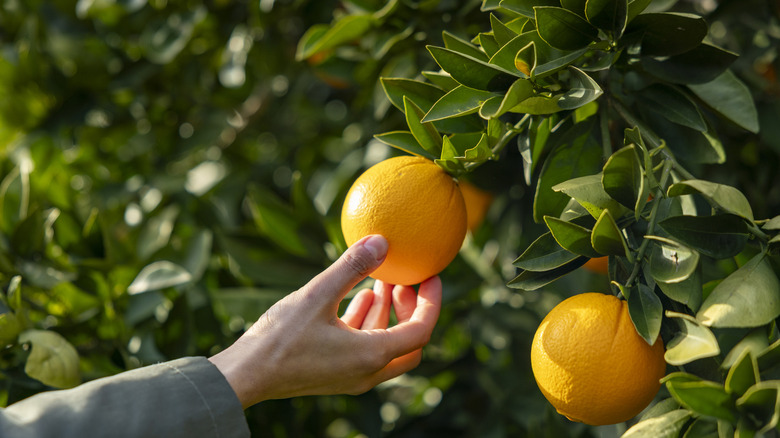
If you're a gardener, it's safe to assume you're willing to go through great lengths for a successful harvest. But even when you're feeling desperate for the slightest sign of growth, practical approaches are preferred. Some gardening hacks lean more towards sorcery than science and could potentially do more harm than good. One specific tip for fruit trees straddles both plains. Will hammering a nail into their trunks stimulate flowering and fruit growth, or is it just a bunch of hocus pocus? There aren't any scientific conclusions to back up the claims, but there are certainly strong hypotheses on both sides of the spectrum.
Whether you're mulling over fast-growing fruit trees for beginners or consider yourself a seasoned pro, you've likely heard this myth before. It's believed that hammering an iron nail into the trunk will make the tree feel threatened and ultimately shock it into reproduction. The sap and nutrients within the trunk will be thrown out of whack and start flowering as a response to the controlled stress. Some say this is a way to speed up Mother Nature, yet others think this method can harm the tree and even lead to a premature demise.
Can hammering nails into fruit trees stimulate fruit production?
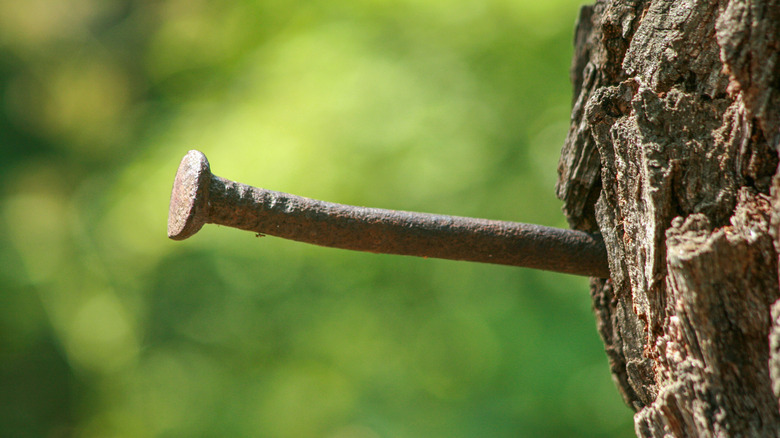
If your garden of fruit-bearing trees hasn't been active in quite some time, perhaps you've considered this hack — and there's plenty of convincing online chatter. According to virtual forums, many people cannot provide an explanation, but insist this method works. One commenter on a forum noted his mandarin tree getting a new lease on life thanks to the approach. Another commented that a coconut tree followed a similar growth spurt that was nothing short of "supernatural." Does the iron nail permeate the nutrient into the tree trunk and get things cooking?
Some gardeners are not quite as convinced of this phenomenon, and they believe that the method could potentially induce long-term tree damage and even kill the tree, negating years of hard work you took to bring it to life. Some pros insist that this method can damage the tree's cambium, a tissue layer that affects growth. Others say it can contribute to rotting, which is certainly unwelcome.
Taking the argument a step further, the nail debate also exists when pertaining to copper rather than iron, some saying that the material could slow down the ability to transport nutrients and water effectively, ultimately causing the tree's demise. Regardless, there is common ground between both parties: a prosperous fruit tree. Instead of relying on highly-debated methods, utilize soil boosters and compost for a healthy harvest. Compost, in particular, is the true game-changer for strengthening the soil, allowing fruit to prosper, and providing trees with the proper nutrients to ward off diseases and critters.