

Repair Or Replace: How To Determine What's Best For Riding Lawn Mowers
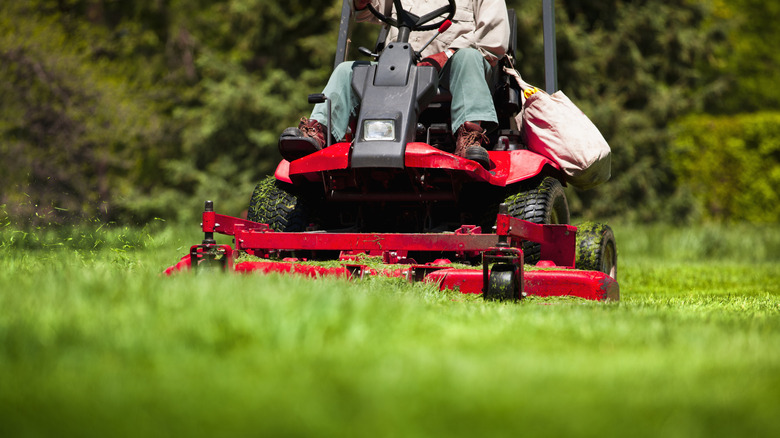
No matter how long you've owned your trusty riding lawn mower, there comes a day when that odd rattle, inconsistent startup, or uneven cutting could be a sign of a larger issue. Generally, minor issues and inexpensive fixes make repairs worthwhile, while frequent breakdowns, major mechanical problems, and repair costs approaching the mower's value are signs that replacement may be the better investment.
Still, knowing when to simply repair or fully replace your lawn mower can be a difficult, confusing, and expensive decision. A new riding lawn mower costs around $2,500 on average, but prices can easily go much higher, even over $10,000, depending on the exact model. In contrast, the average cost to service a riding lawn mower, even by a professional, may only be a couple hundred dollars. Given the drastic price difference –- not to mention the hassle of selecting a new mower or continually trying to fix one that's doomed to fail -– it's important to know the key signs to decide when it's time to repair and when it's time to call it quits.
Some of the most common lawn mower issues include poor mowing performance, difficulty turning on, vibrating while in use, a smoking engine, or just running slowly, all of which can have multiple causes. It isn't always clear what's a quick fix and what's a long-term problem. Similar to a totaled vehicle, if the lawn mower repairs get too expensive, it can become cheaper to purchase a new one. That's why it's often worth it to get a quote for repairs from a professional up front, before you've sunk additional money into parts and labor. The expected longevity and number of years you've owned the mower are factors too, as it's generally not worth repairing a mower at the end of its life expectancy.
Signs that a riding lawn mower needs to be repaired
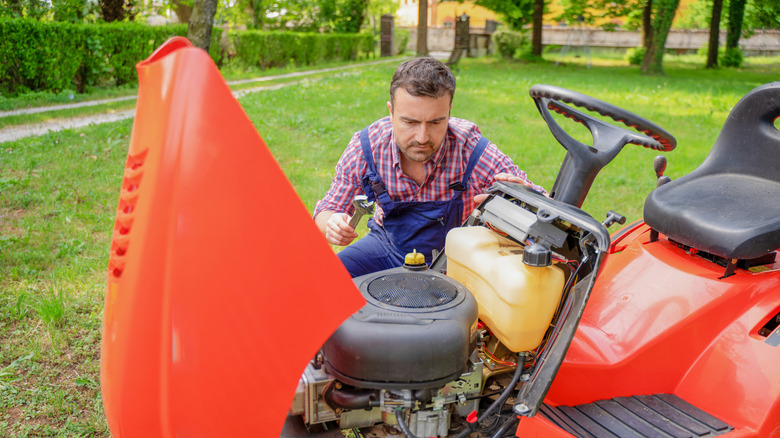
Ranging from minor mechanical issues to standard lawn mower tune-up and maintenance, many of the problems you'll come across are, fortunately, repairable. If your lawn mower is having trouble starting (or it often dies during use), it could be caused by simple things like faulty spark plugs, a clogged carburetor, low oil, or a dead battery. Another issue that can have a small, inexpensive fix is uneven cutting performance; this might be caused by dull or bent mower blades, a tilted or clogged mower deck, or even a flat tire that's making the mower lean to one side.
Of course, not all repairs are minor; some larger repairs include issues with the engine, transmission, and mower deck. The engine may need to be rebuilt or replaced if it has major internal damage, has issues turning on, smokes, or makes strange noises. Your mower could need a new transmission if it's experiencing a loss of power, especially on hills, lagging response times, or a performance drop-off during use. Clearly, lawn mower issues can overlap. A single problem (such as unusual noises) can indicate one of several problems, which is why it's often best to have a professional assess what repairs are needed.
Signs that a riding lawn mower needs to be replaced

Then there are times when a lawn mower is past the point of repair. As mentioned, engine issues are a primary reason to replace a lawn mower, as rebuilding or replacing an engine can cost anywhere from $500 to $2,700. Similarly, replacing the transmission costs between $625 and $2,500 on average. The higher end of both of these figures may be more expensive than purchasing a brand-new riding lawn mower. Cost aside, you might be forced to buy a new mower if your current model is old enough that replacement parts are no longer made or sold.
There are plenty of other reasons to want to purchase even if you don't necessarily have to, and they're perfectly justifiable. Some people simply don't want to deal with the headache and time commitment of constantly repairing their current lawn mower, even if costs stay relatively low. After all, the saying is that time is money. New and improved models may also offer perks like oil-change-free engines, improved fuel efficiency, or just a more comfortable ride. So if you find yourself tempted to check out the best riding lawn mowers on the market, we don't blame you.