

Out With Wood Decks: Consider This Waterproof, Durable Alternative Instead
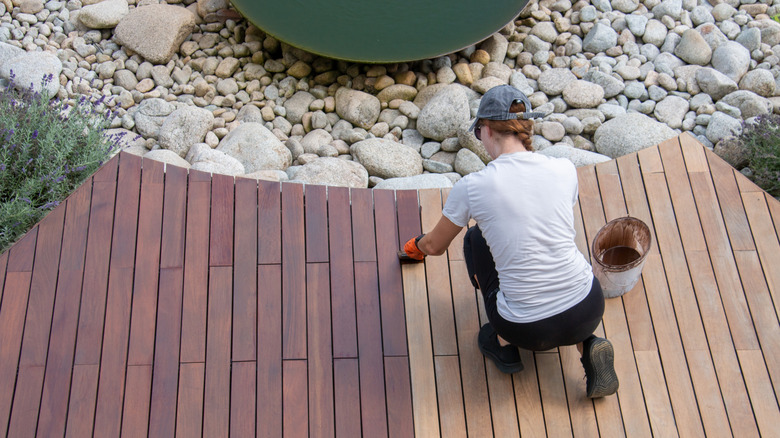
Between cleaning, sanding, staining, and sealing, a venerable old wood deck can feel less like a place to enjoy sunshine and fresh air and more like a never-ending home improvement project. And that's just what a wood deck is. As a natural material, wood needs regular care to keep it from yielding to the elements. Even when you strictly follow a maintenance schedule for your wood deck, mold, mildew, warping, and rot can get the upper hand. If the weekend tax and the hard dollar costs of upkeep make you want to cut the knot, PVC decks are a durable alternative that knocks out wood in almost every category.
Sometimes incorrectly called vinyl, PVC decks are made from polyvinyl chloride, a synthetic plastic. They are waterproof, so there's no sealing necessary — ever. PVC doesn't easily absorb spills or fade in color, so you skip out on staining, too. As a plastic, mold and insects simply can't get a good foothold on PVC boards. They won't crack, split, or splinter, which is a big bonus if your deck gets a lot of barefoot traffic.
There are even more reasons to choose plastic over pine. Some PVC deck manufacturers back their boards with warranties of up to 50 years against fading and staining. PVC also resists warping far better than wood or composite. Since warping can spell the end of even the most well-maintained deck, that durability matters. Even under constant UV radiation and temperature swings, a PVC deck should hold its shape for decades.
Eco-friendly, flexible design options
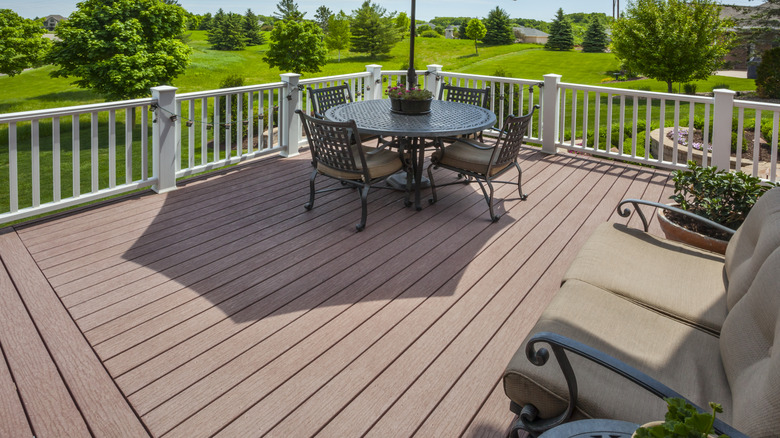
You might be surprised to learn that PVC decking is actually one of the more environmentally friendly materials you can choose. As a synthetic material, there are no trees cut down to make it. And, unlike the pressure-treated lumber used in most wood decks, PVC can be easily recycled once you're done with it (after a few decades or more). You can also opt for PVC decking made from recycled materials to go the extra eco-friendly mile.
As far as looks go, PVC decking comes in almost any color and finish you can imagine, so there's no aesthetic compromise — though it won't look indistinguishable from wood. You can also do a lot of things with PVC that are much harder or simply impossible to do with wood. Many manufacturers offer multi-width boards, so you can create a distinctive design for your deck. You could accomplish the same effect with wood, but you'd have to turn your backyard into a lumber mill during installation. But there is one thing PVC can do that wood never could: curve. Certain models of PVC boards can be curved using heat bending, so your deck design isn't limited to just straight lines.
The downsides of PVC decks: upfront cost, heat, color, and feel
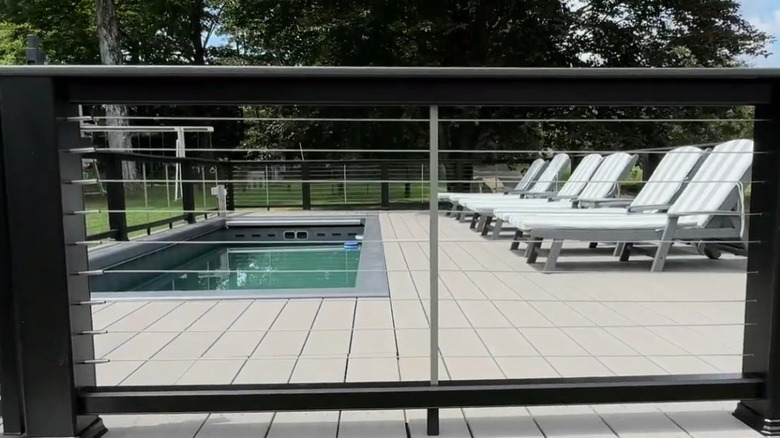
Upfront cost is where PVC loses some of its luster compared to wood. Expect to pay between $10 and $15 per square foot for a PVC deck, not including labor costs (per Decks.com). For good old-fashioned pressured-treated wood, the materials cost somewhere between $3 and $8 per square foot (via NerdWallet). On the other hand, you can also expect to save an estimated $4,000 in maintenance costs every 10 years by opting for PVC, according to TimberTech.
Like anything exposed to the sun, PVC decking can get hot — hotter than wood, but not as hot as composite. You can temper your PVC deck's temperature by choosing a lighter color or opting for a product line with good heat resistance. One other word about PVC's color: You can't change it. Unlike a wood deck, which can be sanded and restained, PVC's color is set for life, so choose carefully.
Lastly, some people may not like the feel of PVC underfoot. This is really only a concern if you or your family go barefoot a lot, but it's worth mentioning. The only way to find out if the texture of PVC is intolerable or barely noticeable is to order some samples and try it out. While plastic doesn't feel like wood, it also doesn't feather and splinter like wood decking, which is a small blessing for bare feet.