

No More Guesswork: The Best Watering Method To Keep Succulents Happy And Healthy
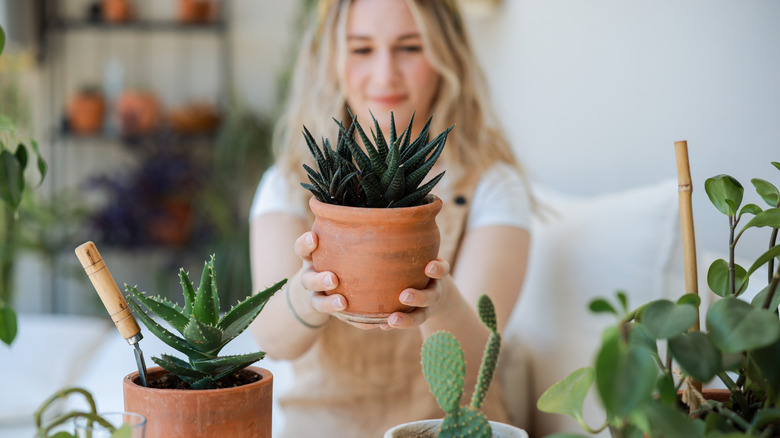
If there is any class of plants that thrive on being forgotten about, it is succulents. Regardless of whether you're growing Hens and Chicks (Sempervivum spp.) or Echeveria (Echeveria spp.), succulents typically do well if they receive lots of sunshine and minimal watering. However, despite this fact, one of the biggest mistakes people make when caring for succulents is overwatering them. Thankfully, the soak/dry method eliminates the watering guesswork to keep your succulents happy and healthy.
The soak/dry method is a watering technique that saturates the succulent soil and then allows it abundant time to dry completely before the next watering. Owing to the arid environments succulents are native to, they have adapted to store water in their roots and plump leaves for long periods of time. This makes them highly drought tolerant, which means that they don't need to be watered very often. When active, succulents only need to be watered every 2 to 3 weeks. When dormant, time between waterings can be even longer.
That said, though the soak/dry method is the best method for watering succulents, you need to make sure you're doing it right. All succulents should be planted in well-draining soil in pots that have adequate drainage holes – Martha Stewart recommends planting succulents in strawberry pots. Without both of these things, this method could easily waterlog the soil, which can lead to issues such as root rot and yellowing leaves. So, as long as you have the right pot and soil, this method is pretty foolproof.
How to water succulents using the soak/dry method
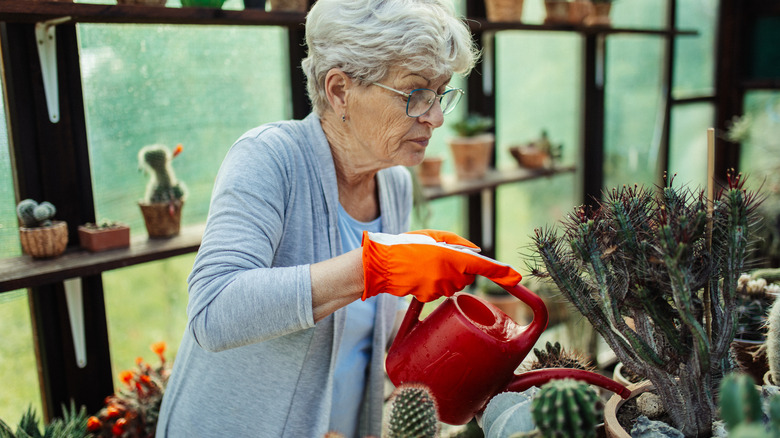
The ease of the soak/dry method is a major part of its appeal. The first thing you need to do is check the moisture level in the potting soil. Do this by inserting your finger about an inch deep into the soil. If you sense any moisture at all, don't add more water just yet. If it is bone dry, it's time to soak it.
Soaking the plant could be done by simply watering it until water comes streaming out of the bottom of the pot. Be careful not to flood the pot and pour slowly; when plants have too much water, they can effectively drown as water displaces air. Alternatively, for portable potted plants, you can try bottom watering by submerging the succulent pot in a large container of water. Remove the pot once the topsoil is slightly moist.
Where you place your succulents is important as well. They require at least 6 to 8 hours of sunlight per day, so you will need to place them in rooms with plenty of windows and light. You may also need to increase the watering schedule if you find the soil is drying out very quickly, or decrease it if it retains moisture for extended periods. Regularly check the moisture levels, especially before watering.