

Skip Bird Feeders: The Native Plant To Grow Now To Help Birds Survive Winter
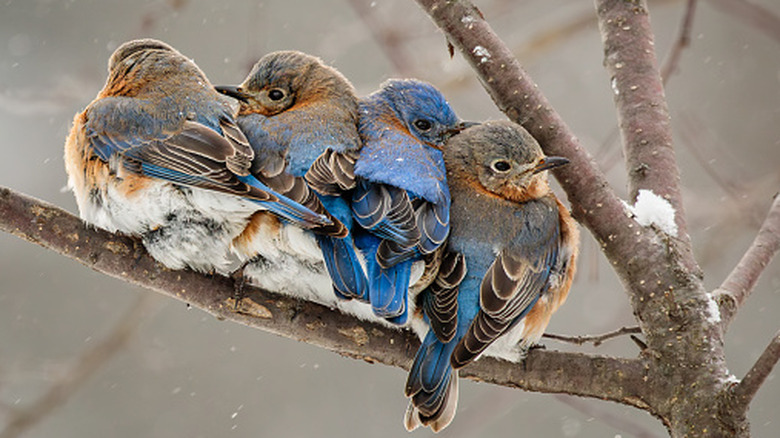
Bird feeders are one of the easiest ways you can support a variety of birds who stop by your garden or backyard. Yet this isn't the only way to do so, and there are arguably some hidden downsides to bird feeders, such as potential messes that can attract rodents. Growing native plants is a great alternative (or addition) to bird feeders, especially for supporting birds during the harsh winter months. You might think of plants with large flowers or fruits as good selections. Surprisingly, there is also an ornamental grass that can potentially help certain birds survive winter by offering both food and shelter: Little bluestem (Schizachyrium scoparium).
This native perennial gets its name from its bluish-green colored foliage that evolves into shades of copper-red or yellowish-orange during autumn and winter. It also produces pretty bronze and purple seed heads in the fall. Aside from its attractive qualities, little bluestem has a reputation for not being fussy about growing conditions, and is pretty easy to grow while being resistant to drought, as well as pests and diseases.
If your primary concern is to support birds in your area, the good news is little bluestem has a lot to offer in this regard, too. According to the University of Maryland Extension, it's not uncommon to spot overwintering birds such as sparrows taking shelter among little bluestem foliage during snowstorms. Not only might birds take shelter among the foliage, but the plant can also host larvae of which some omnivorous birds may depend upon when other winter food sources are scarce. Songbirds eat the plant's seeds during the fall and winter months, too.
Growing little bluestem for a bird-friendly, attractive garden
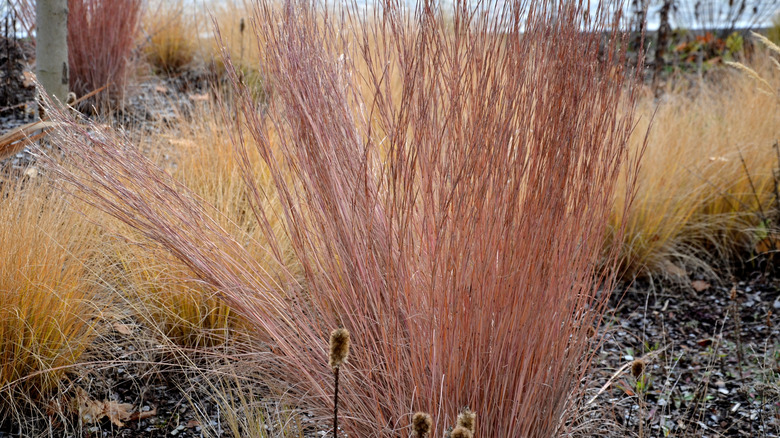
Little bluestem is a great addition to native garden designs, and can be found naturally in eastern portions of North America. It is considered hardy in zones 3 to 9, and also doesn't require much maintenance. Still, this perennial grass prefers full sun, as well as slightly moist and well-draining soil. These conditions are also conducive to taller grass growth, which may in turn provide more opportunities for bird shelter in the winter.
Little bluestem can easily be grown from seed or small divisions in home gardens, and it has a medium growth rate. While often best planted in spring to ensure healthy plant growth that survives through winter, you can add little bluestem to your garden in the fall via established plants from a nursery. While the ornamental grass is often planted as a border, it can also easily be planted in containers if you're short on space.
Many gardeners choose to prune little bluestem leaves down to ground level in late winter to promote new seasonal growth. This is not a requirement, though. In fact, cutting the leaves between 2 and 4 inches can still provide some benefits, says the University of Wisconsin-Madison. (When in doubt, consider a trick for cutting back ornamental grasses pros use). Overall, you can expect little bluestem to grow up to 2 to 4 feet tall and wide once established. While the plant has benefits for birds, it also has a reputation for being deer-resistant.