

Skip Long Installations: Building Gravel Driveways Is Easier With A Time-Saving Amazon Find
We may receive a commission on purchases made from links.
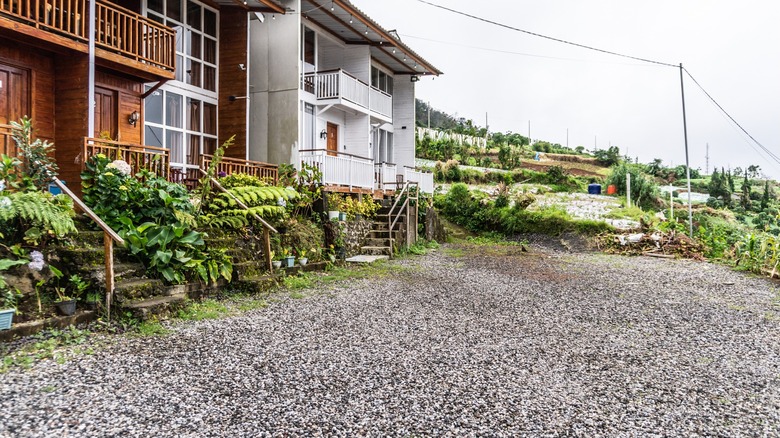
Gravel is one of the cheapest driveway options, but what you save in installation costs, you may end up spending on upkeep. One of the thorniest maintenance issues with a gravel driveway — along with weed control and potholes — is keeping the gravel where it's supposed to be, which is definitely not on the lawn or piled up on the edge. If there were a way to stabilize the gravel and prevent it from migrating, you wouldn't have to rake it back into place or spend money trucking in more. One way to prevent migration is to install the VEVOR Ground Grid, currently available from Amazon.
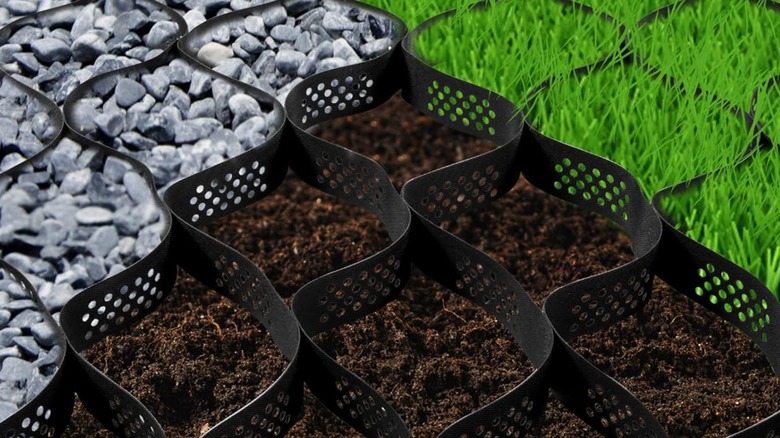
This ground grid comes in modules that cover 237.5 square feet for about $75.00. The grid is made of durable high-density polyethylene (HDPE), and the 9.9-by-9.9-inch cells are large enough to hold most types of gravel. It can also hold such notoriously slippery materials as pea gravel and keep any type of gravel in place on a slope.
Each module comes tightly bundled. After unbundling it, you install it by staking one corner to the ground and stretching the material out in two directions. You add stakes as you go to secure the grid in place and use the provided clips to link sections together. The material is strong but flexible, and it will conform to the lay of the land.
A grid for a permeable, weed-resistant driveway
The cost of installing gravel for your driveway is lower than that of any other material, and with a grid to contain the gravel, upkeep can be similarly inexpensive. Cost isn't the only advantage, however. A gravel driveway is more permeable than asphalt or concrete, which means it allows water to soak into the ground underneath it. This nourishes the soil, and it prevents the runoff and erosion. Permeable paving captures up to 80% of the rainwater it receives. Some communities consider gravel an impervious surface because of the compaction of gravel and soil caused by vehicular traffic. By supporting vehicular load and spreading it out, a grid system helps correct that.
The VEVOR Ground Grid also helps solve weed growth — another bane of gravel driveways. Plants tend to grow where gravel has thinned out, but a grid that holds gravel in place helps reduce thinning. They won't disappear completely, but they are easier to control.
You don't have to use gravel with the VEVOR Ground Grid; it will hold other materials as well, including eco-friendly alternative materials like crushed seashells. You can fill the cells with dirt and plant grass, because the cells are strong enough to support vehicle traffic and protect what grows inside them. The weight they can support, however, is limited to 1,885 pounds per square foot. Once the grass matures, your driveway can end up looking like part of the lawn.