

Not Concrete, Not Gravel: The Beautiful & Eco-Friendly Driveway Alternative Everyone Overlooks
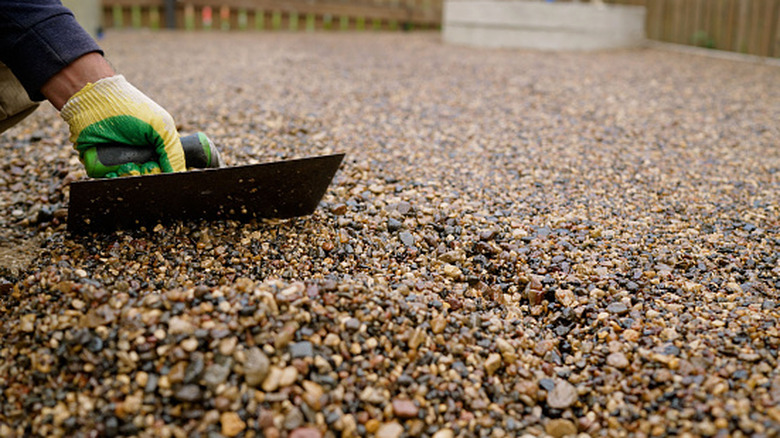
Besides being a necessity for car owners, a driveway heavily influences your property's curb appeal, and homeowners often choose concrete or asphalt driveways for their durability and clean look. These materials can be expensive to install, however, and solid surfaces often create drainage issues such as driveway puddles. As an alternative, gravel can be both less expensive and more permeable. Yet while gravel does offer a sense of rustic charm and years of repair-free service, another option that's comparable in price doubles down on the charm factor, provides permeability, and lasts just as long without repairs: seashell.
Seashell driveways have been favored in coastal communities since colonial times. After consuming oysters and shellfish, which formed a major part of their diet, settlers would recycle the shells by crushing them and using them as a paving material. These days, crushed shells — most often taken from oysters, clams, or scallops — are available by the ton and can be shipped anywhere, so there's no longer any need for people living inland to overlook them when sourcing driveway materials. Once you've laid them down, the shells will break down the more you drive over them, quickly flattening out into a level, well-draining, and attractive driveway surface.
Pros and cons of seashell driveways
First, let's explore the positives of using seashells as a driveway material. Provided they're ethically sourced, seashells are a natural and eco-friendly alternative to petroleum-based asphalt and concrete, the production of which releases large amounts of carbon dioxide and depletes water resources. Shells allow rainwater to soak through, thus eliminating the drainage issues of solid materials like concrete and asphalt, and, because they break into smaller pieces under pressure, they have less tendency to create the ruts you find in gravel driveways. Finally, because shells have a lighter color, they reflect sunlight rather than absorbing it, helping to keep the area around the driveway cooler.
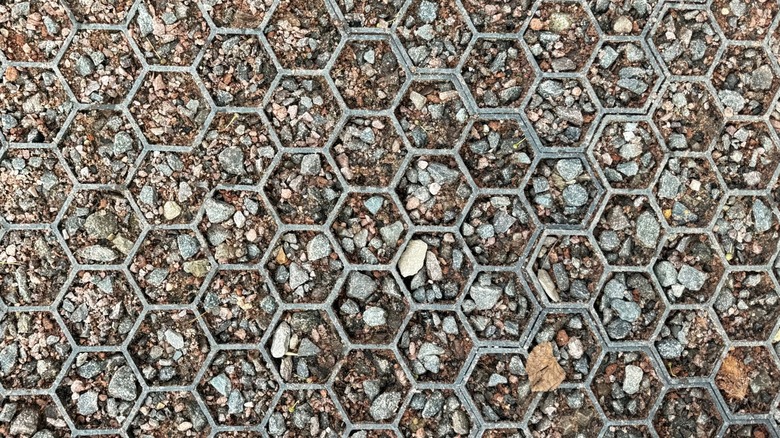
Now for the drawbacks. For one, crushed seashells have sharp edges, and while the shells may not be hard enough to puncture tires, they can be uncomfortable for bare feet, and pets may not enjoy walking on them. Another potential drawback is weed growth — although you can solve this problem by installing a weed barrier underneath the driveway. A third problem is one shared with gravel, which is the tendency to shift or get pushed out of the way by car tires. One solution to this third problem is to lay permeable paver grids on the driveway and fill the cells with shells. The grids hold the shells in place while still displaying their attractive coloration and primitive appeal.