

Cover Old Mugs With Fabric To Turn Them Into Cute Organizers
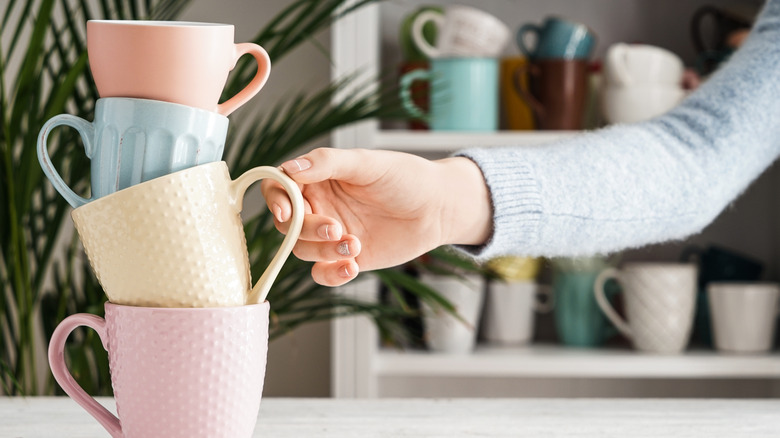
Is it time to clean out that cabinet of miscellaneous coffee mugs? You know which one. It's hiding a collection of old mugs with novelty images, peeling print, business slogans, and your company's 25th anniversary logo. This clever DIY shows how to cover old mugs to turn them into cute organizers you can use all over your home. So instead of donating a box of odd mugs to the local thrift store, you can reuse old coffee mugs and put them to work!
In a YouTube video from Craft Yourself Silly, you can see how to sew a functional mug caddy from a piece of fabric. This is a great way to use fabric scraps or fat quarters, and it's a fun beginner project, but you'll need basic sewing skills. A sewing machine is used in the video, but if you are skilled, you can stitch it by hand.
You can make this organizer for free if you have plenty of scraps, or for just a few dollars if you need to purchase materials. If you decide to purchase the pattern, it will run around $12 from Craft Yourself Silly, and it will include 10 additional projects in two downloadable files. You'll need fabric shears or a rotary cutter, a measuring tape, an iron and board, straight pins or fabric clips, two matching or coordinating pieces of fabric, matching fabric scraps for the pockets, fusible fleece or interfacing, thread, and optional closure material such as elastic, Velcro, or ribbon.
Stitching a fabric caddy to cover old mugs
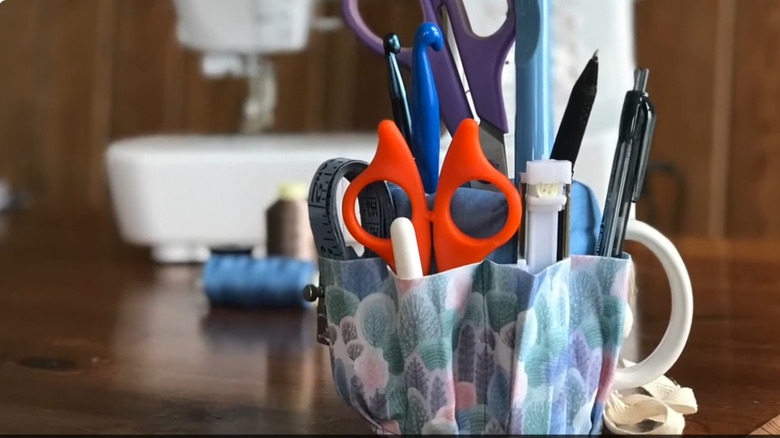
Some mug caddy designs only cover the outside of the mug, which can make it top-heavy or cause the mug to tip. The design of this pattern is brilliant because it uses inner pockets to balance the caddy and create extra storage space inside. With both inner and outer pockets, the weight of the items inside the mug balances the weight of the items on the outside. By creating box pleats, the "bubbles" she mentions, she shrinks the circumference of the caddy while still allowing plenty of room for thicker items.
One warning from the video is notable. During the top stitching phase, you'll be sewing through up to 12 layers of fabric, so go slowly and carefully to avoid breaking a needle, or use heavy-duty needles designed for sewing denim. Another tip is to cut the inner pocket panel just a bit shorter to avoid interior pocket bunching.
Turn this into a project for the kids by skipping the lining material and using craft felt instead of fabric. The pieces can be glued together, and you can also attach ribbons or other trim with glue. Or, upcycle an old pair of jeans by strategically cutting them to utilize the loops or pockets for more rugged storage of heavier items. When you cover old mugs with a homemade caddy, you can use them anywhere to store sewing notions, office supplies, art supplies, makeup tools and brushes, and more.