

Will WD-40 Repel Mice?

Spotting a bunch of mice running around the house is anything but a fairy tale. It's more like a nightmare that involves setting traps, tossing food, and disinfecting everything in sight. There are plenty of old wives' tales about possible deterrents, one of which is using WD-40. Sadly, this is nothing more than a modern myth. According to experts like Dr. Jim Fredericks, board-certified entomologist and Senior Vice President of Public Affairs at the National Pest Management Association (NPMA), and Josh Petro, Operations Manager at Truly Nolen Pest Control, repelling mice isn't one of the effective uses for the popular household product.
With ongoing pest control visits averaging between $100 and $300, eyeing a cheap can of WD-40 as a possible alternative is an understandable impulse if you need a budget-friendly way to keep mice out of your home. But you shouldn't be swayed by the potential savings. "As we showed with our 'Don't Try This at Home' series, quick DIY 'hacks' likely won't work against pests like rodents because they don't get to the core of the problem," Dr. Fredericks told us.
Because they don't hibernate, mice are constantly seeking out the warmth, shelter, and food that residential homes provide. In an exclusive interview with Hunker, Dr. Fredericks said this creates both a nuisance and a serious public health risk. "Rodents spread more than 35 diseases, including hantavirus, lymphocytic choriomeningitis, and plague," he explained before adding that more than 21 million homes are invaded by mice each winter. "Once inside, they can chew through wood and electrical wires, increasing the risk of fire." That's why it's important to use effective, tested, and safe pest control methods.
WD-40 doesn't repel mice and can be hazardous
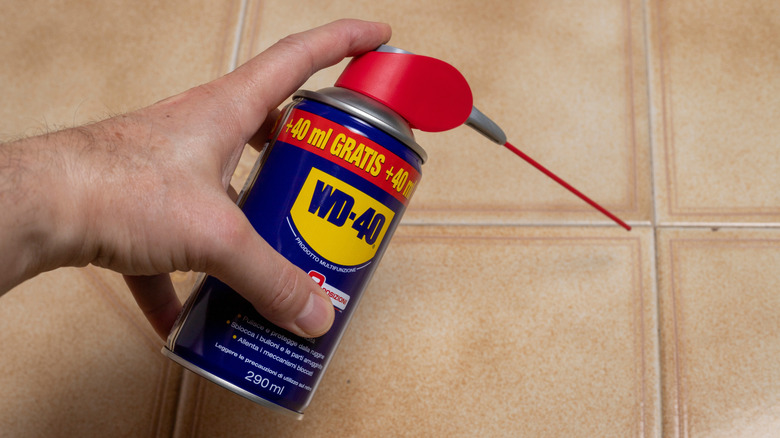
While there are ways to make your home less attractive to mice, covering it with WD-40 isn't one of them. In fact, according to Josh Petro, there is no reliable or evidence-based proof that using the lubricant discourages mice or other rodents. During an exclusive interview with Hunker, Petro explained, "WD-40 is not a rodent repellent, and spraying it around the perimeter of your house is unlikely to create a barrier that keeps mice or rats out." The extermination expert believes the viral hack evolved from an assumption that rodents, who have a strong sense of smell, will be repulsed by WD-40's strong petroleum/solvent odor, but the odor eventually fades.
Petro warned against using WD-40 as a pest repellent not just because it's ineffective against rodents. It comes with several other downsides as well, including the risk of fire and inhalation hazards. "WD-40 contains petroleum-based hydrocarbons and is classified as a flammable aerosol ... Its vapors or mists can cause respiratory irritation, dizziness, or other nervous-system effects," he said, before adding that the exposure can irritate or dry your skin and eyes.
Spraying WD-40 along doors and windows also creates a mess. The same secret ingredients that protect your tools from rust or lubricate your bike chain leave behind a sticky residue that grabs dirt, pollen, and other debris.
Ditch the WD-40 for these proven mice-repelling alternatives
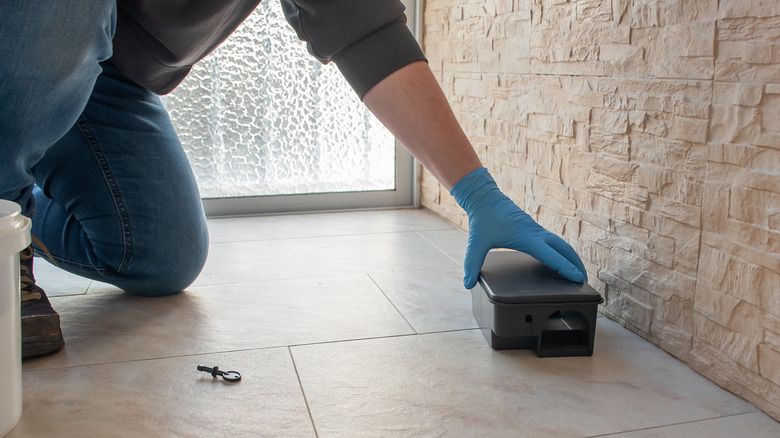
In exclusive conversations with Hunker, both experts agreed there are much safer and more effective DIY mouse repellent options than WD-40. "The safest and most reliable DIY approach is not really a 'repellent'," Josh Petro said. "It is exclusion plus removing attractants, with traps only if mice are already inside." He suggested removing food and water sources while adding natural solutions to keep mice away for good, like peppermint essential oil.
Dr. Jim Fredericks also stated that homeowners should act before rodents make their way inside. "You can take steps now, including sealing cracks and holes around the home, replacing loose mortar and weather stripping, keeping firewood at least 20 feet away from your home and at least five feet off the ground, and storing food in sealed plastic containers," he suggested. However, if you see mice scurrying inside your home or find tell-tale signs like droppings, gnaw marks, or dark grease along your floors, he recommended reaching out to a qualified pest control professional.
Similarly, Petro warned that homeowners need to understand when it's time to stop attempting homemade remedies and seek out professional help. Based on his 11 years of extermination experience, the expert said, "If pests are biting or stinging, contaminating food, damaging electrical wiring or the structure, or if DIY treatments require potentially hazardous chemicals, professional help is the safer choice." He explained that traps and sprays are only a temporary fix, and that finding large amounts of droppings, damage, or spotting multiple mice is cause to call in a professional pest exterminator.