

No Need For Concrete: The Durable Alternative For A Sturdy Retaining Wall
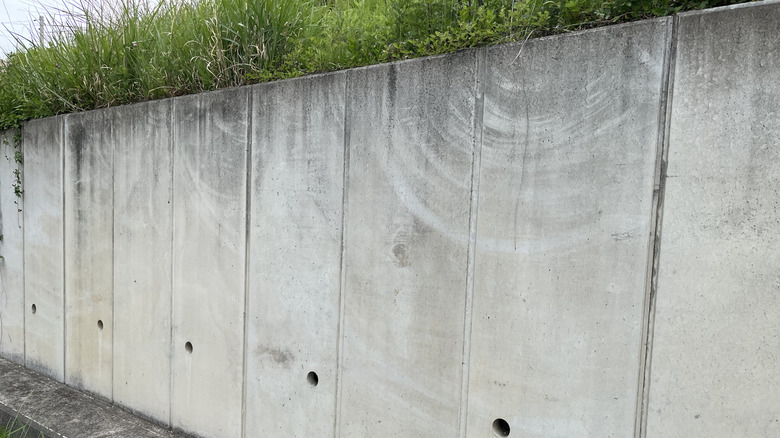
When discussions about building retaining walls come up, concrete is a commonly recommended material. In both its poured and block form, concrete is strong, stylish, and accessible. However, it is prone to cracking and spalling if not installed correctly, which can make repairs difficult. If you want to ditch concrete retaining walls, gabion walls are a durable, smart alternative. Not only are they highly sturdy, but they are also affordable and eco-friendly.
Though gabion walls' origins can be traced back thousands of years, the term "gabion" is derived from the Italian "gabbionne" which roughly translates to "big cage." A gabion retaining wall is constructed out of large wire cages filled with stones. The cages keep the rocks held in place, and the rocks, for their part, allow for water drainage and keep the hillside from collapsing.
Gabion retaining walls can be very effective, especially on steep properties where erosion is a particular concern. Gabion walls also have the additional benefit of being impervious to the freeze/thaw cycle that can destroy concrete. Another reason gabion makes an excellent retaining wall alternative is that the use of stones can easily match the surrounding landscape, whereas concrete has a more distinct, consistent look and could potentially look out of place.
Installing gabion walls is easy, affordable, and eco-friendly
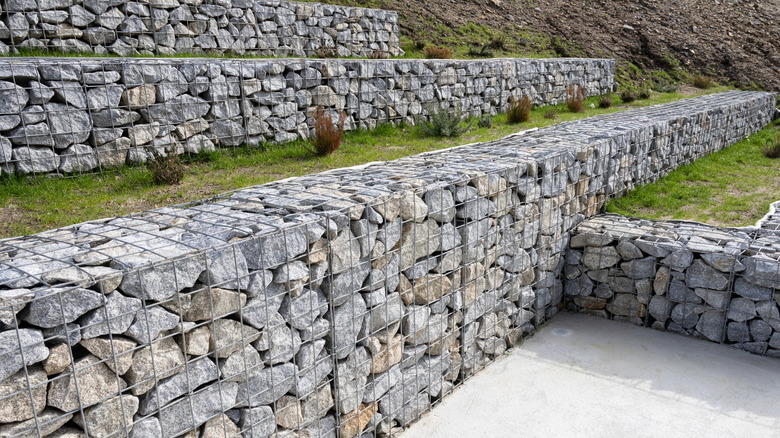
As far as installation is concerned, gabion is much easier than concrete. Constructing gabion retaining walls boils down to creating cages from gabion baskets, securing the cages together with metal hardware, and then stacking rocks inside. For a retaining wall, gabion ratios are a foot thick for every 2 feet of elevation. So, a 4-foot-tall retaining wall would need to be 2 feet wide. While something that size could be a manageable DIY project, larger gabion retaining walls may require professional installation, especially if they require trench digging or ground leveling.
Which brings us to affordability, which for gabion can vary greatly between DIY and the pros. For professional installation, gabion runs between $25 to $50 per square foot, which is almost identical to concrete's $25 to $40 per square foot range. DIYing gabion walls can be made more affordable if you have access to free or recycled stones. This use of pre-existing materials also makes the walls very eco-friendly, as it reduces the need for concrete to be mixed and made.
Besides retaining walls, gabion baskets can be utilized for a number of different home purposes, including accent walls and decorative garden pillars. One downside is that the wire cages give gabion walls an industrial look, which won't suit every home design and landscape.