

Ditch Concrete Blocks: A Smarter Way To Build A Retaining Wall That Looks Good
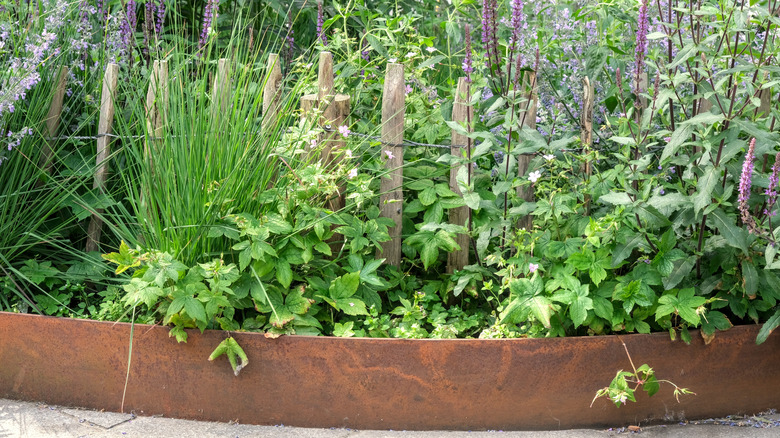
Let's be honest: Homeowners are vain when it comes to landscaping features, and rightfully so. Even the slightest details can make or break your curb appeal, so it's crucial to find materials that not only look pleasing, but get the job done. When it comes to retaining wall ideas, concrete reigns supreme. However, it's not necessarily the most original or eye-catching choice, and it does require fairly regular maintenance. If you're looking for an alternative, Corten steel retaining walls knock aesthetics out of the park and fight corrosion effectively.
One of the most functional and clever landscaping ideas, Corten steel, aka weathering steel, is famous for its lush patina and durability — a win-win. In comparison to regular steel, Corten steel contains a greater amount of chromium, phosphorus, nickel, and copper, which results in strong corrosion resistance and tensile strength. It proves to be a lasting choice, whether you're opting for a retaining wall on uneven ground, in a garden, or along a driveway, and it promises an alluring upgrade from concrete or stone.
Corten steel retaining walls — see if they're right for you
While there are plenty of pros to a Corten steel retaining wall, let's get the con out of the way: Its price. Corten steel can make its way up to five times the price of concrete, reaching $150 per square foot, so a project requiring 80 square feet of steel can cost up to $12,000 for material alone. (And rust run-off is possible in a wall's early days, which could affect nearby materials, though this will ease as the Corten stabilizes.)
If you're willing to pay the price upfront, however, there are plenty of benefits of going this route. For one, there's no maintenance required — no coating, painting, sealing, etc. If you live in an area with plenty of rain or snow, you won't have to stress because it will still last decades even when exposed to harsh conditions. And as much as it is a landscape looker, it's equally durable, ideal for adding structure to land.
If you're wondering how to incorporate this look into your space, start small: You place a retaining wall around a tree or a small garden before tackling a larger plot of land. Speak with a contractor about pricing and planning, or consider the DIY route if you're looking to keep costs down. Always make sure to discuss with your local building department, as this project could require a permit before installation.