

Out With Drywall: A Lightweight And More Durable Alternative

We may receive a commission on purchases made from links.
Don't ever stand between an exit door and DIYers who are trying to get out of drywalling. It's a nearly universal building practice, but it's also loathed by all but the most patient DIY-minded homeowners. Installation is challenging to learn and almost supernaturally messy, and the final product is beset with issues like a lack of impact resistance, lack of acoustic dampening, and most importantly, vulnerability to moisture and mold. Hunker spoke exclusively with Peter Kravchuk, contractor, carpenter, and founder of New Day Construction – a highly-rated Washington-based construction and remodeling company – about the best alternatives to drywall, and he had some options, some fascinating insights, and one product he often recommends: PVC panels.
There are actually a lot of drywall alternatives, and Kravchuk pointed to three that have notable practical advantages over drywall. "Plywood or birch ply sheathing finished clear or painted holds fasteners anywhere on the wall, which matters in garages, shops and mudrooms where people hang heavy things," he said. He also had some praise for shiplap and similar solid-wood board wall coverings. "Tongue-and-groove pine or shiplap is forgiving on out-of-plumb framing and hides movement in older houses," Kravchuk pointed out.
But Kravchuk also explained that one of the most practical alternatives is often manufactured wall panels, particularly polyvinyl chloride. "PVC and composite wall panels are the ones I reach for in wet areas," he said. "Fiber cement backer with tile is heavier, but it's the right call behind showers." PVC panels weigh significantly less and go up faster than drywall, and they're impervious to moisture. They also offer up to 50% lower materials and labor costs and even have a lower lifetime total cost of ownership.
The case for PVC wall panels
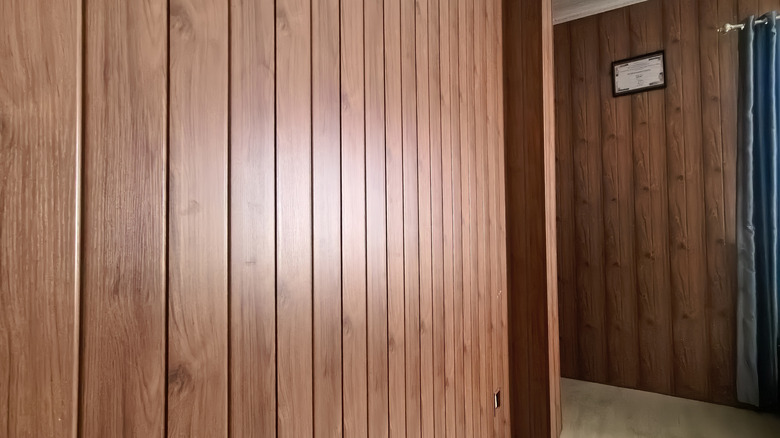
Its ability to withstand moisture is the key to PVC's usefulness as a wall covering. "They're genuinely waterproof, not water-resistant," Kravchuk said, "so a leak or splash doesn't start a mold problem inside the wall cavity." That smooth waterproofness also provides another key benefit: ease of cleaning. "They clean easily with soap and water, which is why they work so well in laundry rooms and utility spaces where drywall gets scuffed and stained," he explained.
Anyone who's worked with PVC trim probably understands the waterproof argument, and might already have a handle on the other big benefit of PVC: It's very easy to work with. "A single person can carry and cut them with standard woodworking tools, reducing labor costs compared to hauling and hanging 5/8 sheets," Kravchuk said. "Installation is fast, since panels go up over furring or directly to studs with no taping, mudding, sanding, or three days of drying time between coats," he added.
However, PVC doesn't work well everywhere. The smooth, often white surface of standard PVC panels looks like what it mostly is — a wall covering for public businesses, particularly businesses where easy cleaning is critical. "Even good PVC panels read as commercial in a living space, and seams are visible in a way taped drywall seams aren't," Kravchuk says. While PVC panels are available in rectangular, square-edged sheets just like drywall, you can also buy them in interlocking, tongue-and-groove, and lapped profiles. They're also available in plain and decorative varieties, and in utilitarian profiles like slatwall. But it's hard to shake the commercial feel.
Where to use PVC panels, and when not to
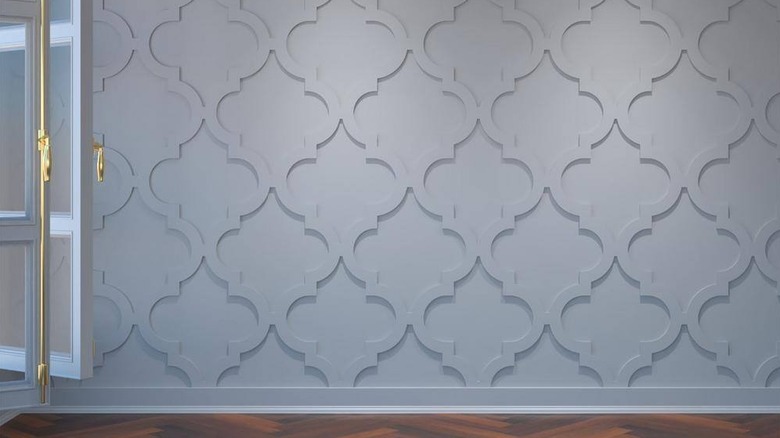
"Drywall became the default because it's cheap and paintable, not because it's the best performer in every room of the house," Kravchuk told Hunker. PVC wall panels clearly have their charms, like moisture resistance, cost, and workability — cutting PVC boards is almost a pleasure. But there are significant downsides that aren't necessarily the same as the advantages and disadvantages of PVC vinyl fencing or, say, PVC trim.
The big one is the fact that it might not be legal to cover walls with PVC where you live. This is mainly owing to the material's fire performance. "PVC behaves differently than gypsum in a fire and can release smoke," Kravchuk explained, "so code often still requires drywall as the base layer in garages and on shared walls. Check with your building department before planning a whole room in it." There's also the problem of off-gassing, though this toxic problem is more of a concern with PVC shower curtains that aren't painted.
Nonetheless, where PVC is allowed, it can have a big effect. Kravchuk said that wherever the biggest problem is moisture- or impact-resistance — basements, detached workshops, garages, laundry rooms, mechanical rooms, and utility closets — PVC is a candidate, particularly since these spaces don't need to look more homey than PVC can manage. This is most dramatically true of spaces that are prone to flooding, like basements, where even brief water incursions can lead to drywall replacement, while PVC wall panels just shed the problem moisture.