

No Cluttered Pantries: The 'Invisible' Kitchen Storage Trend Taking Over Homes
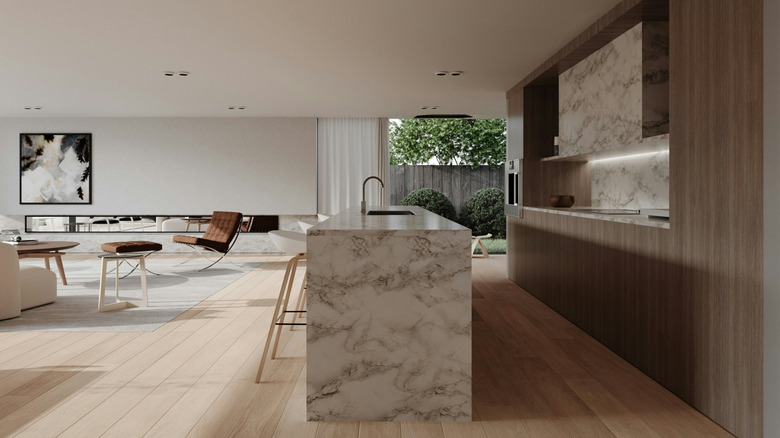
Some see it as minimalism or warm purposefulness. Some see it as a subtle sign of excess. And nobody's supposed to see it at all, since the recent buzzword among interior designers is the "invisible kitchen." The idea is that the kitchen shouldn't stand out from other areas of your home but be fully integrated into its architecture and design, often via innovative storage solutions. And while some designers might balk at such a description, the invisible kitchen is a three-way marriage of minimalism, engineering, and sleight of hand in hiding functional elements to create a more flexible, aesthetic space.
The rising trend, which is best-suited to open-concept layouts, extends the look and feel of the living area seamlessly into the kitchen. Utilitarian components like small appliances, range hoods, and dinnerware all but disappear behind movable panels and other smart design enhancements, allowing the form to overtake the function. "This is about intentional design. A kitchen so considered, so cohesive, that nothing competes for your attention," Dallas-area real estate broker Julie Provenzano explained. "It marks a shift toward a quieter, more integrated kind of luxury." The hidden kitchen changes the room into something inspired by five-star hotels, according to designer and architect Michael Gabellini (via The New York Times). Marked by high-end custom cabinetry, natural materials, luxury appliances, and advanced transformable fixtures, the hidden kitchen is a decidedly upscale space hiding in plain view within the homes of the wealthy ... often in a second home or urban condo and primarily used for entertaining with little cooking.
Are average homeowners interested in invisible kitchens?

The invisible kitchen isn't the most popular kitchen trend of 2026, as it sits in that early stage of trendsetting where only the wealthy fully express it until it "trickles down." The most uncompromising versions seem to imply the revival of the scullery, a separate food-prep galley requiring renovations that many middle-class homeowners would be unlikely to prioritize. All this luxury comes at a luxury price ... easily six figures when you start making major remodels, installing futuristic fixtures, and upgrading appliance packages. An average person unprepared for a full-scale overhaul may be better off trying more budget-friendly tricks to create an invisible kitchen appearance.
The National Kitchen & Bath Association's "2026 Kitchen Trends Report" reflects some interest in ideas related to invisible kitchens, highlighting themes like whole home continuity and seamless design, but nothing like a totalizing invisible kitchen approach is mentioned. It doesn't look like the invisible kitchen is catching on with the average homeowner just yet. We used Google Trends to compare the interest in invisible or hidden kitchens to various keywords suggesting more traditional approaches, like "professional range" and "cabinet hardware." In the past 12 months, web and YouTube users were as much as 775 times more likely to search for traditional terms, and Google Shopping users were far more interested in traditional kitchen products ... 66 times more likely, for example, to search for "range hood" than "appliance garage."
Capturing the invisible kitchen look in your home
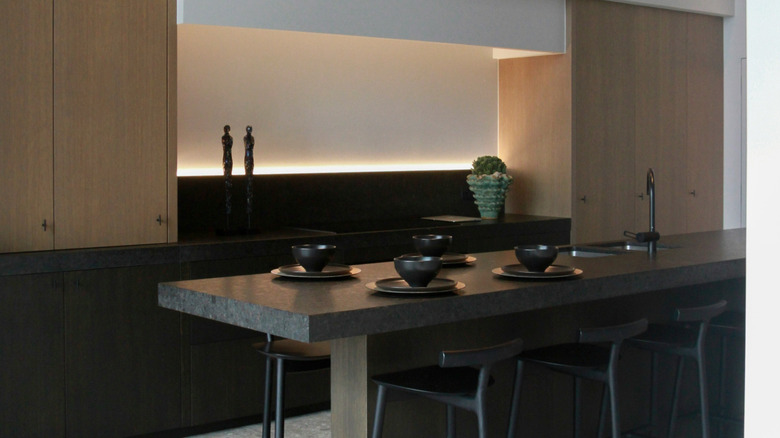
There are lots of ways to achieve invisible kitchen aesthetics without the scullery or DoorDash bills. The NKBA suggests, for example, putting prep sinks and small storage appliances into pantries to create a kind of mini-kitchen that relieves the main kitchen of some of its functional demands. Appliance garages, pull-out pocket doors, and other means of appliance concealment (but generally not vertical shelves, an otherwise excellent alternative to appliance garages) are an obvious upgrade, but you can also look to more advanced product choices to get the hidden kitchen storage you want. Panel-ready appliances that look built in and hidden in-drawer or pop-up outlets are a great start. Even elements of the unfitted kitchen, an up-and-coming alternative to built-in cabinets earlier this year, could fit an invisible kitchen, since freestanding furniture like large island tables partly defines non-kitchen rooms.
Many "invisible" kitchens won't have upper cabinets, but a single row of tall cabinets that look like a wall. Pantry entrances can be hidden, with all the camouflaging, hardware-free panels and cabinets matching the kitchen's walls. Rather than cultivate the hotel lobby vibe, introduce decor elements like pottery and plants that de-emphasize kitchen functionality. Remember you can dip your toe in the invisible waters without jumping in over your head. As always-sensible design and lifestyle expert Arlyn Hernandez wrote for Emily Henderson, "Loving design and a beautiful room don't have to also come with a degree from MacGyver University for how to disguise everything in sight to look like a vintage oil painting or woven basket."