

Two Cabinet Trends That Are Going To Take Over Kitchens In 2027
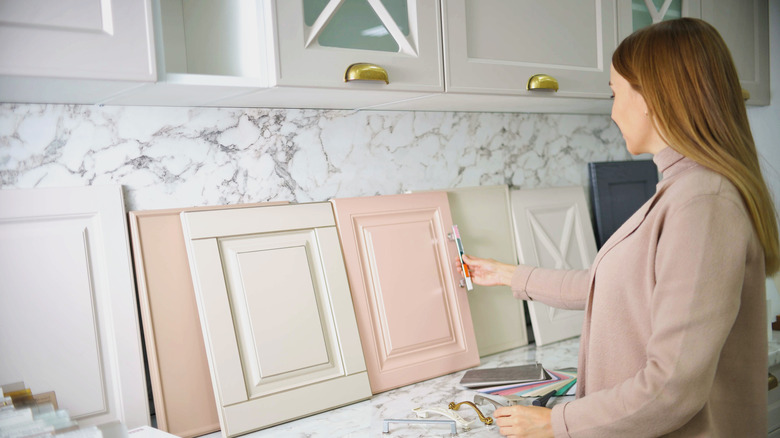
Kitchen cabinet trends are constantly evolving. Take a look back at the cabinets of your childhood. They might have been long runs of bulky honey oak doors, or glossy laminate cabinets that showed every single greasy fingerprint. Well, the tides have shifted, and there are two leading cabinet trends that designers say will be taking over in 2027. The answer? Fewer upper cabinets and a move back to more traditional styles.
Let's start by addressing the latter. It might surprise you to hear that traditional styles are back. After all, didn't we just condemn swathes of wooden cabinetry? But as bulkier profiles paired with speckled granite countertops are certainly still a look of the past, honey oak cabinets have made a comeback in 2026, and it's not just the finish either. Interior designers like Christopher Boutlier are noticing a return to classic door profiles. "Not fussy or overly ornate, but kitchens that feel as though they could have been built a hundred years ago," he told Southern Living.
Then there's the move away from upper cabinets. Instead of a run of vertical cabinets that can overcrowd a kitchen, there's a trend toward wall storage alternatives like open shelving. This can be traced to a desire for more personal, lived-in kitchens. "People love to collect things, especially kitchen items," designer Brianna Scott told Good Housekeeping. This results in a space that's "functional yet open and not filled with a ton of millwork," she says.
Traditional cabinetry styles
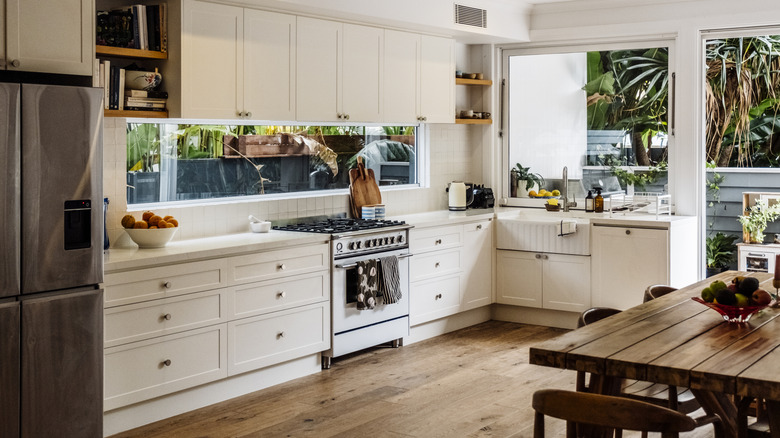
In the last few years, there's been a move away from stark, clinical kitchens. Instead, homeowners are favoring warm tones and textures that make a space feel more homey. With cabinetry, that often translates to natural wood finishes and molding details, which is likely why searches for "traditional kitchen cabinetry" are up 150% from 2025, according to Google Trends data.
But what does traditional cabinetry look like? Well, besides the aforementioned warm-toned wood, expect to see more classic Shaker-style kitchens. Shaker cabinets have been a mainstay in kitchens for centuries, making them a truly timeless kitchen cabinet style. Speaking to Southern Living, Christopher Boutlier also identified inset cabinetry and furniture-inspired details as part of this cabinet trend. Inset cabinetry is when the doors and drawer fronts sit flush within the cabinet's frame, and the origins of the style can also be traced back centuries. Meanwhile, furniture details could translate to freestanding cabinetry, decorative legs, or statement hardware like iron handles or exposed hinges, and features associated with antique furniture.
And don't worry — traditional cabinets don't have to look stuffy or dated. A trending paint color can modernize the classic designs, or you can opt for more contemporary styles, like slim shaker cabinetry, where the outer frame is less wide than the traditional shaker style, creating a more streamlined and minimalist look.
Stylish alternatives to upper cabinets
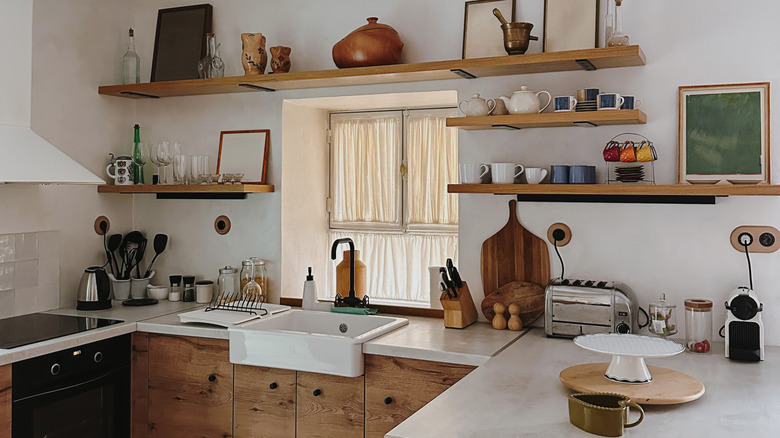
For the past few years, kitchens have featured fewer vertical cabinets on the upper wall. Before, it was typical to have a run of cabinets both off the floor and around the walls for extra kitchen storage, but this can make kitchens feel smaller and more closed in. Now, designers like Emily Henderson are questioning whether they're officially out of style, favoring wall storage alternatives like open shelving instead. Not only can it make for a visually cleaner kitchen, but it also allows for more personalization. For example, you could display a curated collection of kitchenware like mugs, bowls, and glassware for a kitchen that looks truly unique.
You don't have to rely on open shelving in place of traditional upper cabinets, either. For extra storage, consider a hanging rail for utensils like pots and pans, or opt for non-conventional furniture like a display cabinet to act as a miniature pantry. If you prefer a more minimalist look, you could pare down your kitchenware so it all fits in your lower cabinets, and leave the upper portion of your walls blank.
The one trendy exception to upper wall cabinets is when they stretch all the way to the ceiling. Instead of leaving a wasted space at the top of your cabinet, which tends to collect dust, vertical cabinets with millwork extending all the way to the ceiling can look custom and high-end. It's a style many designers use in smaller kitchens where closed cabinetry is necessary, yet it still feels very on-trend.