

Stop Pruning These 11 Shrubs Every Crisp October & Thank Us Later
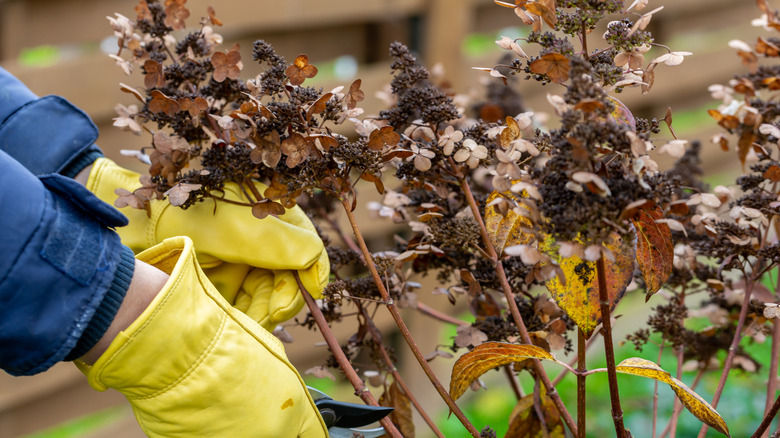
It's October — time to tidy up your garden and get it ready to withstand the cold of winter. That means pruning certain plants for a more productive garden in the spring, but sometimes, it also means putting the shears down. If you've found yourself wondering why some shrubs just aren't producing the flowers you expected come springtime, it could be that you've been pruning them at the wrong interval, basically cutting off their flowers before they have a chance to bloom.
The list of plants to avoid pruning in October is a long one, and includes several shrubs, from lilacs to forsythia to rhododendron, which bloom on old wood, meaning they produce the buds for next year's flowers at the end of the current growing season. But it's not just old wood shrubs that you want to skip pruning in October. Some that bloom on new wood should be left alone, too, as a late fall pruning can lead to winter damage.
Bigleaf hydrangea
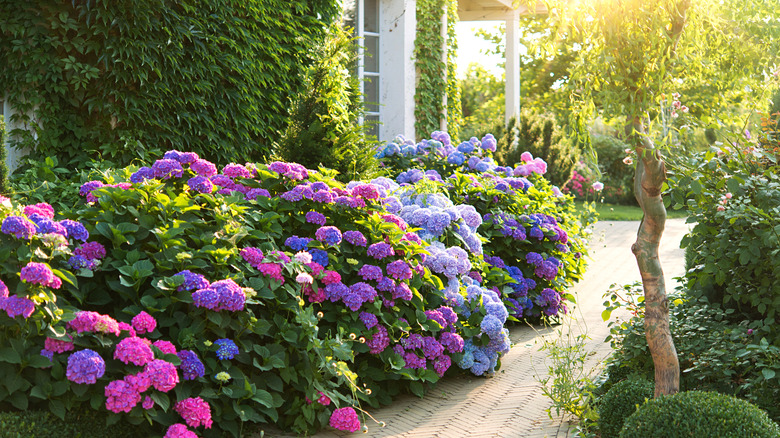
For perfect looking hydrangeas, you need to follow the 1/3 rule of pruning, meaning you only prune one third of the shrub each year. It's not just how much you prune, but also when you do it that matters, particularly for varieties like bigleaf hydrangea (Hydrangea macrophylla), which flowers on old wood. The best time to prune it is in the summer, right after it has flowered. Late pruning is one of the primary reasons why the shrub doesn't bloom — depriving you of its signature flowers.
Camellia
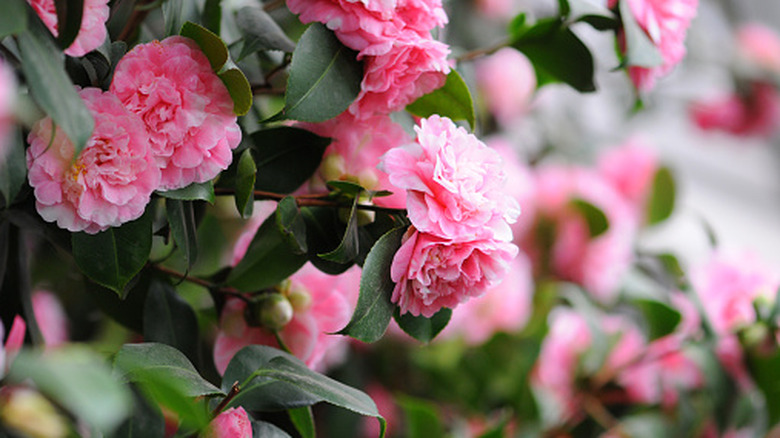
With their evergreen foliage and distinct red, pink, or white flowers, camellias (Camellia japonica) are attractive garden plants and particularly popular in the southern part of the U.S., as they're only hardy in Zones 7 through 9. Since the shrub produces flowers on the previous year's growth, pruning the plant in October will mean no bloom next year. The plant flowers in the late winter to early spring, and that's the best time to prune it, just after it's dropped its blossoms for the year.
Butterfly bush
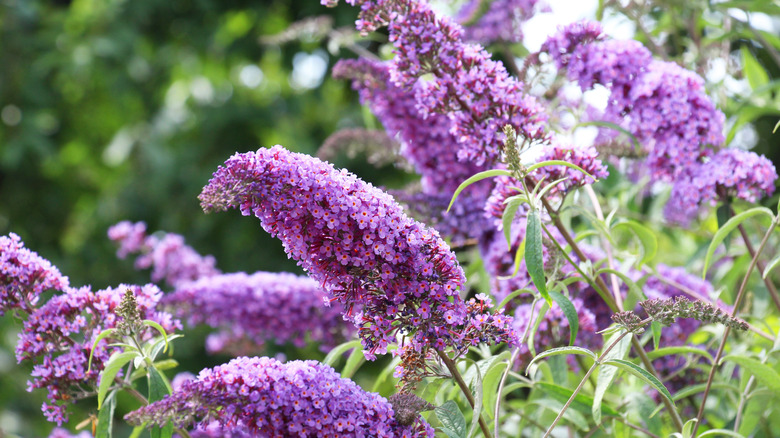
Since it is considered an invasive species in several areas, there's a question as to whether you should avoid planting butterfly bush (Buddleja davidii) in your garden. But if you already have the profusely blooming shrub tucked away in a garden bed, the ideal time to prune it is next spring, rather than in October. Butterfly bush flowers from new growth, so while pruning it now won't eliminate next year's blooms, it will make the shrub vulnerable to winter's cold. Leave it alone and wait until you see new leaves forming on the stems next year before you cut it back.
Flowering almond
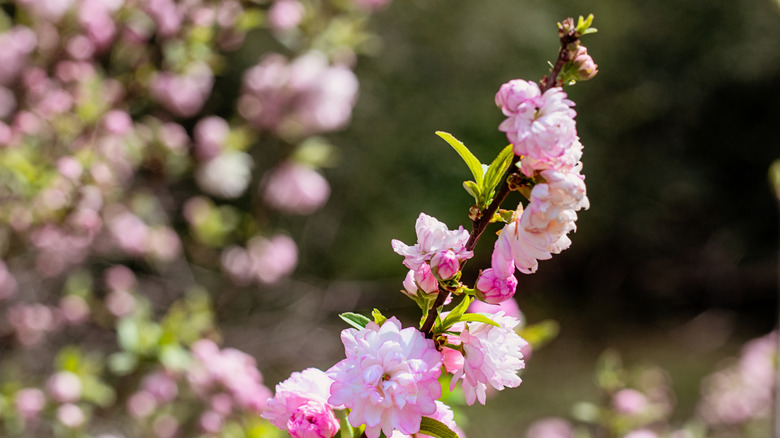
Not to be confused with almond trees (Prunus dulcis), flowering almond (Prunus glandulosa) is a compact shrub that produces beautiful double pink flowers in the early spring. It's a one-and-done-wonder, meaning it blooms for just a single season each year, in the early spring. That is, it blooms if you leave it well enough alone in October. The shrub produces flowers on old wood, so if you take a pair of pruning shears to it in the fall, you'll cut off all the unique flora for next spring.
Fringe tree
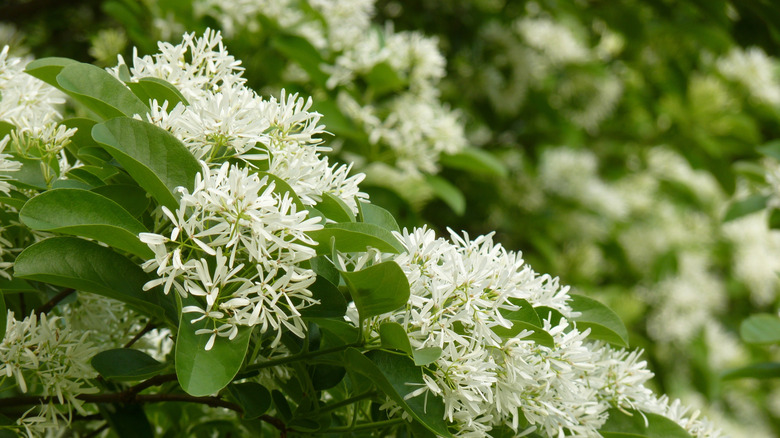
A large shrub that is sometimes grown as a tree, fringe tree (Chionanthus virginicus) produces long, slender white flowers in the late spring. It flowers on old wood, so that's one reason to skip pruning it in October. Another is that it's a slow grower and may not need that much pruning at all. If you're going to cut fringe tree, do it after the shrub has finished blooming. Focus on removing damaged stems and branches when you do prune.
Weigela
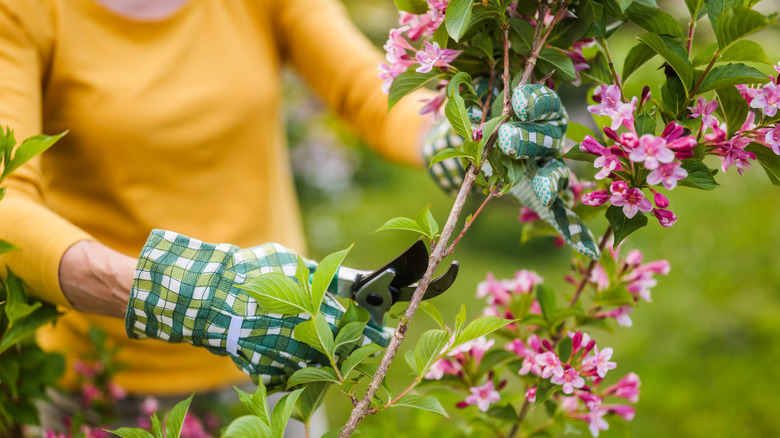
Weigela (Weigela florida) is a shrub that thinks it can have it all. That is, the shrub blooms on both old wood and new wood. For its initial bloom, in the spring, it flowers on old growth — which is why you don't want to cut it back in the fall. Then, it often blooms again in the summer, this time on new growth, meaning you may not want to swoop in with the pruning shears right away. Instead, the ideal time to cut it back may be in the early spring, removing any branches that have died during the winter.
Cotoneaster
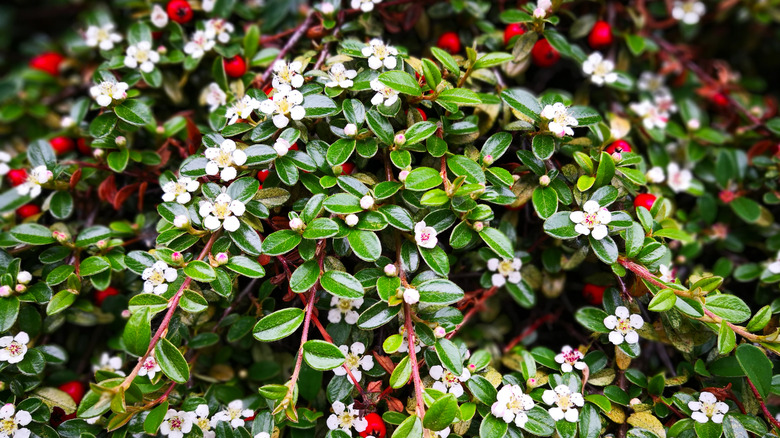
Cotoneaster (Cotoneaster coriaceus) is a shrub that has something to offer in the garden year-round, from delicate spring blossoms to late season foliage color to brilliant red berries in the fall. Pruning it at the right time is essential if you want it to continue to be a showstopper in your garden or hedge. Skip an October pruning, as doing so will encourage the plant to produce new growth, which can be damaged by frost. So wait until the end of winter or early spring, before the shrub moves into its active growth phase, to give it a trim.
Beauty bush
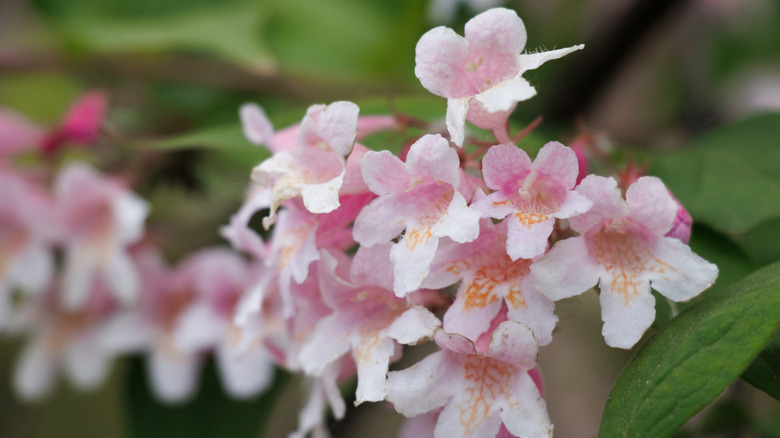
When it's covered in lots of little pink flowers in the spring, beauty bush (Kolkwitzia amabilis) proves that it's been well-named. The rest of the year, eh, not so much, except maybe in the fall when its leaves turn a touch yellow. So, to ensure that you get those coveted flowers and beauty bush's annual display, make sure not to prune it in October. It flowers on old wood and will need all the buds it can get to put on a pretty show next spring. After it has flowered, you can cut it back, but no more than 30% and no later than the middle of summer.
Viburnum
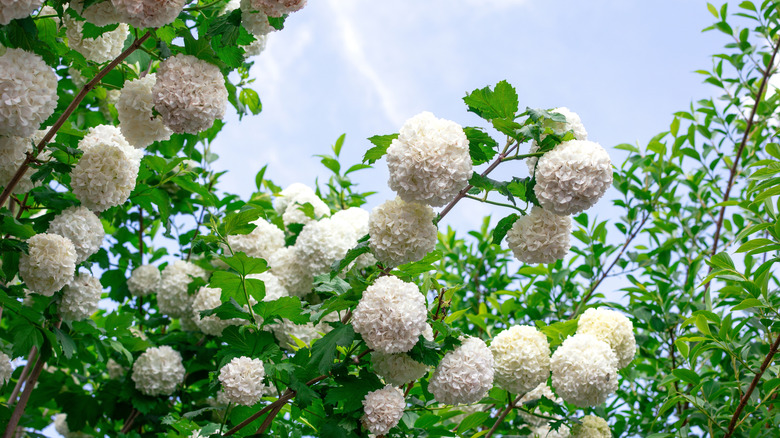
Viburnum (Viburnum spp.) is the type of low-maintenance, reblooming shrub that can make you forget hydrangeas. The shrub produces flowers on old wood, meaning that if you're going to prune it, the best time to do so is right after it finishes flowering, usually in the early summer. That said, pruning viburnum in the summer can mean cutting away the flowers that will develop into berries in the fall. If you need to do a bigger pruning, cutting away branches that have gotten unruly, wait until late winter or early spring, when it is starting to warm up but before the plant has started actively growing.
Flowering quince
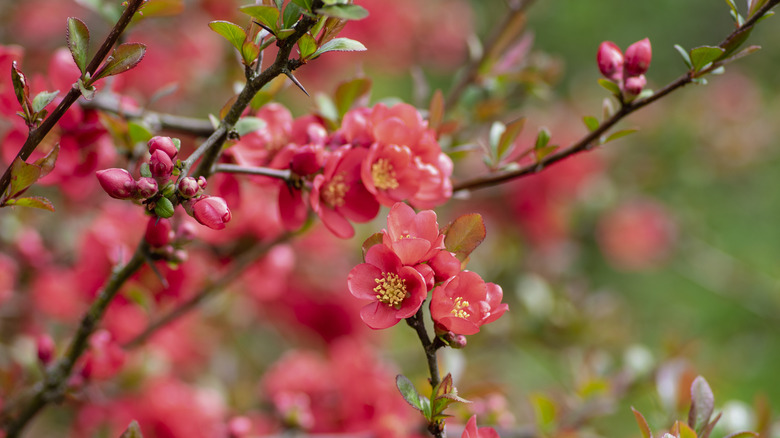
A member of the rose family, flowering quince (Chaenomeles speciosa) is a large shrub that produces a type of quince fruit that's usually turned into sweet jelly or jam. Or, at least, it can be, if the shrub isn't pruned at the wrong time. To get that fruit, skip pruning flowering quince in the late fall, as it flowers on last year's growth. Also hold off on pruning in the spring, after it's finished flowering. If you don't have the time to make jam and don't care about the fruit, give the shrub a good pruning in the spring to improve next year's blossoms.
Chokeberry
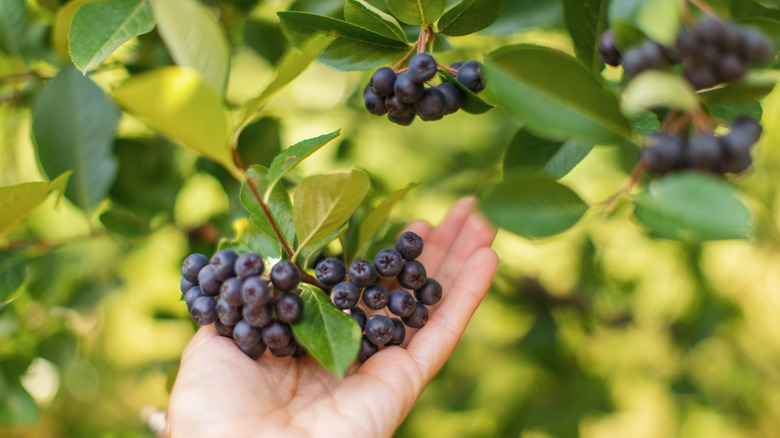
Like flowering quince, chokeberry (Aronia spp) is a member of the rose family. It also produces fruits that are tough to eat on their own, thanks to their astringency. While you may not want to eat them, they are pretty to look at and come in either black or red, depending on the variety. To get those fruits, and the flowers that precede them, don't prune chokeberry in fall. Instead, wait until after it has flowered and use a light hand. Focus on cutting back dead or damaged branches when you prune.