

Skip The Vinegar: Easily Clean Floor Grout With 2 Kitchen Staples
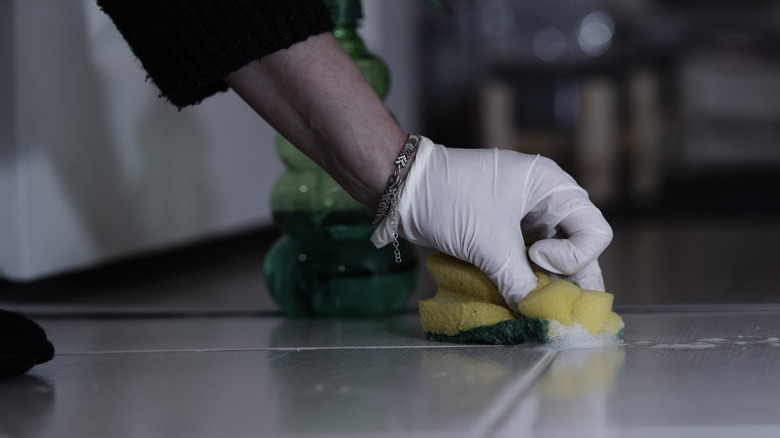
White vinegar is arguably one of the most common "green" cleaning items used as an alternative to commercial cleaning products. When diluted with water (and sometimes dish soap, too), vinegar can indeed be a powerful home cleaning ally. Its acidity can help break down dirt and grease. But if you're trying to remove dirty grout stains with vinegar and not seeing results, there's a good reason for this: Vinegar doesn't have the abrasive qualities needed to treat these stubborn areas. Instead, there may be another solution waiting in your kitchen. With the right technique, you may be able to use baking soda and water to clean floor grout much more effectively than vinegar.
You might already use baking soda around your home for its odor-absorbing qualities. However, baking soda is also slightly abrasive. This makes it gentle enough to scrub certain surfaces, including floor grout. Yet you cannot it is by itself. When plain water is added to the baking soda, it makes a mildly abrasive cleaning paste. A baking soda and water solution is good to use in conjunction with a regular mopping schedule based on your floor type to keep both your floor tiles and grout sparkling clean.
How to use baking soda and water for cleaning floor grout
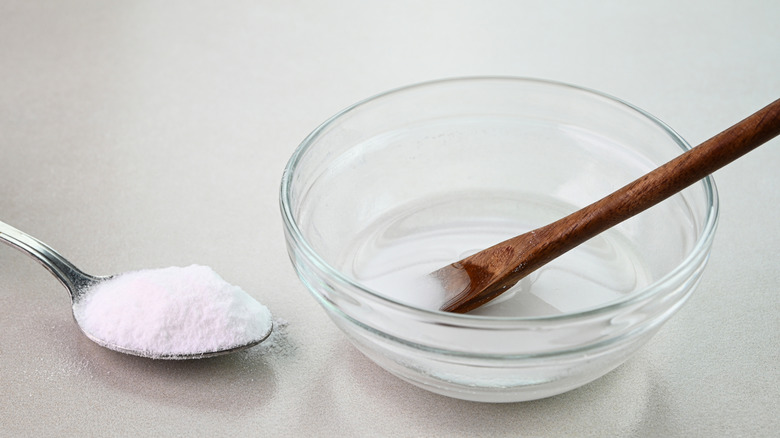
Baking soda and water is an affordable and accessible cleaning solution, and it's easy to use, too. First, pour a liberal amount of baking soda into a large bowl. Add small amounts of plain water, a little at a time, until you've created a thick paste. Apply the paste directly to the grout lines and scrub them with a soft brush, then let the paste sit for at least 15 minutes. Finally, rinse the grout with warm water before drying with a soft towel. Alternatively, if you're in a pinch, you can sprinkle baking soda in small amounts on a damp sponge and scrub the grout before rinsing with clean water.
Despite the overall safety of baking soda and water, it's still a good idea to test one small area of grout before using it on your entire floor, just like you would with any new green or commercial cleaner. Also, as an important caveat, baking soda should never be used on waxed or wood floors, as it may strip away protective layers and finishes. There are also other surfaces to avoid cleaning with baking soda at all costs, including natural stone countertops, so avoid using baking soda on grout near these surfaces.
Should you also use vinegar? These two solutions effectively cancel one another out, and instead create a salt water substance in their wake. Stick with baking soda and water instead for your floor grout, and repeat the process until the lines look clean again.