

The Stunning Historical Windows That Add Privacy Without Blocking Natural Light

Not every house offers plenty of natural light, and spending time in dark spaces can be a serious downer. Swapping heavy curtains for breezy linen ones can sometimes help, but it also means losing some privacy in the process. The same goes for knocking down walls or removing interior doors. These changes may brighten things up, but they definitely leave rooms way more exposed. A better solution can be found in a window feature barely anyone knows about unless they're from the South. Often found in historic homes, transom windows are panes of glass installed above doors or interior openings that let daylight bounce around a home without sacrificing privacy. To learn more about their appeal and how to incorporate transom windows in today's homes, Hunker spoke with Mark Johnston, Founder of Historic Design Consulting.
"Transom windows have a long history that stretches back hundreds of years, and it is these historic roots that remind people of 18th and 19th century American homes," Johnston said during his exclusive interview. While the earliest versions date back to the 1400s, transom windows became commonplace in Georgian, Victorian, and Colonial Revival homes before the widespread use of electric lighting. "They add an interesting architectural element to interiors that can make a space feel more formal and emphasize the height of taller ceilings that were common in older house styles," the expert added.
Transom windows come in many styles offering natural light, privacy, and ventilation
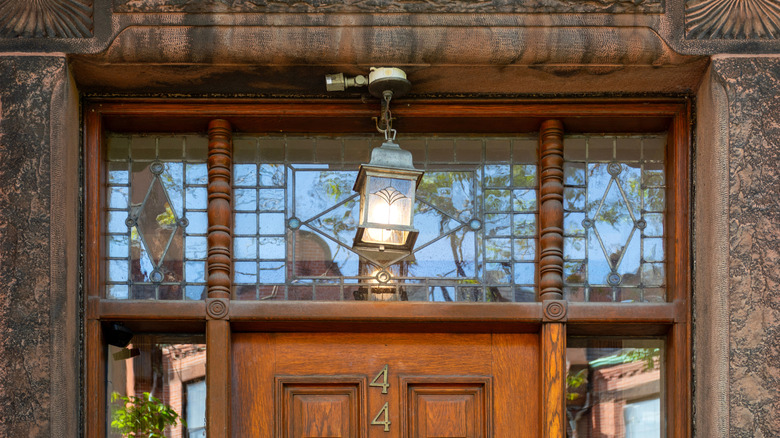
Because they're installed above doors or cased openings, transom windows tend to be much smaller than standard windows. And often, they're made of leaded or stained glass. According to Johnston, these traits make them an excellent way to add privacy without blocking natural light.
The stunning windows have other benefits as well, some of which are rooted in their original history. "Transom windows were particularly common in 19th century apartments and hotels between public and private areas," the historic restoration expert explained. "They maintained privacy while allowing natural light and fresh air to enter living spaces." While newer versions installed in homes today are typically fixed or non-opening, this wasn't always the case in historic properties. In fact, older transoms were commonly designed to be operable. They typically relied on in-sash or awning-style mechanisms that allowed them to be opened for increased airflow and ventilation before the advent of air conditioning.
While you can DIY a transom window, it's also easy to purchase them in a wide range of shapes and styles. Half-round transoms, which are also called fanlights, are a common addition above the front doors of Federal or Colonial Revival homes. Unlike sidelights, which allow any nosy neighbor to peer inside, locating decorative windows above the door provides plenty of light without compromising on privacy.
Transom windows provide beauty and function to a wide range of architectural styles
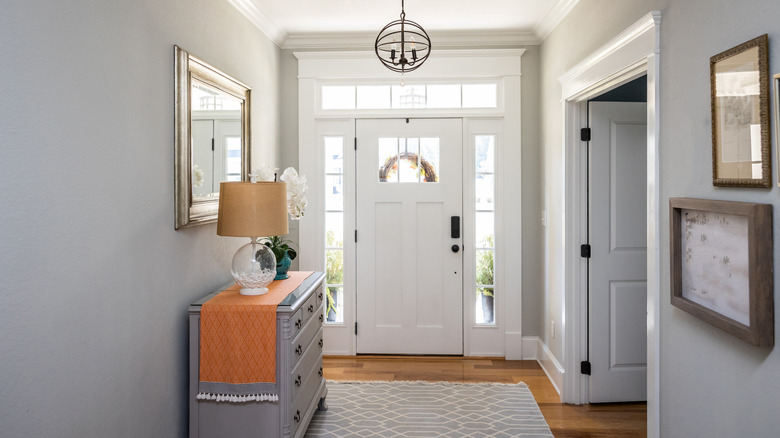
If you're trying to figure out how to brighten a dark room, a transom window is a solution worth considering. "Styles may come and go, but the benefits of transom windows endure," Johnston said before adding that he believes they'll remain a popular design choice despite originating in far-gone eras. "Although today we do not maintain the strict divisions between personal and public like they did in the 19th century, they can still serve to delineate different areas of a home," the historic design expert explained. He also noted that using transom windows on exterior walls can help link the inside of our homes with the natural light and air found right outside.
Transom windows are an iconic choice for adding privacy without blocking natural light, but it isn't all about their stunning appearance. "They aren't simply an aesthetic, but offer functional benefits," Johnston said, adding, "As we are increasingly concerned with the costs of heating an area circulation, transoms provide real benefits of moving warm air out of spaces."
Even if you don't live in a historic house, it's easier than you may think to add a transom window. According to Johnston, transoms are surprisingly versatile. "They also work well with a variety of building styles, ranging from the elaborate Neoclassical to spartan, modernist spaces," he said.