

Better Than Privacy Film: A DIY Solution To Cover Windows Above Bedroom Doors
We may receive a commission on purchases made from links.
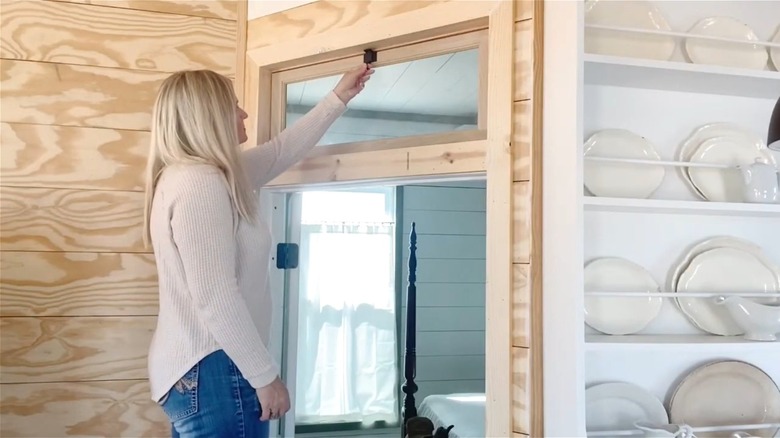
The small, horizontal window above a door or window frame is called a transom window. Transom windows were popular in the 18th and 19th centuries and are sometimes found in modern homes as well. And while they add a certain charm, many people don't like the way they let light and sound seep into a room, especially a bedroom. Privacy films seem like an easy solution, and they can filter light, but they won't block it completely or muffle sound.
Covering this type of window with wallboard is a big job and not easy to undo. Transom windows are also a vintage feature in old homes that can be more valuable than you think, so they are worth keeping. You can create your own inexpensive window cover using the tips in this video by thebrickhousechronicles. This DIY project preserves the original architectural feature while still blocking light and muffling sound, and it's easy to remove if you change your mind later.
To make the transom window cover, you will need medium-density fiberboard (MDF) or plywood. Both MDF and plywood require woodworking tools to cut the pieces to size. If you have a circular saw, table saw, or jigsaw, this will be a straightforward process. Measure the transom, then mark the MDF or wood with a pencil to cut it to fit the space. You can also cut it with a handsaw, but it's a tougher job and may be hard to make accurate cuts. Some major hardware stores can cut wood to size upon request. Once you've successfully cut the board to fit the transom window, the rest of this project is simple, and you can customize it to match your style.
Make a wood transom window cover for better light control and privacy
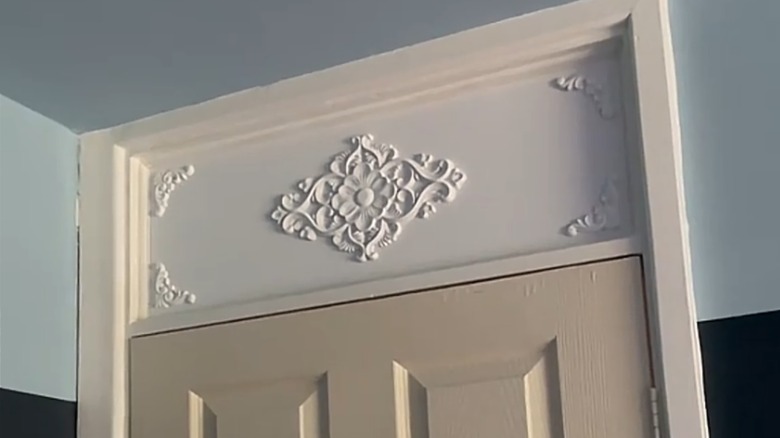
Your choice of paint or stain is the first opportunity for personalization. You can match it to the bedroom door frame for a uniform look, or paint it the same color as the door if you're trying the contrast trim or accent door trend. Keeping the cover free of any adornments will suit minimalist spaces. To get a more traditional aesthetic, add decorative molding like thebrickhousechronicles shows in her video. A wood applique, like the Yalikop Wood Appliques, can help you achieve a similar look. You can also use stick-on trim like Art3d Pre-Cut Wall Molding if you want something slightly less ornate. To paint a design, use a stencil. A hand-painted design adds charm that can suit cottagecore or folk-art inspired spaces.
Once your panel is finished and dry, it's time to mount it over the transom window. For temporary attachment, you can use Velcro strips, like the Velcro Brand Heavy Duty Tape, which makes it possible to remove and put the panel back as needed. Another option shown in the video is double-sided mounting tape, which offers a secure, removable way to mount the window cover. If you want the panel to stay up for a long time, nails and wood glue offer permanent mounting.