

Not Mums Or Black Eyed Susans: The Hardy Perennial That Brings Fall Color To The Garden
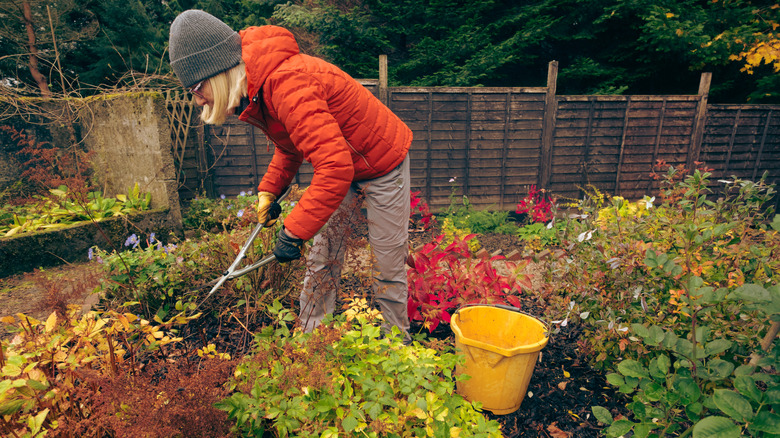
You know the drill — at the first sign of fall, colorful, potted mums (Chrysanthemum) start popping up everywhere, at the local supermarket, big box stores, even some gas stations. They adorn the porches and walkways of almost every home you pass. If not mums, it's another fall-blooming flower, like black eyed Susans (Rudbeckia hirta). While mums and black eyed Susans are pretty, there's a bit of the same-old, same-old about them. Plus, if you want potted mums to last, you need to go to great lengths.
Luckily for you, there's another gorgeous perennial to plant in your garden this fall. Bluestar (Amsonia spp.) is a three-season stunner, producing a sea of blue flowers in the late spring, vibrant green foliage in the summer, and golden leaves in the fall. Plant bluestar in your garden in the early autumn, and enjoy its beautiful, yellow foliage as the temperatures start to dip.
Choose the location for bluestar carefully — it can tolerate some shade, but for the best foliage color and overall plant form, giving it a spot in full sun is best. Well-drained soil that isn't too rich or fertile is ideal, too, otherwise the plant can spread and get floppy. Depending on the variety, bluestar is hardy from zone 3 or 5 to zone 8 or 9, and adding a layer of mulch around its crown will help it survive the cold winter.
Choosing a bluestar variety
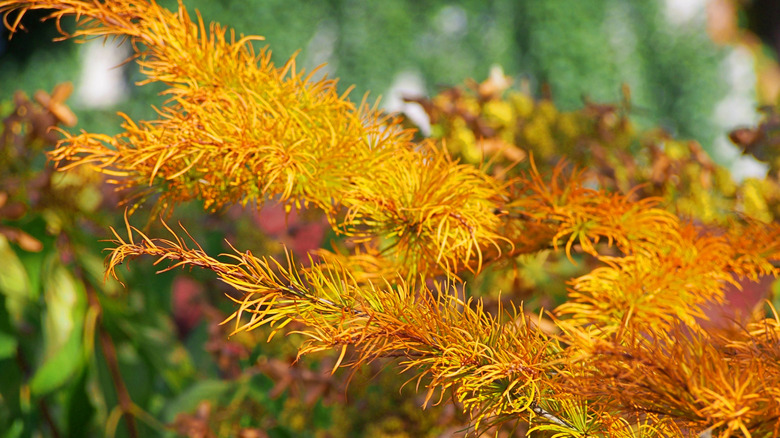
Once you've decided to plant bluestar in your garden this fall, you've got a few options. Your choices may be limited based on your location — some varieties, like Amsonia hubrichtii, are less cold-tolerant and only hardy to zone 5, while others, like Amsonia tabernaemontana, are hardy to zone 3. So, if your location happens to fall in zone 5 or above, your choice of bluestar may be dictated by your foliage preference.
The textural foliage of bluestar comes in two primary forms, lance-like, which are long, narrow and taper to a point at each end, or thread-like, which are fine, fluffy, and feather-like. Threadleaf bluestar (Amsonia hubrichtii) has fine, needle-like leaves, while the more common Bluestar (Amsonia tabernaemontana) has lance-like leaves. Although either option will give you a nice fall color, the foliage of threadleaf bluestar may be slightly more spectacular, so if you're looking for a real stunner, and don't live in a region that's too cold, that may be the variety to pick.
As fall turns to winter, bluestar will lose its leaves. But, you can leave the plant alone, Be sure to leave 12 to 18 inches of stem as part of the cutback, providing habitat for native bees and visual interest in your garden. As winter turns to spring again, and bluestar starts to bloom, it'll add height to your garden and attract pollinators. You can't really say that about a pot of grocery store mums.