

Does The Color Of Painter's Tape Matter?
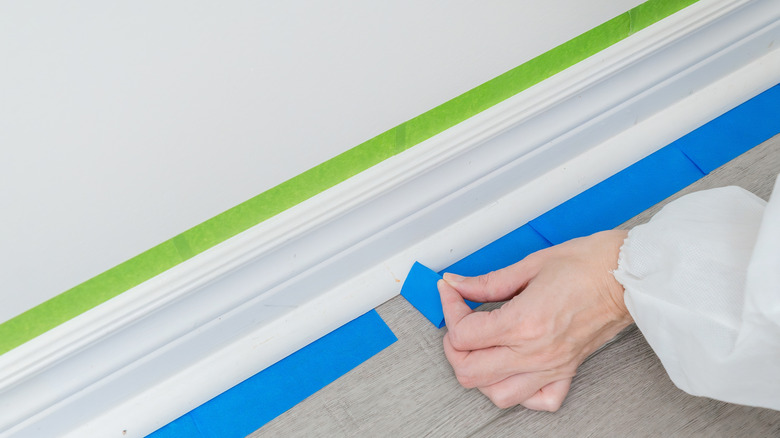
While standing in the paint aisle, it's easy to assume painter's tape is painter's tape and the color of the roll is just for variety. But it does matter. This is because the hue directly corresponds to its adhesion strength. This, in turn, dictates the type of surface you can put it on without ruining your paint or leaving that awful sticky residue. Grab the wrong roll, and you could end up peeling off fresh paint or tearing a wallpaper edge — not the way you want to finish a weekend paint job, especially if you're renting and hoping to get your deposit back.
Whatever you do, though, don't get confused between masking and painter's tape. The former is tan or beige in color and has a high level of adhesive, and can peel off the paint or leave behind sticky residue. On the other hand, painter's tape won't damage your carpets and its adhesion strength depends on the color of the roll. This can get confusing because even go-to brands like 3M sometimes use the terms "masking tape" and "painter's tape" interchangeably. So, always pick one based on the surface you're going to use it on and the level of adhesion you want, while ensuring you check the manufacturer's instructions and packaging.
For low-to-medium adhesion, go for light colored painter's tapes
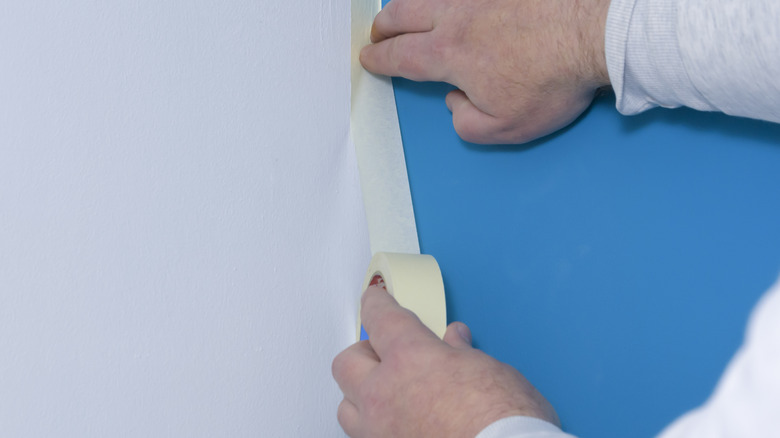
White-colored roll, such as the one sold by Trimaco, typically has the lowest level of adhesion. It's suitable for wallpapers and delicate or freshly painted surfaces, as its low adhesion reduces damage to paint. Plus, you can peel it off cleanly within 14 days. Another low-adhesion painter's tape comes in pink, and it doesn't blend in with the walls when applied. So, it's a good pick when you want to do accent stripes or wish to protect a hardwood floor while painting. You can also use it to protect painted drywall, wood floors and cabinets, and other delicate surfaces where it can stay for about 60 days without leaving any residue behind.
But if you need low-to-medium adhesion, pick light blue over white painter's tape. For example, when you're painting a window frame but don't want to get the paint on the glass, you can put the tape along the panels. Moreover, this tape is compatible with different kinds of surfaces, including wood, glass, tile, and other textured areas. Better yet, it doesn't leave residue behind and it's not strong enough to peel off paint. Due to these reasons, this tape is commonly used around a house for general purposes. However, do note that while brands like ScotchBlue sell light and dark blue painter's tape, the color difference is very subtle and the brand doesn't make a distinction between their uses, only noting that the darker version has "advanced" adhesion.
You'll also need to take extra care when taping textured surfaces with light blue tape since the paint can seep in. So, during the application stage, press down strips as you go and then apply a thin layer of caulk along their edges to seal them in place. For best results, don't start painting until the caulk dries.
For medium-to-high adhesion, lean towards darker shades of painter's tape
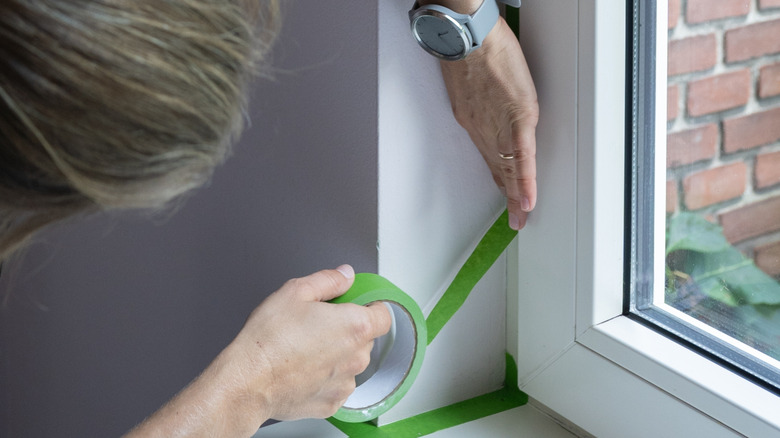
Now, if you're looking for medium adhesion, for, say, upgrading your living room walls or your bathroom floors, you typically want to stick to the dark blue colored painter's tape. This is because you can apply it on boards and window frames or lightly textured surfaces while painting the walls or floors. Plus, you can cleanly peel off all the strips within 14 days — plenty of time to wrap up a small project. It's also UV- and water-resistant, making it perfect for outdoor as well as indoor use. For instances when you need very strong adhesion, go with green tape. It's designed for rough surfaces like concrete, rough wood, stucco, and brick, so it's ideal for outdoorsy spots, but do not use it on paint. Do take it off within 3 days for a clean peel. And even if you're using it indoors, remember to remove it within 5 days.
With that said, keep in mind that while the color of the tape signals what it could be used for, it's not a universal law and can change as per manufacturing brands. So always read the tape label's description to be on the safe side. For example, FrogTape's bright green tape is quite different to the kind discussed above. It has medium adhesion and is known to prevent paint bleed on surfaces like carpet, metal, painted walls, and glass. Though you can remove it cleanly for up to 21 days, it's only useful with latex paint, not oil-based ones. Similarly, FrogTape's low-adhesive tape is yellow in color, but Scotch's Yellow Tape has a very strong adhesive level. While the latter is meant to be used on smooth outdoor surfaces, you can use the former only for decorative projects and delicate surfaces.