

Can A Bench Grinder Restore Rusty Garden Tools?
We may receive a commission on purchases made from links.
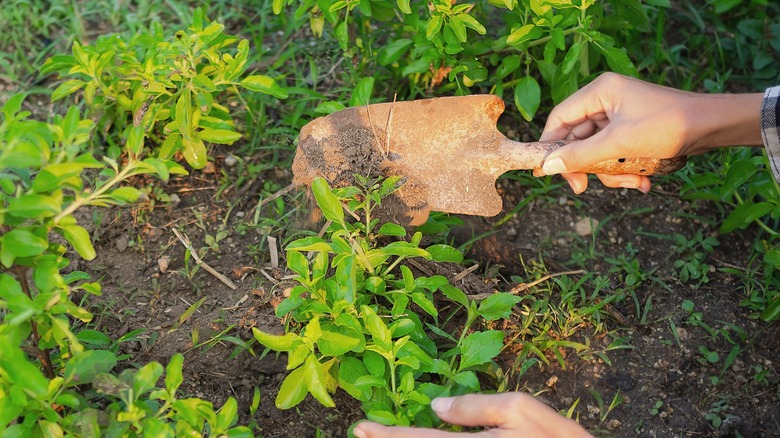
Tools that get neglected for years or repeatedly left out in the rain usually develop a thick rust layer that drags down their effectiveness and longevity. Rather than spend money on replacing them prematurely, it's often just as easy to explore quick, convenient ways to remove the rust and restore the tools. There are actually a number of possibilities, and using a bench grinder is definitely one of them. If you have one already set up in your workshop, it will do the job rapidly and without rust-dissolving chemicals, but it may be overkill and end up damaging the tools if you use it the wrong way.
The number-one mistake you can make is to equip the grinder with a standard grinding disc, which would be like pressure-washing your deck with a 0-degree nozzle. Just as you need a nozzle with a wider spray pattern to spread out the force of the water and avoid damaging your deck, you should ideally use a wire wheel brush, such as the Avanti Pro 6-Inch Bench Wire Wheel, or a flap wheel to distribute the grinding action of a bench grinder over a wider area and generate less heat. If you use a grinding disc, you could disfigure your tool, and you might cause enough damage to require replacement.
One advantage to using a bench grinder to remove rust is that you can sharpen the tool while you're at it. Many pieces of gardening equipment have a cutting edge. While there are several ways to sharpen tools to keep them working like new, a bench grinder is quicker than most, and since you're already using it to remove rust, it's also one of the easiest. But be careful. You might damage the tool by applying too much pressure.
Remove rust and maintain garden tools with a bench grinder
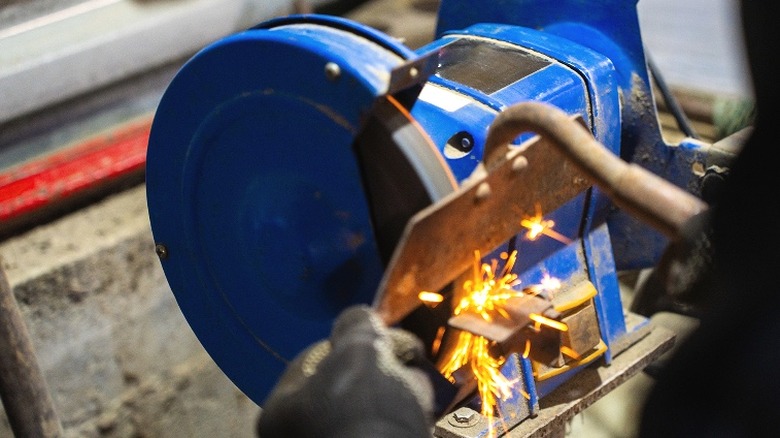
Sparks and small bits of metal may fly around when you work your tool edges with the bench grinder, so put on a pair of goggles, a mask, and gloves. You should also remove dried dirt and hardened concrete from the tools with a scraper and stiff brush beforehand if you don't want to fill the room with hazardous dust or get hit by small stones. Hold the tool lightly against the downward-moving side of the wheel, using just enough pressure to remove the rust without deeply scratching the metal and exposing even more of it to air, moisture, and rust.
Make smooth, gentle passes across the tool's rusted surface until you remove as much corrosion as possible. Once they are rust-free, you can get in the habit of cleaning your garden tools and rubbing them down with mineral oil after each use to prevent future issues. If your tool has a blade, it's also easy to sharpen it using the same wire wheel or flap disc that removed the rust. To maintain the factory edge of your cutting tools, check the bevel angle on the blade and hold the tool so that the bevel is flat against the wheel. The factory angle on the blade of a digging tool like a shovel or hoe is usually worn away, so after removing any rusty spots, just grind the upper side of the blade enough to see bare metal all along it.