

More Than Sharpening: Everything You Can Do With A Bench Grinder
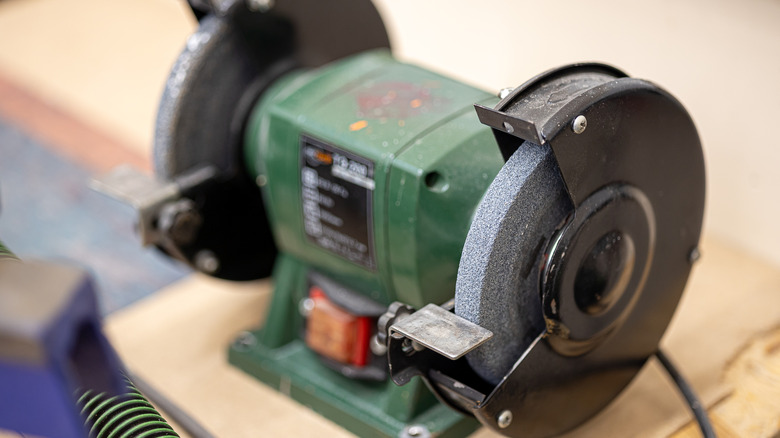
The DIY world is very strangely divided between people who think bench grinders are the most useful things they own and those who think they're mostly outdated relics. In its traditional form, this tool rotates two grinding wheels at high speed and is mostly used for sharpening drill bits, chisels, mower blades, and knives you don't much care about. But sharpening isn't the only way to apply a good spinning disc, and we've found plenty of ways to keep a bench grinder useful, from polishing to cleaning, machining, shaping, and maybe even lathing.
What you do with your bench grinder depends largely on what your wheel is made of — and there are plenty of options. In addition to standard stone designs made of various materials, there are options made of diamond, steel and brass wire, and adaptations for flap models. There are single- and double-wheel grinders, as well as modifications that allow more than one disc on a side. We've even seen models with a flexible drive shaft that adds a rotary tool and all the functionality that implies. And you can improve the utility of the grinding wheels you already have by properly dressing them.
The important thing about all these explorations is to only use stones and wheels with their intended materials. Standard grinding wheels for ferrous metals, for example, should not be used for softer metals like copper and aluminum, which can clog the wheels and then expand dangerously under the heat of subsequent uses. And, in general, use steel wire wheels for tasks requiring more abrasive handling and brass wire wheels for a softer touch.
Clean and straighten metal brushes
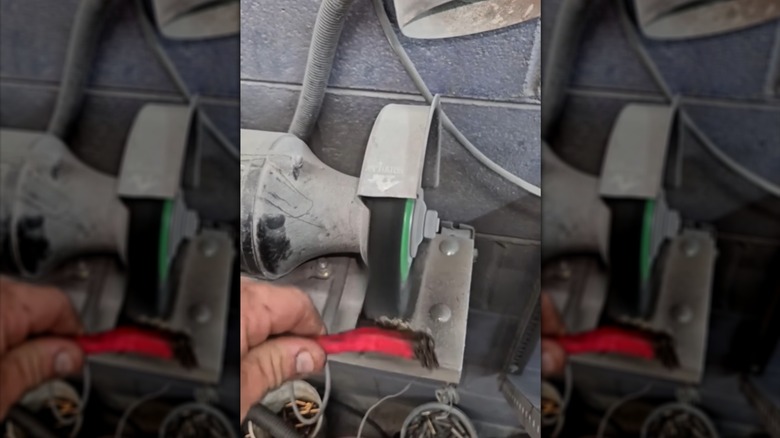
Let's start with wire wheels, since they generally add the most new functionality to a bench grinder if you haven't used one with anything but a grinding wheel. These are great for removing corrosion and grime, especially from metal, and YouTuber @whatnooowaaay discovered that you can use them to restore an old wire brush. Just remember to wear your safety gear — wire wheels are always dicey to use, and applying them to a wire brush only multiplies the potential for flying metal bristles.
Remove corrosion from metals to be welded
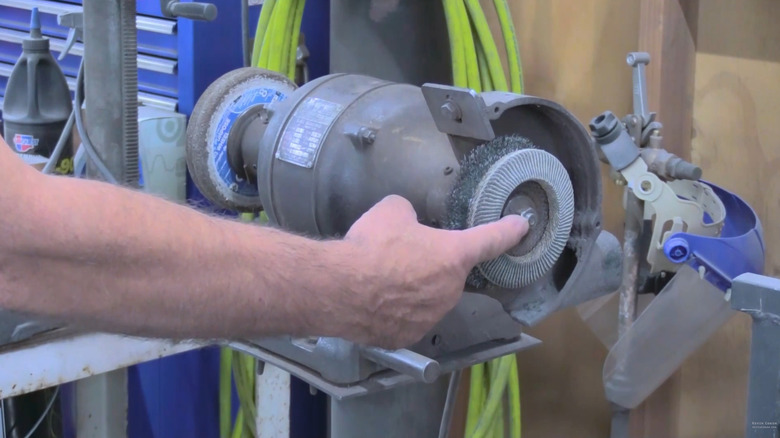
Welders often use wire brushes to clean up workpieces, and that calls to mind a couple of other welding-related benefits a bench grinder brings to the, well, bench. One of these is the fundamental chore of cleaning up whatever metal you're welding. This corrosion can be light, barely visible oxidation or a heavy encrustation of rust. A properly equipped bench grinder with guards and rests installed is a great way to quickly and safely remove the crust so you can properly stack those dimes.
Grind welded beads
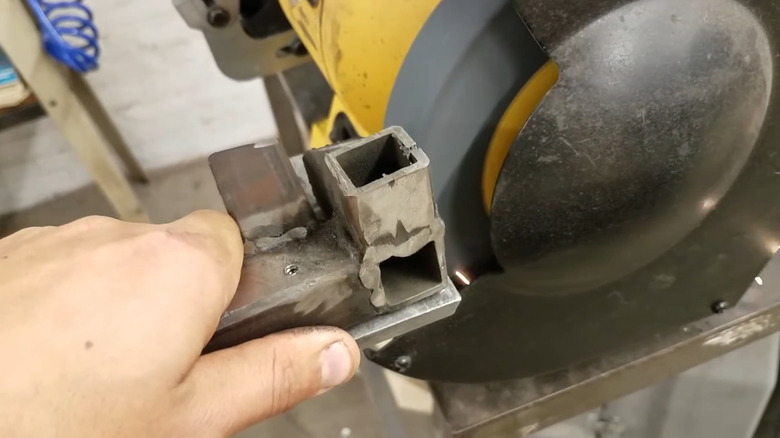
Sometimes the dimes don't stack like you want them to, and you need to do a little post-operative cosmetic work to make your welds look their best. This is usually the purview of an angle grinder, but for smaller workpieces a bench model is an easier (and often safer) alternative. Smoothing out a bead, done properly, won't weaken the weld, but it will certainly improve its appearance and get rid of spatter on the fused surface.
Smooth and deburr pipes
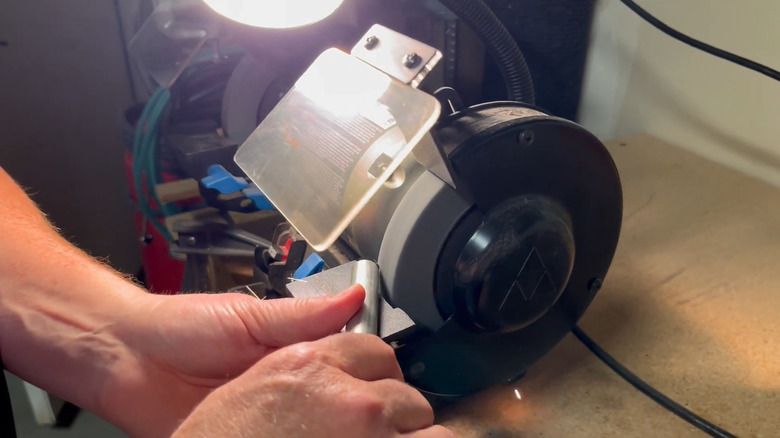
Perhaps you know the pain. The literal pain. When you cut a pipe, particularly with a rubbing or ratcheting pipe cutter, you end up with edges that turn your segment into a weapon and all but prevent it from properly joining with another piece. The answer is deburring — quickly grinding off that sharp bit — and it's one of the things bench grinders do best. Just watch the type of stone you're using, because copper and PVC might clog stones meant for ferrous metal. When you cut stainless steel, deburr it with a flap disc.
Round off bolts and threaded rods
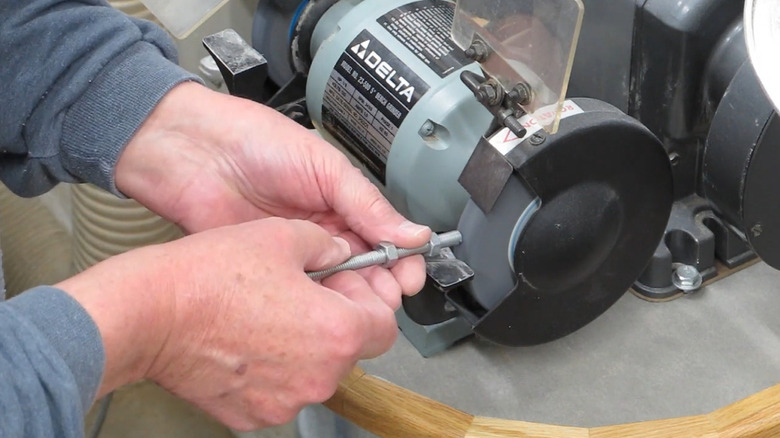
If you're into gunsmithing or other hobbies that require parts of specific lengths, you've probably had to cut a bolt or threaded rod at some point. And most likely, you discovered that whether you cut the piece with a hacksaw, angle grinder, or bolt cutters, the screw no longer fits its nut or threaded hole. The fix requires a very special type of deburring that accounts for the slant of the threads, and it's best done on a bench grinder (Brownell's also sells a holder specifically designed to keep your bolt from flying across the shop).
Machine custom metal parts
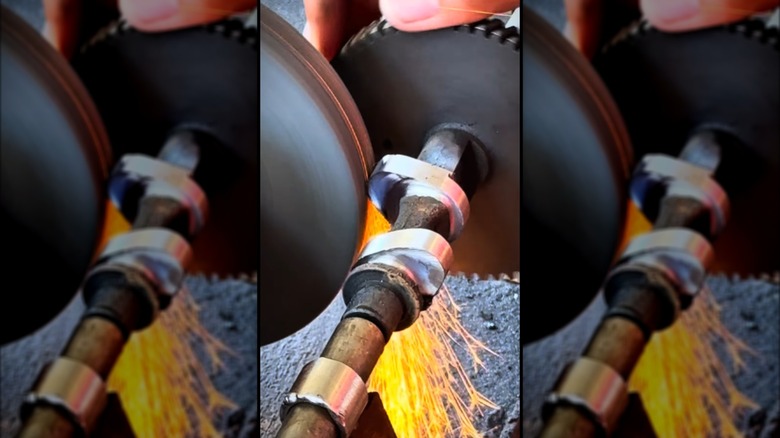
Given the metal cutting, smoothing, sharpening, dulling, and rounding that a bench grinder is capable of, it's a fairly capable tool for metal fabrication. One of the most practical things to make is a pedestal base for the grinder itself. But the coolest thing we've seen someone do is make a low-cost cam for a race car. By hand. With a grinder. It's probably not a skill you need, but once you see it, you'll no longer doubt your bench grinder's utility.
Adapt with a drum sander for shoemaking and leathercraft
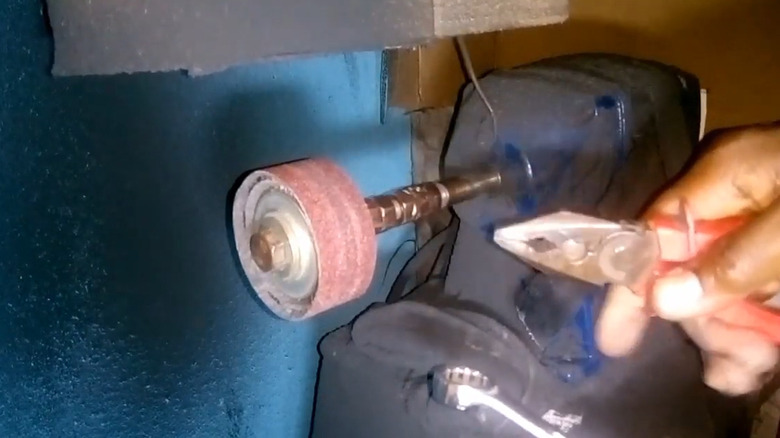
If you've ever been tempted to fix a favorite pair of shoes (yours or your kids'), it might be helpful to know that slightly modified bench grinders are commonly used in shoe manufacturing and repair. They're called filing machines and can be as simple as a standard bench grinder with a sanding drum attached (Harbor Freight sells these, by the way). These tools are used to shape soles and heels, roughen leather and other materials for gluing, and buff various parts of the finished shoe.
Polish parts
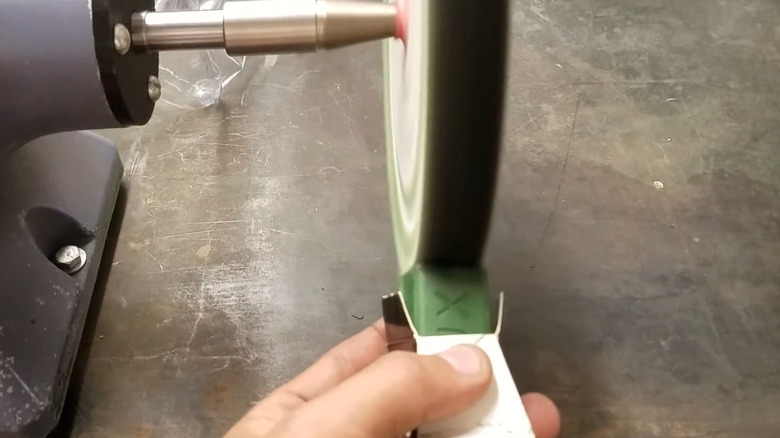
With the appropriate arbor adapter (if needed), you can use one side of your bench grinder as a polisher. Simply attach a polishing disc made of felt, cotton, sisal, flannel, etc. and add an appropriate compound, which provides just the right amount of abrasive grit to get the job done. Then brush up metal parts made of aluminum, brass, chrome, copper, steel, and even wood and plastic. It couldn't be easier!
Cut wood and hard materials
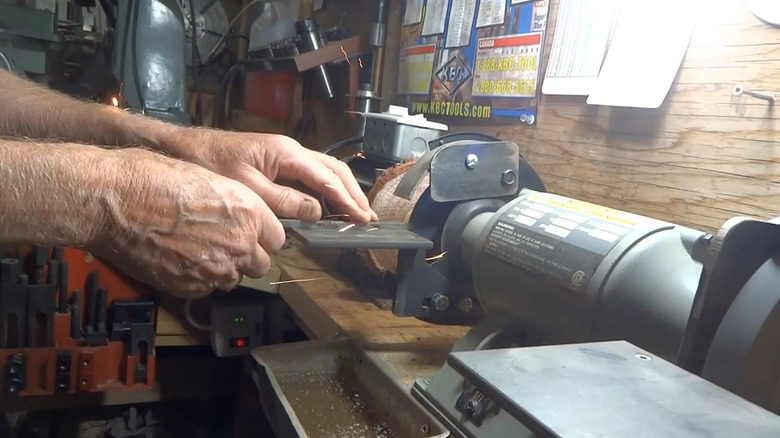
Though it's not ideal, you can use a bench grinder to cut through hard materials like wood. It's a bit of a tricky process with a typical wheel, but with a smooth hand it can be done. Just make sure you're up to the task and aware of the dangers: Your workpiece will tend to get very hot with the prolonged grinder contact, which can weaken metals and set wood on fire. If you're not comfortable with this risk, do not use a bench grinder with wood. Otherwise, keep a little container of water handy for cooling and dousing. You can also modify a bench grinder to accept a cutoff wheel if you find it more comfortable.
Clean bolt threads
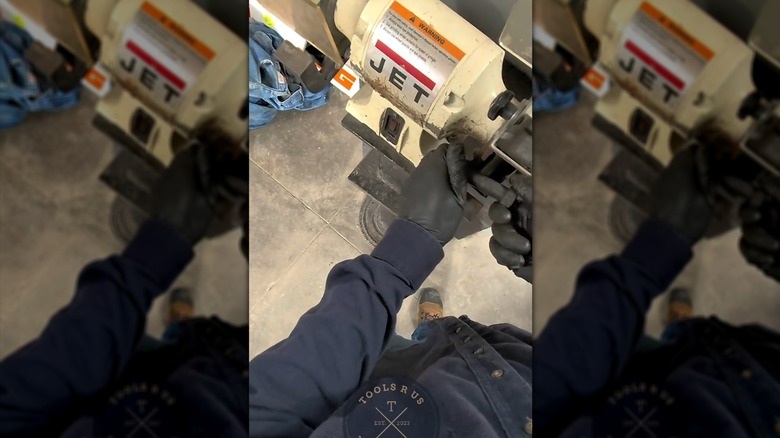
Ahh, a satisfying morning spent disassembling and cleaning your mower, rebuilding the carburetor, and putting everything back together in perfect working order. It's all perfectly polished and sparkling — except for all those bolts you had to stick back in. Over the years, they've acquired an absurd amount of rust. Fortunately, with a wire wheel on your bench grinder, cleaning up threads is a snap. Just be sure to carefully hold onto the bolt with some pliers while wearing protective gear, because it's very easy for a grinder to grab corrosion or threads and throw the bolt at high velocity.
Remove paint from small parts
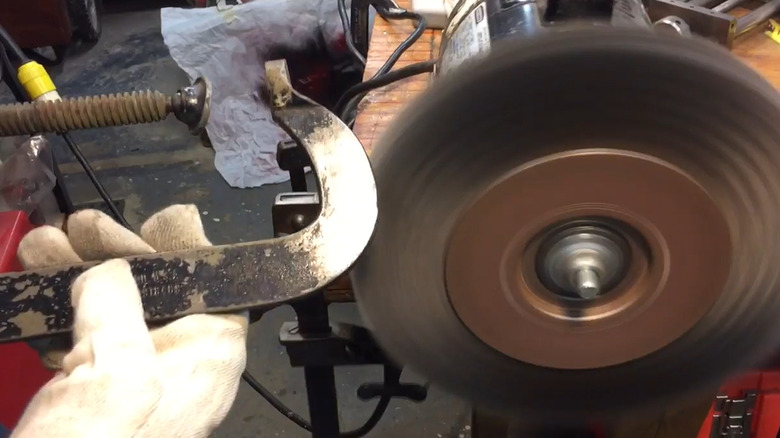
If a tool can remove rust, it can probably remove paint. And so it is with the bench grinder, at least for relatively small parts you can hold in your hand. You can use a grinding stone or a flap disc, of course, but the ideal is usually a wire wheel so you can quickly brush old paint away. When you're done, your workpiece should be set for a new coat, though you might like the bare metal so much that you just leave it as-is.
Make a mini-lathe
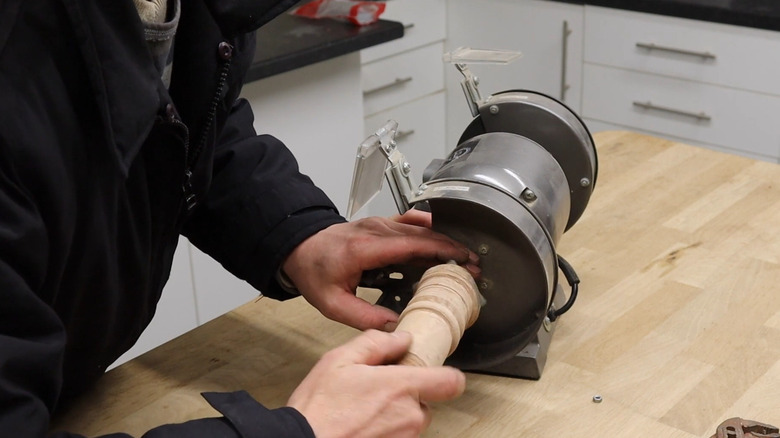
A Reddit user claimed to have made a mini-lathe by attaching a drill chuck to their bench grinder. We might have dismissed it as pure crockery, but then we saw another DIYer's model for ourselves. It's simply a matter of using a coupling nut and threading adapter to attach a drill chuck to either end of your bench grinder. Or, like YouTuber @diycp1976, you can use a square washer to make a mounting plate that threads onto the grinder (as seen above). Note that bench grinders spin fast, so you might consider controlling the speed with a variable transformer if possible.