

7 Unreliable Appliances Our Expert Warns To Avoid At All Costs
Andrew Kuznetsov is the kind of guy you want to ask for appliance advice. When he loves something, you're not left wondering about it, and he's just as unfiltered about models, features, and makes he doesn't love. Hunker wanted to get the scoop on today's least reliable appliances, so we spoke exclusively with Kuznetsov, who is the president of Adrium Service Solutions, an appliance repair, HVAC, and coffee equipment company in San Ramon, California, serving East Bay and the greater Bay Area. We wanted to know which brands of appliances he would stay away from. He gave us seven. Or 10, depending on how you count.
A couple of appliances on his "avoid" list came as no surprise. LG refrigerators have spoilt many an unsuspecting buyer's day (and their food) to the point that LG had to settle a class action lawsuit. So we weren't shocked when Kuznetsov vetoed them, or outed issues with Samsung icemakers. But he also has a few hot takes on brands that most people assume are a safe buy. For instance, if you've been considering coughing up for a sought-after Viking appliance, Kuznetsov's advice is: "Don't buy them for any money."
There are themes running through Kuznetsov's opinions about appliances, but instead of the usual immoderate hearsay, his are relentlessly evidence- and experience-based takes. One recurring theme is that the old trumps the new tech, until it doesn't. For example, he has little patience for the new (and expensive, surprisingly unreliable) solder-free lock-ring fittings on sealed systems. "I would prefer to buy a fridge without these fancy-shmancy lock-ring fittings," he says. "Old-school brazing is the best quality connection for copper and aluminum tubing." Here is the full list of appliances and features Kuznetsov sees endless issues with, and why they're bad buys.
Viking and Summit appliances have expensive and slow-to-arrive parts
Kuznetsov doesn't class Viking and Summit appliances as unreliable as far as the actual units go. But if things do go wrong, you might not be able to reliably (or affordably) source parts. He speaks with the technical competence of a technician, and in a world where products are increasingly designed to be replaced rather than fixed, he operates by the opposite principle. The ethos guiding his company is "Engineering instinct first, parts catalog second, no guesswork in the middle."
The trouble arrives when there's no way to use those engineering instincts to fix a product because of parts supply issues. So Kuznetsov unequivocally steers buyers away from Summit appliances, because of challenges with unavailable parts and very long turnaround times on orders. "Usually no parts are available — but if there are, it can take six months for delivery or more. They can send four wrong parts in a row, so it's a real headache to fix them," he reveals. That's not a refrigerator you want to own.
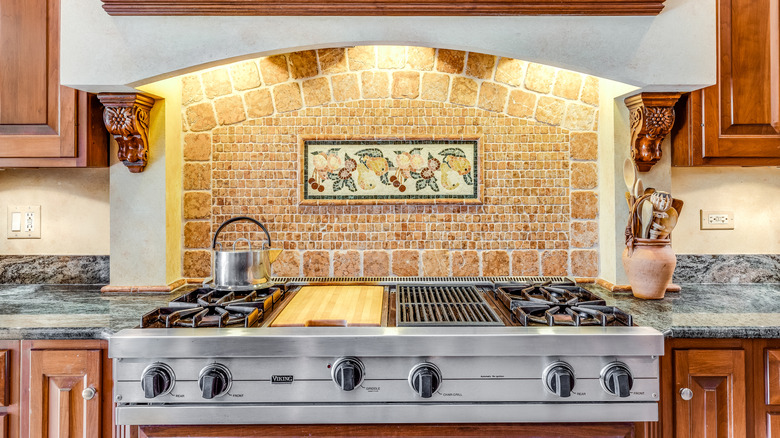
Viking, the wildly expensive, luxe kitchen appliance brand, gets in the way of repairs in a completely different way. "They have a shorter parts support period and a huge ... HUGE markup on their parts," Kuznetsov explains. He then voices the common problem technicians (and everyone else) has finding part numbers on Viking products, which is ostensibly to preserve their super-clean look. "You are lucky if your tech will find the original part on your Viking fridge," he said. "Viking always hides the original parts numbers."
LG and Samsung refrigerators will probably make you lose your cool
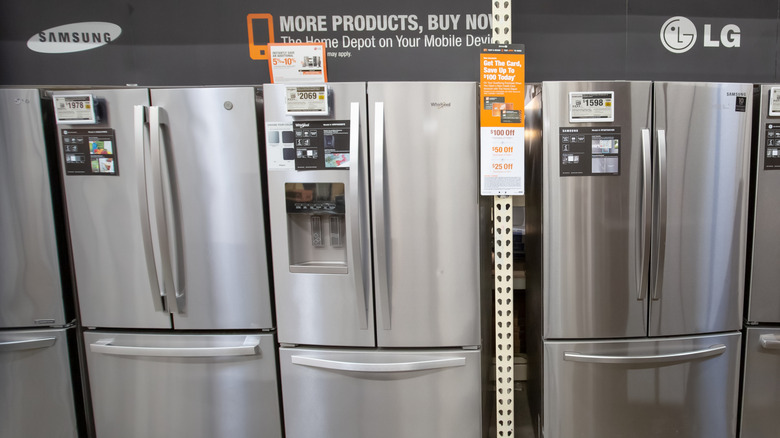
The saga of LG's linear inverter compressors has tarnished the company's reputation, and Kuznetsov pulls no punches about the brand's refrigerators. "LG failed with their inverter compressor," he says. "I replaced hundreds. I know guys who have replaced thousands of their compressors." LG's strategy of incrementally improving the compressor design and issuing software fixes doesn't seem promising, and Kuznetsov doesn't have much confidence in the brand's fridges.
Samsung also has problems with its digital inverter compressors, but Kuznetsov points to other issues with Samsung fridges, like ice makers that cause ice to form in the fresh food. He explains that fixes can be expensive because the parts that fail are major components, and they're prone to failing multiple times. Ice makers are an unexpected window into Kuznetsov's honest preference for the simple over the needlessly complex. "Please try the countertop ice makers," he encourages consumers. "Your fridge will be cheaper without an ice maker and have more room for other things. Ice maker modules may cost $150 or more, plus labor, for the replacement."
He prefers Sub-Zero refrigerators (who doesn't?) and has equally expensive taste in wine refrigerators, including Perlick, which he says is the most repairable brand around. With $3,400 entry-level models and others that cost over $10,000 or more, one sincerely hopes repairs don't come up very often.
LG and Samsung dishwashers are often too expensive to fix
Most consumers are painfully aware of what a fiasco the modern dishwasher has become. Saddled with water-efficiency requirements and an ever-evolving features menu that would make AI blush, the road to making a great dishwasher was always going to be tough. But manufacturers have done themselves no favors with their approaches or the ever-shorter average lifespan of dishwashers, and Kuznetsov warns buyers to shy away from new features. "Do you know how Bosch dropped the 'best dishwasher' crown? They made a zeolite feature," he quips. "If you see something with a new function, be careful. I might not know how to fix that thing yet."
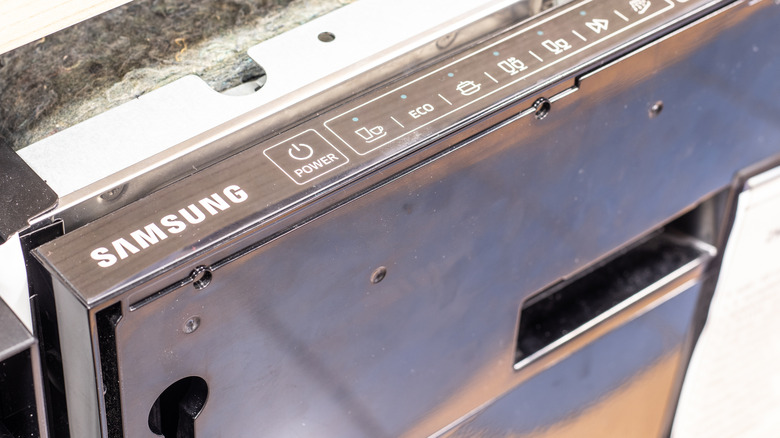
The other dishwasher problem gets to the heart of the "replace, not repair" mentality, which is equally frustrating for consumers and the repair technicians they turn to for help. Kuznetsov is loathe to repair LG and Samsung dishwashers because parts and labor can add up to more than the purchase price of the appliance. "It's always the control board or control panel or both. Nobody is going to pay for the repair."
Kuznetsov's dishwasher-purchasing advice is something that many consumers also know, intuitively, after years of experiences of their own: Lean into the planned obsolescence, or prepare to pay a lot. When you buy Fisher & Paykel, he explains, you pay a higher price and replace the dishwasher less often. There are reasonably good cheap dishwashers as well, like Whirlpool, but they won't last as long. "You can buy Whirlpool — $500 each — every five years three times, or buy a $1500 Fisher & Paykel once," explains Kuznetsov.
The inverter boards on KitchenAid and Whirlpool cooking appliances are fast to fail and expensive to fix
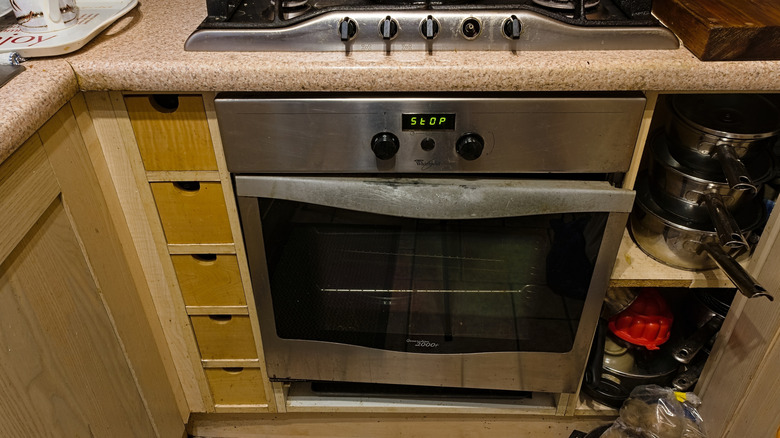
Kuznetsov also wants you to avoid KitchenAid and Whirlpool microwaves and built-in ovens. The problem isn't that they might burn your food, quite the opposite. Given time, they're very unlikely to burn your food because they'll probably stop working altogether. One major problem is the inverter boards. Unfortunately, in a nation with an increasingly unstable power grid, inverter boards tend to be easily damaged by power conditioning issues. And in these brands, "I always see bad inverter boards," Kuznetsov shares. "You're better off buying a microwave without an inverter board. Buy one with a capacitor and diode instead. The inverter board will cost you $300 against a $6 diode and $12 capacitor."
This is where you can see that his attitude about new technologies is grounded in practicality. Inverters aren't a flawed idea, but the technology has come along at the wrong time, or with the wrong implementations. "Inverter boards are a new feature to make all electronics much more efficient," Kuznetsov explains. "You can see this component on HVAC heat pumps, washers, refrigerators, microwaves, and induction cooktops. This component is very sensitive to any power fluctuations and costs a lot. Nobody even tries to fix it, only replace it."
His solution, counterintuitive for some, is to consider buying a less advanced machine, which is likely to have fewer problems. He also has some recommendations for more reliable brands, including Whirlpool cooktops, Wolf ranges, and microwaves made by Toshiba, Sharp, or any other Japanese brand.
LG proves that bad dishwasher makers can create good laundry appliances
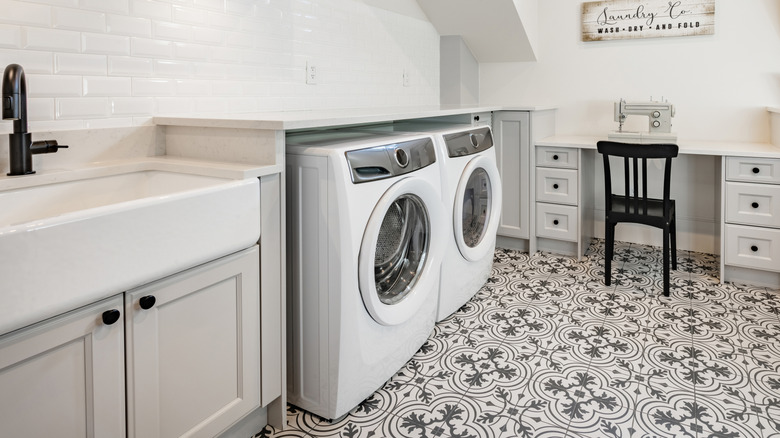
You might have noticed that Kuznetsov isn't dogmatic about brands to avoid. For example, he recommends Whirlpool cooktops and dishwashers, but not their microwaves and built-in ovens. This is because certain companies are simply better at certain appliances. So it's no surprise that a manufacturer of unreliable kitchen appliances can turn around and make a spectacular washing machine.
He says this phenomenon precisely describes LG, the most trusted washing machine brand of 2025. "Their washers are amazing," notes Kuznetsov, "but kitchen appliances by LG usually are not." He says that the quality of LG washers is "comparable with much more expensive Speed Queen," which appliance aficionados will recognize as the highest of praise.
LG, he said, also makes good dryers — which checks out as they are Consumer Reports' top electric clothes dryer brand for 2026. But he notes that it's not particularly difficult to make a good dryer. This might be an unintentional jab at Samsung, whose dryers earn his approval right after bluntly dismissing the brand's refrigerators and dishwashers. His proclamation that "even Samsung makes good dryers" is not exactly the stuff investor brochures and confident consumers are made of.