

Skip Cedar Mulch: There's A Cheaper, Weed-Resistant Alternative That Looks Good
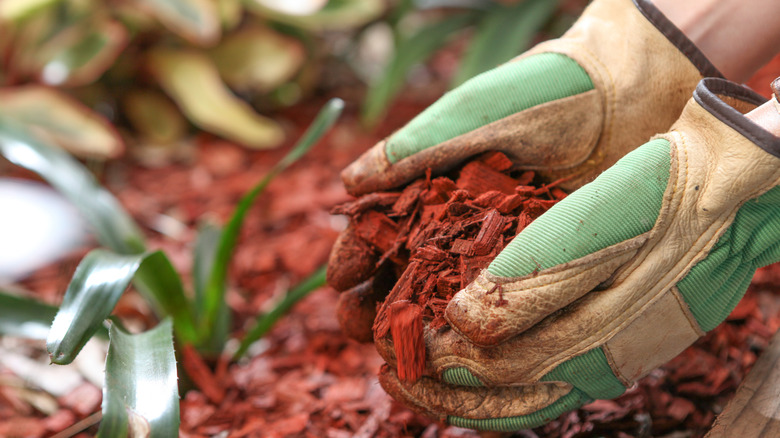
A thick layer of mulch can be your garden's best friend, enhancing the aesthetics of your beds and enriching the soil to help your plants thrive. Cedar is the gold standard of mulches thanks to its natural antifungal properties, rich aroma, and signature color. At around $41 per cubic yard, however, cedar mulch can also break the bank, particularly if you have a lot of garden ground to cover. The good news is that cedar is hardly the only type of mulch you can go with. Humble shredded hardwood mulch may not have the same prestige as cedar, but it can prevent weeds in your flower beds as well at a fraction of the price.
At about $28 per cubic yard, dropping a lot of shredded hardwood mulch on your beds won't mean dropping as much green. Hardwood mulches can be made from a variety of trees such as oak, maple, hickory, and ash, so the exact cost may vary depending on the trees used. Plus, there are a few other ways shredded hardwood beats out cedar mulch pound for pound.
More reasons to choose shredded hardwood over cedar mulch
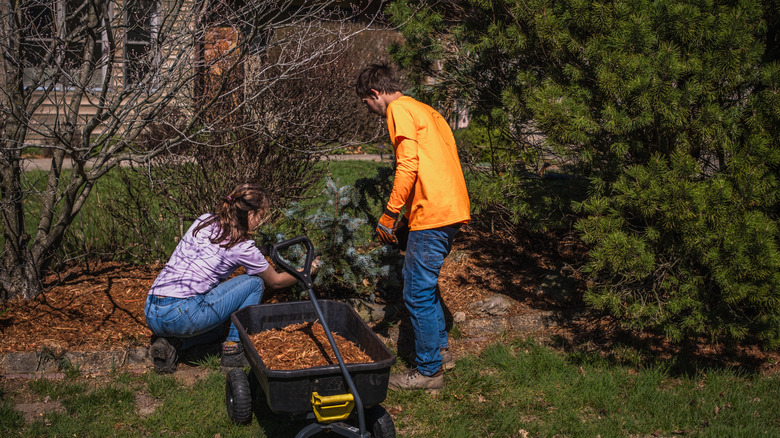
If you're trying to build a backyard oasis for birds, bees, and bugs, shredded hardwood mulch is the way to go. The structure creates an environment that resembles a forest floor. It provides winter refuge for beneficial insects like ladybugs, lacewings, and wolf spiders, which eat garden pests like caterpillars and aphids. As shredded hardwood decomposes, it feeds networks of fungi and bacteria, which in turn support other creatures such as earthworms. While many gardeners love the essential oils that give cedar mulch its intoxicating aroma and insect-repelling properties, cedar can end up driving away helpful garden bugs as well as harmful pests.
Landscapers recommend reapplying a top layer of mulch every year or so, so cost becomes an annual concern. Shredded hardwood mulch can be reapplied every year fairly cheaply to keep your garden looking its best. You can purchase color-treated mulch to help delay the fading process, but make sure it's treated with dyes like iron oxide or carbon and not toxic chemicals that might leach into your plants.
You may have heard there's no such thing as a free lunch, but there may be free mulch. Local sanitation and public works departments and tree removal companies sometimes have more mulch than they know what to do with, so they give it away. The downside is quality control. You'll get whatever they have available, which could be a blend of hardwoods, softwoods, and leaves. But if cost is your main deciding factor, you can't get any cheaper than free.