

Clear Grease And Oil Buildup From A Slow Drain With A Few Kitchen Staples
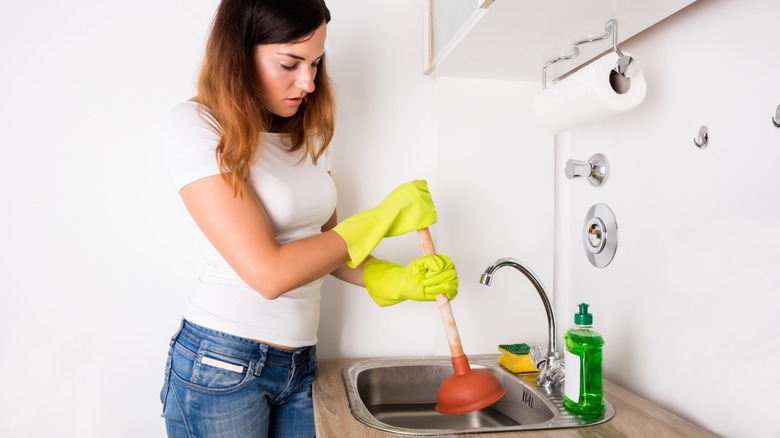
When a pile of dirty dishes is staring right at you, it can be hard to know what to do if the kitchen sink is hopelessly clogged. Do you grab a plunger, wait for it to slowly drain, or reach for a chemical drain cleaner? If you head to the internet for advice, you'll find all kinds of suggestions on how to unclog a drain. Many people are convinced that you're able to clear grease and oil buildup from a slow drain with a few kitchen staples like dish soap or vinegar and baking soda. According to Brendan Eaves, American Home Shield Virtual Plumbing Expert, these DIY remedies may work when you're battling a small clog, but more serious blockages usually require more advanced troubleshooting methods or help from a professional.
Of course, you should never pour cooking oil or grease down the sink because it can cause serious (and costly!) damage to your home's plumbing and septic or sewer system. But sometimes a trying-to-be-helpful dinner guest does it absentmindedly or small amounts of oil drip into the pipes as you scrub pots and pans clean over time. To make life easy and avoid larger issues down the line, try to clear blockages as soon as you notice a drain start to slow down. "Dish soap can be effective to help clear a slow drain caused by just a small amount of grease or oil buildup," Eaves told Hunker in an exclusive interview, explaining that it works by breaking down oil into tiny droplets. "This method works best for minor buildups or accidental oil disposal."
Try dish soap, vinegar, and baking soda for small sink clogs
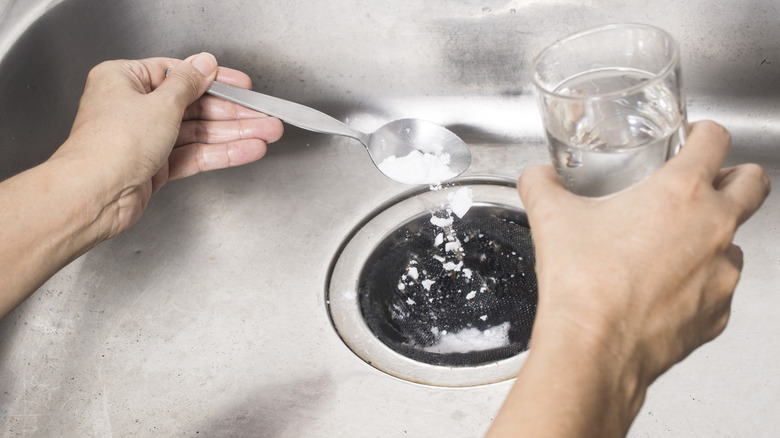
While it won't work on giant chunks of who-knows-what, blobs of hair, or other solid blockages, dish soap may be an effective and inexpensive solution that's already sitting next to your kitchen sink. "To try this method for small clogs, first pour ½ to 1 cup of dish soap directly into the clogged drain, then let it sit for about 5 to 10 minutes so the soap can coat the grease in the drain and begin breaking it down," Brendan Eaves suggested. After a little time has passed, run hot water directly into the drain to flush it. "This can work as the warm water helps soften the grease, while the dish soap lifts it off the pipe walls," Eaves explained. However, he cautioned that you should never use boiling hot water because it could damage your pipes.
Dish soap isn't the only option. Another fast fix for a slow-draining sink that's already in your kitchen cabinet is a combo of vinegar and baking soda. When mixed, these kitchen staples create a fizzy chemical reaction that can create enough pressure to push small blockages through your sink drain. It's also a cheap and easy process. "Pour a ½ cup of baking soda and 1 cup of white vinegar into the drain and then let it sit for about 30 minutes," Eaves said. "Follow with flushing the pipe by pouring hot water into the drain to loosen and clear."
Call a pro when DIY drain-clearing methods don't work
If you're dealing with a persistently slow drain, you may be tempted to mix all three home remedies together, but what happens when you mix vinegar and dish soap may surprise you. While vinegar and baking soda cause a chemical reaction that releases carbon dioxide gas, adding dish soap to the mix can more quickly neutralize the acidic qualities of the vinegar that cause this powerful pressure. If your drain is extremely clogged, no combination of these kitchen staples is likely to solve the problem.
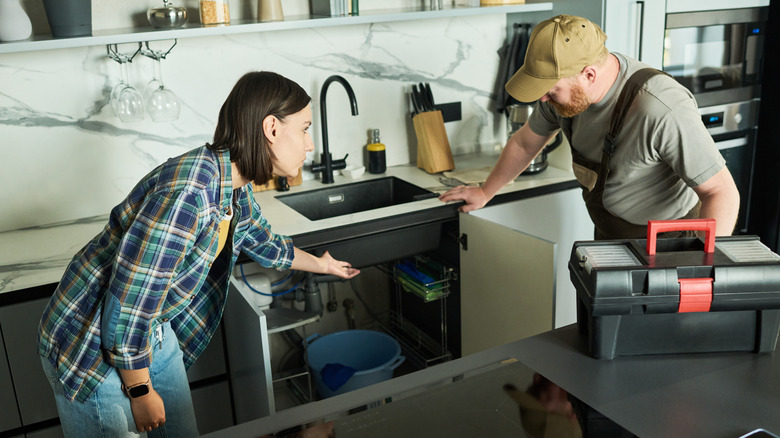
According to Brendan Eaves, expert help becomes necessary at a certain point. "It's best to call a professional plumber if water is backing up into your dishwasher, or if the sink won't drain after you've tried basic troubleshooting," he explained. Beyond pouring a few basic DIY remedies down the sink, Eaves suggested trying a plunger or clearing the P-trap.
There's another sign that you're dealing with a more serious problem than a little dish soap or baking soda can handle. "You should definitely seek professional help if the clog returns shortly after you think you cleared it," Eaves cautioned. "This could mean you have a more serious blockage deeper in the plumbing system that needs to be addressed." According to Angi, the average cost for drain clearing services is $246. The process is usually quick, but both the time and cost involved can vary widely depending on the location and extent of the clog.