

What Happens If You Mix Cleaning Vinegar And Dawn Dish Soap?
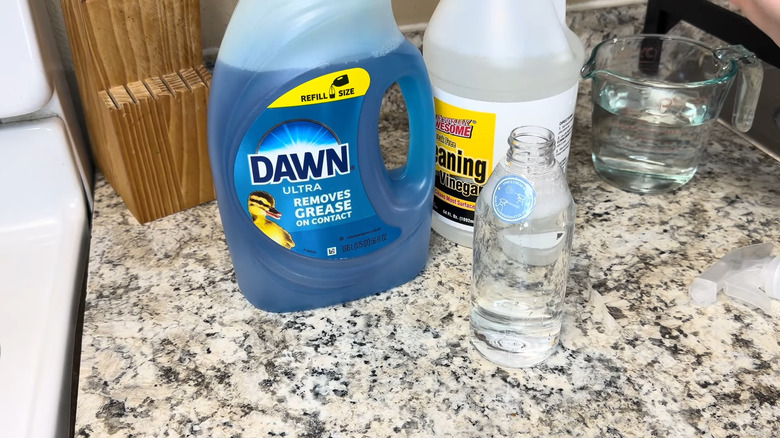
You may have heard of the cleaning "hack" made by mixing cleaning vinegar with Dawn dish soap for an ultra-boosted formula, but is it actually good, or are the claims just a wash? And, more importantly, could the concoction even be hazardous to use? Firstly, mixing cleaning vinegar with Dawn dish soap is not dangerous. Dawn's ingredient list doesn't contain any of the cleaning products you should never mix with vinegar, such as bleach, ammonia, or hydrogen peroxide. That aside, even when a mixture isn't dangerous, proprietary formulas like Dawn's are intentionally made with ingredients that work together precisely and harmoniously, and adding something acidic like vinegar can alter the formula's effectiveness.
In this case, Dawn contains sodium hydroxide, commonly referred to as lye or caustic soda, which the brand identifies as a pH adjuster. Sodium hydroxide is a chemical compound in the base (or alkali) family, whereas vinegar is an acid, and the two neutralize each other when combined. So, by mixing Dawn dish soap with cleaning vinegar, you're actually making the formulas of each less effective.
The problem with mixing Dawn dish soap and vinegar
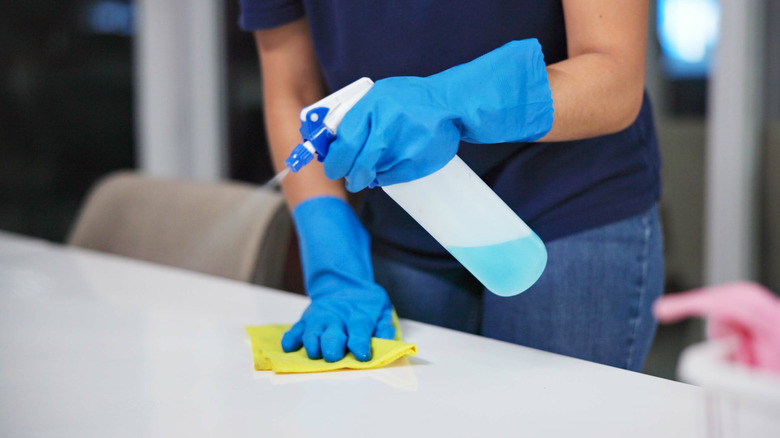
The way Dawn dish soap and vinegar work to clean makes each ideal for a different purpose, so there's not much to gain by mixing them. Dawn dish soap cleans primarily using surfactants, which lower water's surface tension and surround grease with tiny structures called micelles. These micelles trap oily residue and suspend it in water, allowing it to be rinsed away instead of sticking to the surface. Since oil and water don't mix, you can think of a surfactant as the vehicle that allows water to capture and remove oily or greasy residue from a variety of surfaces.
Vinegar, on the other hand, cleans with acetic acid. Standard white vinegar contains about 5% acetic acid, whereas most cleaning vinegars contain 6% (though some ultra-concentrated products can reach upwards of 30% and require careful dilution). This acid breaks down deposits like limescale, rust, and hard water stains into compounds that can be rinsed away with water, making vinegar ideal for tasks like removing hard water stains from glass and other nonporous surfaces, descaling faucets and showerheads, and restoring metal.
On top of all that, mixing cleaning vinegar with Dawn dish soap limits where you can safely use the products. Vinegar can damage certain surfaces, including wood and natural stone. So, rather than adding Dawn to your homemade vinegar cleaning solution, it's best to keep the two as separate tools in your cleaning arsenal.