

Forget White Cabinets: Martha Stewart's '70s Kitchen Featured The Retro Trend That's Back For 2026
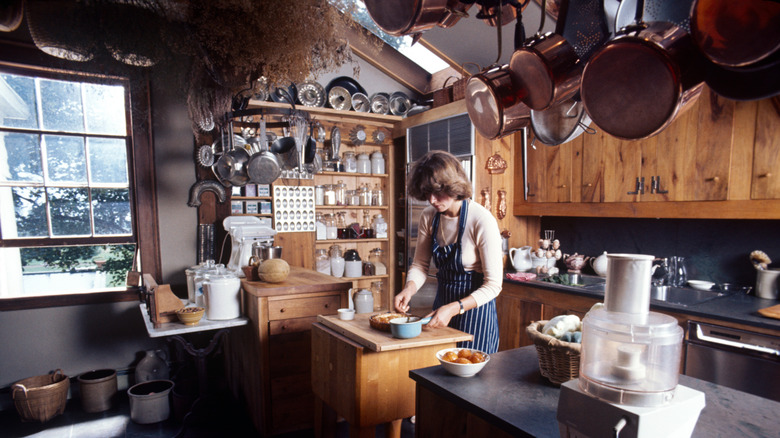
A resurgence of popular 1970s design elements is certainly in full swing, from sunken living room conversation pits to curved sofas and mushroom lamps. And since that epic decade in interiors, America's beloved lifestyle and interiors guru, Martha Stewart, has been relevant every second. Mix the two, and what's not to love?! Enter Turkey Hill, Stewart's first home, a sprawling farmstead in Westport, Connecticut, that she purchased in 1971. Though the house, built in 1805, was lovingly remodeled and updated many times over the 36 years she lived there, the warm, organic feel of the gorgeous natural wood cabinets in the first 1970s iteration of the kitchen still poignantly resonates with today's design trends.
As an interior designer, it's always exciting to see such an iconic space transcend a time period and maintain relevance long after it was designed. But that's just Stewart in a nutshell, isn't it? A trendsetter from day one, so many style decisions that she made back then would look right at home in today's kitchens, most notably the return to rooms filled with rich, warm wood tones. Gone are the days of stark white and gray kitchens of the 2000s and 2010s – people want their homes to feel connected to nature, cozy, lived-in, welcoming, warm, and full of character. Well, take some notes from Martha Stewart's first 1970s Turkey Hill kitchen, because achieving that vibe is as simple as leaning on some of the retro materials, color palettes, and style choices present in that room. Let's dive into what makes Stewart's kitchen so special, and how to translate that once-again-trending wood-centric style to modern-day cabinets and an overall kitchen aesthetic that embodies Turkey Hill's down-to-earth spirit.
Organic mid-tone woods wrap Stewart's Turkey Hill kitchen in a sophisticated warmth
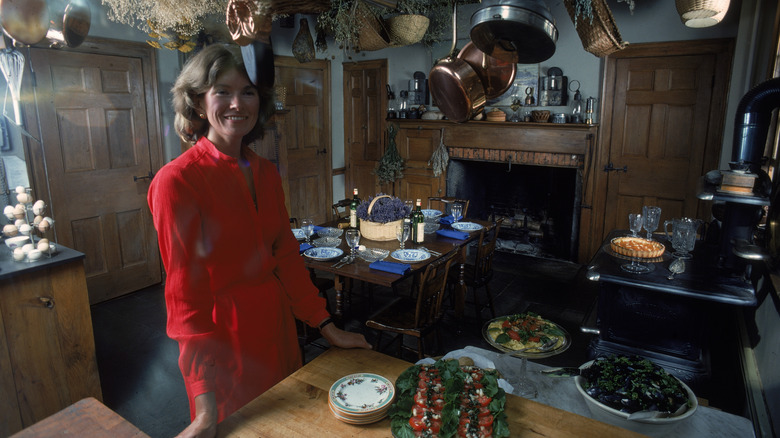
Created by Martha Stewart with her husband Andy and featured in the opening pages of her very first cookbook, Entertaining, the rustic 1970s Turkey Hill farmhouse kitchen feels endlessly warm, inviting, and homey, largely thanks to the significant presence of medium wood tones enveloping the space. The knotty planked cabinets were made from natural sycamore wood – locally sourced from Massachusetts – to bring a distinctive grain pattern, lived-in quality, and special character to the room. Add to that the beautiful original wood-wrapped fireplace and incredible wood farmhouse doors in the adjacent eat-in dining area, and the result is an earthy, cozy, usable kitchen fit for the most chic and charming of homesteads.
And that's just what I think makes this kitchen space so captivating and why so many of the design elements are seeing a resurgence in today's kitchens. Not one inch of this space that feels standoffish, cold, overly designed, fussy, stark, or generic. Instead, the rustic wood cabinets, doors, and fireplace bring a nature-inspired warmth, texture, and tranquillity, while the freestanding wood furniture pieces (either secondhand antiques or cabinetry built to look freestanding like Stewart's baking center) add unique historical charm and a humble approachability. The result is a kitchen that feels actually used and loved, a vessel for feasts to be prepared for beloved guests, cookies to be baked on a rainy afternoon, and memories to be made. And not a white cabinet in sight.
However, there's a fine line between using a space from a previous era as inspiration and creating a time capsule, so let's discuss how the wood design elements from the 1970s Turkey Hill kitchen can be adapted to a modern-day space, be it rustic, traditional, or contemporary.
The modern day approach to a 1970s Turkey Hill-inspired kitchen
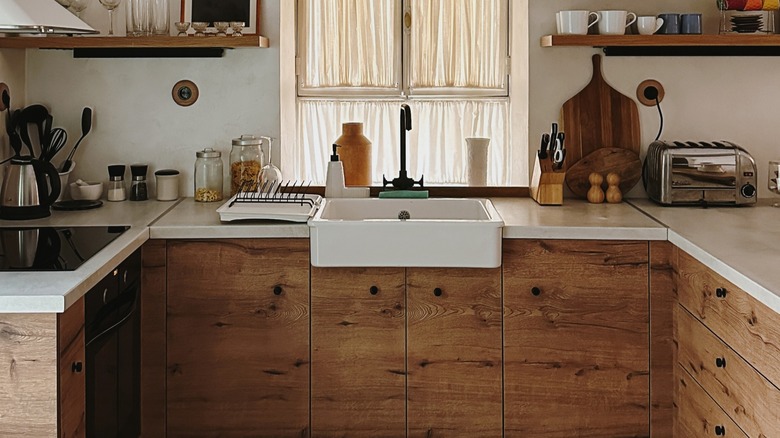
Since the warm mid-tone woods make Martha Stewart's space so welcoming, let's focus on the star of the show: the sycamore wood kitchen cabinets. Wood cabinets finished with a natural topcoat or stained in a desaturated mid- to mid-dark shade work wonders to create a sense of organic calm and sophistication rooted in nature and history. If you opt for a natural sealer, be aware of the innate undertones in your wood species (a pro can help!), as the finish will make them pop. Species like alder, hickory, oak, or pine are available with rustic knots to lean even harder into Stewart's humble homestead aesthetic. Alternatively, simpler varieties of alder, birch, maple, walnut, or oak can be used for a cleaner, more updated spin that can skew more modern or new-traditional.
For that earthy, been-there-forever look, opt for less tailored cabinet door styles (like Stewart's planked fronts). Alternatively, clean, simple fronts skew more modern, while more refined, detailed doors have a polished traditional vibe. Stewart's exposed iron "HL" hinges and simple wood knobs push the cabinet style into the rustic realm. But adding exposed brass/bronze hinges and historical cabinet pulls/latches – either antique-inspired or authentic vintage sourced at a salvage shop – will create more traditional vintage charm, whereas clean-lined contemporary hardware or integrated pulls make wood cabinets distinctly modern. Finally, part of what makes Stewart's kitchen so charming is the (actual or appearance of) freestanding pieces, so incorporate details like repurposing vintage furniture as an island or building in elements with a historical standalone feel to avoid the blandness of conventional stock cabinetry. Like Stewart, wrap the space in additional wood elements like reclaimed beams, interior doors, and salvaged millwork to really reinforce the wood-centric farmstead aesthetic.