

Not Foxglove: The Bell-Shaped Flower That Adds Texture & Charm To A Garden
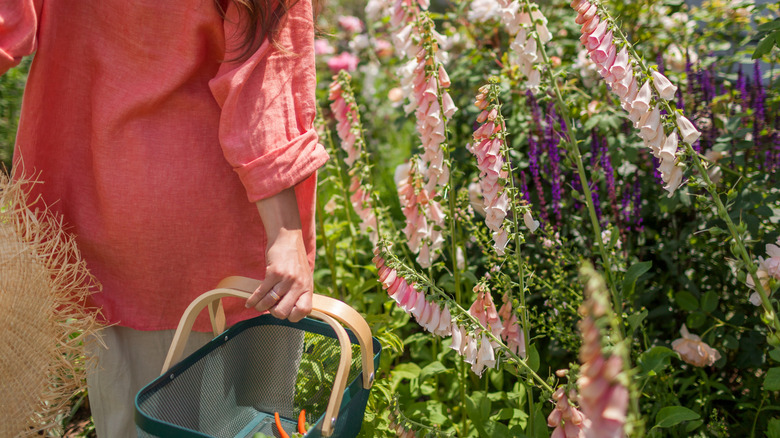
Close your eyes and picture a whimsical cottage garden. One of the first flowers you might think of is the foxglove. Its towering, bell-shaped blooms add height and charm to your space, making it a natural choice if you want to create a garden to attract bees. While Digitalis purpurea may have an obvious place on the ultimate plant list to build the perfect cottage garden, there are similar (and arguably even more eye-catching) flowers that can replace or accompany it.
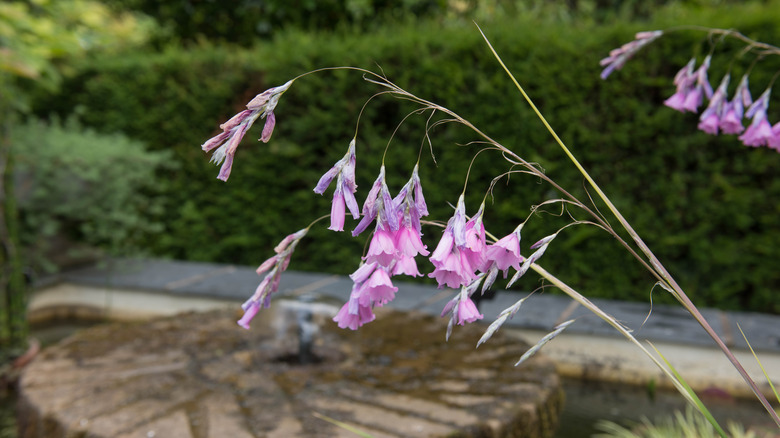
Angel's fishing rod (Dierama pulcherrimum) has the same bell-shaped flowers as the foxglove but with an entirely different silhouette. It's a South African perennial that appears grass-like toward the base before it breaks out into long, slender stems that bend into graceful, bouncy arcs. The delicate flowers dangle from the stems (usually pink, purple, or white) and gently sway whenever the breeze picks up, making your garden look totally dynamic.
The plant can reach around 5 feet tall while flowering. And unlike the common foxglove, which typically forms a leafy rosette before producing flowered spikes that stick up straight, angel's fishing rod appears to float above the surrounding plants, arching like its name suggests. Foxglove adds a stronger vertical element, while angel's fishing rod looks airier and creates more movement. Their growing preferences differ, too — foxglove can handle partial shade, while angel's fishing rod will grow best in a sheltered spot with full sun.
How to grow angel's fishing rod successfully
That description alone might be enough to make anyone run to the garden center. But before you do, know that angel's fishing rod grows best in USDA Hardiness Zones 7 through 10. Plant it in spring in a warm, sheltered location that receives full sun if you want it to thrive. The soil should be rich and able to retain moisture while still draining freely, as the plant needs a delicate balance between enough water during the growing season but not enough for soggy ground — particularly during winter. Water new plants regularly to help it become established and provide supplemental moisture during extended dry spells.
Choose the location carefully because angel's fishing rod can be slow to establish and does not like to be moved. Once planted, give the foliage and flowering stems enough space to arch naturally, so don't plant it too close to any flowering neighbors. Plus, this plant is sure to be the star of the garden; you'll want to give it enough space so it can show off.
If you're going for full storybook charm, angel's fishing rod already puts you halfway there. But if you want to really seal the deal, let it sway alongside ornamental grasses, then fill in around the base with low-growing catmint, lamb's ear, or cranesbill, a gorgeous perennial to plant this fall. Some round allium blooms and upright salvia can also add a few fun shapes without stealing the show from the angel's fishing rod.