

Skip Wood Chips: Replace Mulch With Something Safer For Your Home's Foundation
We may receive a commission on purchases made from links.
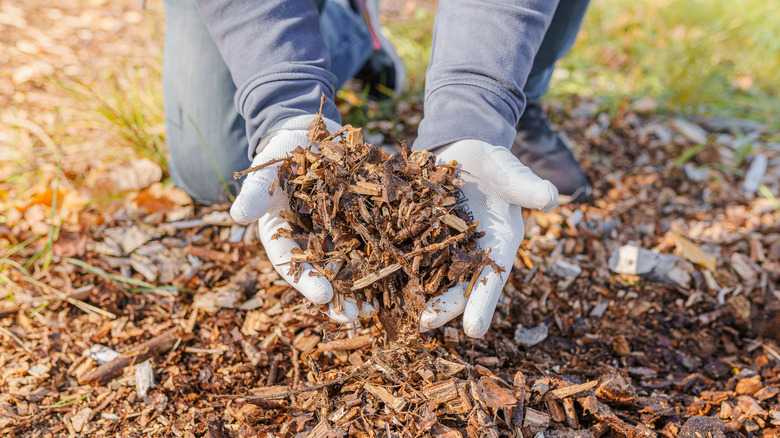
In the world of organic mulches, wood chips are one of the more popular choices. Not only are they coveted for their natural look, but these small pieces of shrub and tree particles are also ideal for promoting soil health in landscape beds containing various bushes, shrubs, and perennials. Yet these benefits don't necessarily translate to the spaces against your foundation. In fact, using wood chips is never desirable in these locations because it can cause issues with termite infestations as well as excess moisture. With these risks in mind, you may consider using gravel or other types of rock-based mulches around your home's foundation instead.
Overall, it is not safe to place organic mulch against the foundation of your house. Piles of wood chips might look attractive against your home, but it turns out that termites appreciate these materials as well. While the jury is still out as to whether wood chip mulches actually attract termites to an area directly (according to the Iowa State University Extension and Outreach), it can definitely capture the attention of such insects that are already in the area. This can translate to an increase in termite activity and foraging, which is something you certainly don't want. While some of these risks may still be seen with inorganic mulches, the chances are far greater with wood-based versions. The University of California even recommends that all types of organic mulches, not just wood chips, should be kept at least 5 feet away from your foundation.
Aside from a reduced risk of pest issues, gravel also has the advantage of lasting much longer than its wood chip counterpart. Rock-based mulches also tend to provide better drainage. Minimizing water accumulation in this way can protect foundations from possible moisture-related damage from rainfall.
Tips for using gravel-based mulch next to your home's foundation
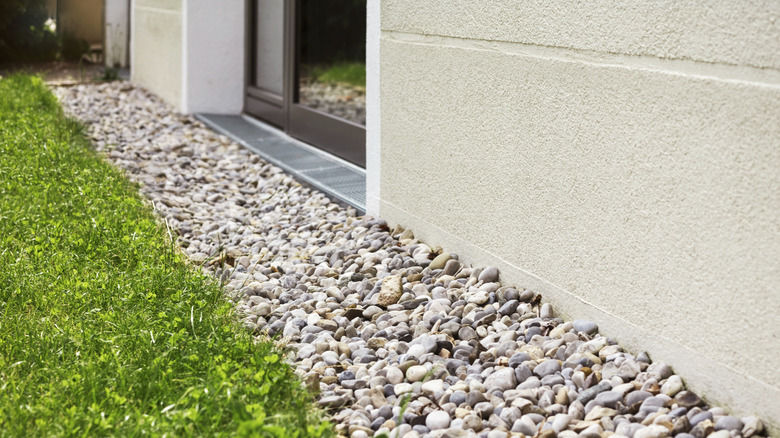
The U.S. Department of Energy recommends 2-foot breaks of gravel and other inorganic materials around foundations to reduce pest-friendly conditions right next to the area. Now while rock-based mulches are more expensive, the good news is you do not have to apply as thick of a layer compared with wood chips. In fact, while you normally need to apply a 2 to 4-inch thick layer of wood chips, you may only need a 1-inch layer of gravel, stone, or other rock mulches, per the Mississippi State University Extension. You'll also want to consider laying down landscape fabric before installing gravel to help the rocks stay in place without sinking into the underlying soil. The landscape fabric would also keep water from seeping into the soil under the rocks. Digging a perimeter trench that slopes away from your foundation is another step worth considering if you're trying to keep out moisture.
In a nutshell, the steps for this project would be to clear the area around your foundation, dig a sloping trench, lay the landscape fabric (you might need landscape staples to keep them in place) then pour your gravel to the right depth and width. Just keep in mind that even gravel may not reduce the presence of pests 100%, as it can still offer shelter. So no matter which type of mulch you use, be sure to monitor the area for signs of termite activity, and to call a pest control expert right away if you see a termite swarm near your home.