

What To Do If You Find A Termite Swarm Near Your Home
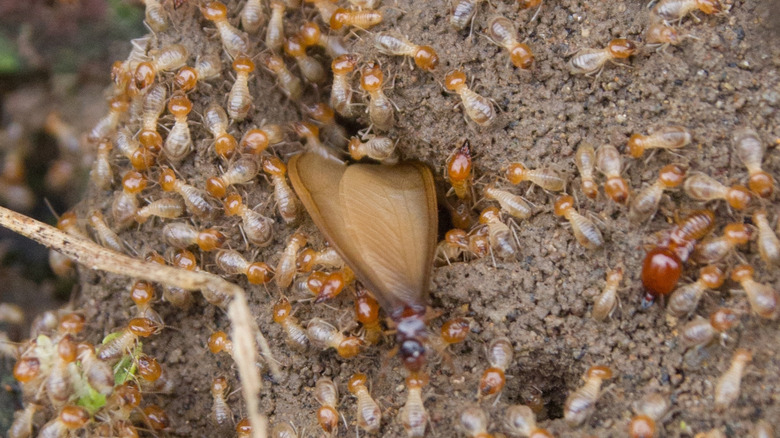
Spotting a termite or a few around your home is never a good sign. After all, these tiny but mighty pests can damage your house's structure and cost you thousands of dollars in repairs and control. In fact, the Environmental Protection Agency (EPA) estimates their treatment alone propels homeowners to shell out over two billion dollars annually. So, if you notice a swarm near you, reach out to a pest control specialist at once. Dr. Jim Fredericks, board-certified entomologist and senior vice president of public affairs at the National Pest Management Association (NPMA), agrees with our assessment in his exclusive interview with Hunker.
He emphasizes, "If you're seeing winged termite swarmers, it usually means a mature colony nearby (maybe inside) and is sending out reproductive termites to start new colonies. ... [So], it's best to contact a pro." But there are things to watch out for in the meantime. "Make note of where you saw the swarm and whether you noticed any signs like discarded wings or pellet-like droppings. That information can help them assess the situation quickly and accurately," he suggests.
Since you're most likely to spot subterranean pests in the U.S., Dr. Fredericks tells us how to spot them. "They build underground colonies made up of thousands of individuals. You want to keep an eye out for pencil-width tunnels made of soil and wood particles running up your foundation, walls, or across exposed surfaces," he says. Hollowed-out wood is another sign that you're dealing with an infestation. "You might also find frass, which are small, pellet-shaped droppings left behind by drywood termites as they tunnel through wood," he adds. Additionally, be wary of shed wings along your windows or doors, as they're indicative of winged reproductive termites, informs our expert.
Can you let a termite swarm live on your property?
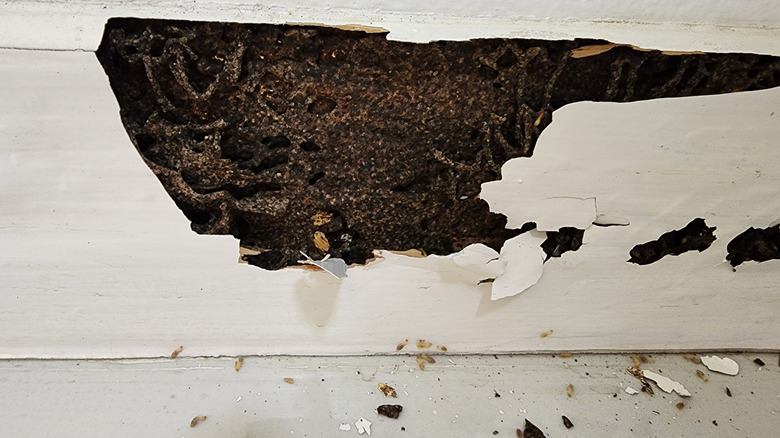
At first glance, termites might not seem so bad. They tend to keep to themselves and don't have much interest in sucking on human blood. So, you might wonder if there's any harm in letting these wood- and cardboard-munching pests be. But don't take them lightly. If left to their devices, they'll take over permanent residence. Worse, they'll invite their immediate relatives, distant cousins, and friends as well as acquaintances over to set up shop permanently. Dr. Jim Fredericks is also against letting them stay. Revealing why, he tells Hunker exclusively, "Termites serve a purpose in the woods, but not by your house. Termites cause an estimated $6.8 billion in property damage each year, and infestation damage is not usually covered by homeowners' insurance." If you don't want to foot the bill for their shenanigans, it's best to get rid of termites as soon as humanly possible.
"A colony can grow anywhere from 60,000 to two million workers, and they feed nonstop," Dr. Fredericks further warns. "What many people don't realize is that it can take five to ten years for a colony to fully mature. By the time you notice swarmers, termites may have already been causing damage behind the scenes for years. Left untreated, an infestation can compromise both the safety and structure of your home." If this continues for a few years, it won't take long before termites collapse your house.
Can you get rid of termites yourself or should you contact pros?
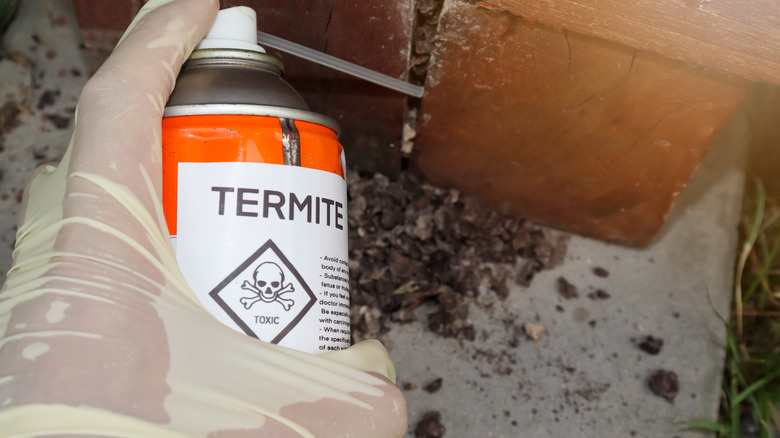
The average cost for treating a termite infestation is $621. And you might have to pay up to $3,000 if you have a large colony hiding inside your home. Based on these estimates, you might want to eliminate them yourself and get the chemicals used to kill termites. However, that'd be a bad idea, according to Dr. Jim Fredericks. "This is not a do-it-yourself job. Effective treatment requires the right training, and equipment," he says in an exclusive interview with Hunker. "Plus, there are so many factors that go into coming up with the right plan, including the type of termites, the extent of the damage and your home's construction. A pro considers all of that before recommending next steps."
Once you show them the door, take a few precautionary steps to ensure they don't swarm your home again. "Since termites are drawn to moisture, keep water away from the home by making sure gutters and downspouts drain properly and fix any leaks," Dr. Fredericks advises. "Store firewood away from the house, avoid piling mulch against siding, and make sure the wooden parts of the home aren't in direct contact with the soil." Moreover, schedule a yearly termite inspection to be on the safe side. Stating the best time for an inspection, our expert recommends, "Termites are especially active in warmer months, and early detection is always the best defense." He says you can even use dedicated tools, such as NPMA's Bug Barometer®, to stay updated on termites' latest activity per weather and climate data, and prepare your home accordingly.